
IslamiCity
Listen PodCasts, Live Quran, Watch Videos @VideoHub

In 1184, while returning from a pilgrimage to Mecca, the renowned Muslim traveler Ibn Jubair was shipwrecked in the Straits of Messina off Sicily's coast. Locals rushed to the scene-not out of compassion, but to charge exorbitant fees for rescuing stranded passengers. The poor among them, unable to pay, were left helpless.
Then, a surprising intervention: a powerful figure arrived on horseback and ordered that the Muslims be rescued free of charge. To Ibn Jubair's astonishment, the man was the King of Sicily-a Norman Christian-who not only welcomed the Muslims but assured them of safety and hospitality during their stay.
Although Normans had ruled Sicily for a century, Ibn Jubair found Arabic still spoken widely. Government officials were often Muslim, and Islamic culture was alive. The Normans-Scandinavian in origin-had traveled south to seek new lands and had found Sicily, a gem long ruled by Muslims, ripe for conquest.
Despite the broader Crusader era, the Norman Kingdom of Sicily became a beacon of tolerance, integrating Muslim, Christian, and Jewish communities with remarkable fairness. While the Normans contributed to Sicily's statecraft, architecture, and science, these accomplishments leaned heavily on the Islamic foundations laid centuries earlier.
Muslim attention turned to Sicily as early as the Caliphate of 'Uthman, just 20 years after the Prophet Muhammad's death. Mu'awiya, the governor of Syria, sent a naval expedition to this strategically crucial Byzantine province. The Muslims knew controlling Sicily meant controlling vital Mediterranean trade and naval power.
Though multiple attempts followed, Muslims only gained a foothold in 827, seizing Mazara under the Aghlabid dynasty. The leader of this campaign, Asad ibn al-Furat, was not a warrior but a scholar. His rallying speech emphasized learning and spiritual purpose over conquest:
"I have been given this appointment because of my achievements with the pen, not the sword... Seek wisdom, preserve it, and you will earn honor in this life and the next."
The conquest took 75 years, but Muslim settlers immediately began cultivating the land. Sicily was divided into three provinces: Val di Mazara (west), Val di Noto (center), and Val Demone (east). The term "val" derives from the Arabic word for province.
Muslim rule revitalized Sicily. Unlike the Romans and Byzantines who focused only on grain, Muslims introduced cotton, sugar cane, citrus, date palms, and more. Sophisticated irrigation techniques and land reforms sparked agricultural and social renewal.
This transformation supported industries like textiles, silk weaving, paper-making, and sugar refining. Sicilian silk became internationally renowned, continuing even under Norman rule, as shown by the exquisite "Mantle of Roger II" in Vienna.
Muslims beautified cities like Messina, Syracuse, Mazara, and especially Palermo-known as al-Madina (The City). Ibn Jubair wrote:
"The capital is endowed with two gifts, splendor and wealth... The eye is dazzled by all this beauty."
Though time has passed, Palermo retains much of its medieval Arab charm in its street layout, outdoor markets, and place names. Areas like the Kalsa (from al-Khalisa) and Lattarini (from suq al-'attarin) echo their Arab origins. Markets like Ballarò still feel like North African suqs, and many locals bear the features and habits reminiscent of their Arab heritage.
Much of Sicily's architecture is a mosaic of civilizations. Palermo Cathedral was once a Byzantine church, then a mosque, and it still bears a Qur'anic verse on one of its Roman-era columns.
Two purely Arab architectural sites survive:
La Favara (al-Fawwara): A castle with a spring, once home to Emir Ja'far.
Cefala Diana Baths: 11th-century hammams still in use until the 20th century.
Many Norman structures, like the Zisa (from al-Aziz) and Cuba, are Arab in form and function. The Cappella Palatina showcases a true cultural fusion: Arab wooden ceilings, Byzantine mosaics, and Norman form.
The blend of Arab, Norman, and Byzantine traditions created an artistic and intellectual flowering. Professor Giuseppe Bellafiore noted:
"The purely Norman element in Arabo-Norman architecture is less than the name might suggest."
The craftsmen, artists, and administrators were often Muslim. Even the dialect of modern Sicily is peppered with Arabic words like zagara (orange blossom).
Under Roger II, Sicily became a global hub of knowledge. Scholars from the Islamic world and Europe exchanged ideas, laying the groundwork for the Renaissance. Latin translations of Arabic texts in medicine, astronomy, and philosophy circulated in new European universities. The University of Salerno became the world's most renowned medical school thanks to Arab knowledge, including works of Ibn Sina (Avicenna).
The Islamic past lives on in Sicilian folk traditions. Puppet shows and oral storytelling mirror Arab customs. Though long neglected, Sicily's Arab roots are gaining renewed appreciation. In 1959, the University of Palermo reinstated a chair in Arabic literature.
The great poet Ibn Hamdis, exiled from his homeland, captured the lasting longing:
"I spoke the word Sicily and longing troubled my heart. A man exiled from a paradise can do nothing but tell of the things he has lost."
"When it came to midnight... the ship had been driven to shore and struck it. The King of Sicily himself came to survey the affair and ordered that the needy Muslims be given coins so they could disembark."
"The prosperity of the island surpasses description... It is a daughter of Spain in its cultivation, harvests, and well-being."
"The Muslims maintain mosques and markets in Palermo, and they gather for prayer during Ramadan under the glow of lamps... The Christian women veil themselves and wear silk robes, just like Muslim women."
"King William lives like a Muslim king: attentive to his physicians, fluent in Arabic, and engrossed in matters of law and administration."
Adapted from the "Muslim Sicily" article that appeared in the November/December 1978 print edition of Saudi Aramco World.
Authored by:
Gian Luigi Scarfiotti studied classics in Italy and economics in Switzerland. After six years as director of a company, he turned to freelance writing and photography.
Paul Lunde is a staff writer for Aramco World, specializing in Islamic history.
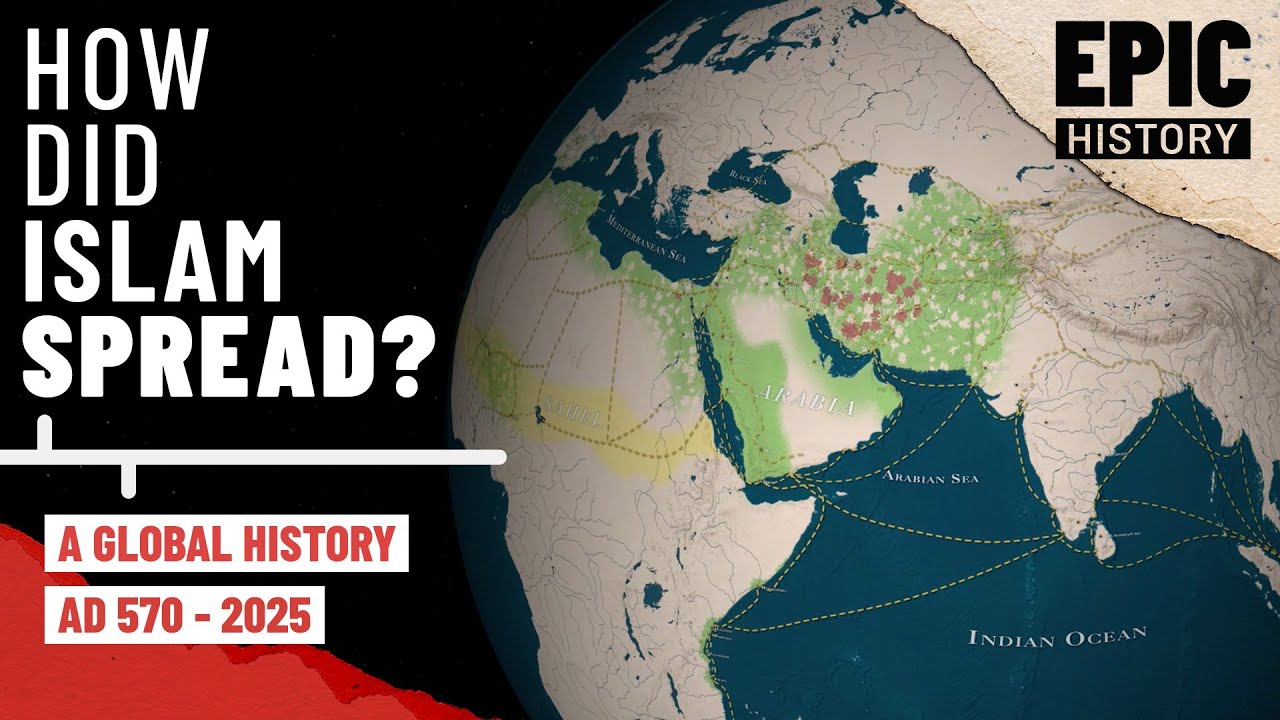 How Did Islam Become A Global Religion?


