
IslamiCity
Listen PodCasts, Live Quran, Watch Videos @VideoHub

As Muharram approaches and we welcome the new Islamic year, it's a powerful reminder to pause-not just to mark the date, but to reflect on what it means to live by the calendar Allah has chosen for us.
Unlike man-made calendars built for administration or economy, the Islamic calendar is divinely mandated. It isn't merely a cultural tradition-it's sacred. Allah tells us in Surah At-Tawbah:
"Indeed, the number of months with Allah is twelve [lunar] months in the register of Allah from the day He created the heavens and the earth..." (Qur'an 9:36)
This verse teaches us something profound: the structure of time, as we are meant to live it, is not arbitrary. Allah Himself decreed twelve lunar months-anchoring our days, our worship, and our history in a rhythm that aligns with His divine will. The lunar calendar is not a convenience; it's a command. It's part of our shari'ah-the very framework of our way of life.
Yet many of us, especially those living in the West, rarely think about the Islamic calendar outside of a few key moments. Maybe we notice Rajab, get more alert in Sha'ban, and then of course Ramadan comes. After Eid, we drift back into the Gregorian months-mapped to work holidays, school semesters, and fiscal quarters. The Islamic calendar fades into the background, becoming invisible in our everyday lives.
But what does that do to our hearts?
When our hearts beat to a calendar not made for us, it's easy to feel unmoored. You live by a time that doesn't tell your story. You measure your months by a system that doesn't celebrate your values. And slowly, subtly, your connection to Islamic sacred time weakens-along with your connection to an ummah that is meant to move together.
Imagine if a child grows up feeling more excited about birthdays or New Year's Eve than about Eid. Over time, Eid loses its meaning. It becomes just another day off. The same thing happens when we treat Muharram or Dhul Hijjah like any other month. Without meaning, sacred time fades into secular time. And secular time doesn't speak to your soul.
We don't need to invent new holidays or rituals. Even simple awareness is powerful. Just knowing that something meaningful happened in a specific Islamic month-be it the Hijrah in Muharram or the Isra' and Mi'raj in Rajab-roots us in our history. It aligns our personal timelines with the divine timeline.
Think of how the broader culture honors months like Black History Month or Mental Health Awareness Month. These aren't just symbolic-they serve to educate, honor, and reflect. We can do the same with our Islamic calendar: commemorate, remember, reflect.
Here are some easy ways to start:
The Islamic calendar is not just about when Ramadan starts or when to fast on Ashura. It's about a deeper alignment. When you live according to the calendar Allah designed, you live in sync with the pulse of your faith. You connect with a timeline that not only measures your days but shapes your identity.
This Muharram, let's not just flip the page. Let's reconnect with sacred time-because when we do, we don't just find our history; we find our place within it.
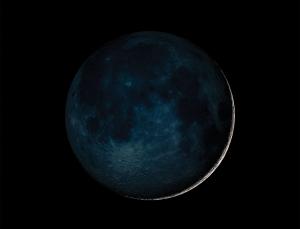 Moon's radio glow could keep Muslim calendars in sync


