
IslamiCity
Listen PodCasts, Live Quran, Watch Videos @VideoHub

At a time when mental health, identity, and worldview are being redefined, a powerful intellectual voice has emerged to challenge the dominant psychological narrative.
Freud Under the Muslim Microscope: An Analysis of His Life and Work, authored by Dr. Mohd Abbas Abdul Razak and Professor Mohd Mumtaz Ali, offers an unflinching, deeply insightful reappraisal of Sigmund Freud - not from the West, but from within the rich intellectual tradition of Islam.
Published by scholars from the AbdulHamid AbuSulayman Kulliyyah of Islamic Revealed Knowledge & Human Sciences (AHAS KIRKHS) at the International Islamic University Malaysia (IIUM), this book is more than a critique - it's a civilizational counter-reading of Freud's legacy, grounded in Dr. Abbas's PhD research and sharpened through decades of teaching and writing.
Why does this matter? Because Freud's theories, while influential, are often absorbed into Muslim societies without being questioned - and this book asks: should they be?
One of the standout chapters, "Freud's Concept of Human Nature" (Chapter 5, page 69), peels back the layers of Freud's anthropology - his understanding of what it means to be human - and confronts it with Islamic ontology. Freud's view of human beings as driven primarily by sexual desire, aggression, and unconscious urges is challenged head-on.
The authors critically examine how Freud's theories strip the human being of spiritual consciousness, replacing it with mechanistic drives and trauma-based determinism. They argue that this reductionist view creates a moral vacuum, incapable of guiding the soul toward higher purpose or ethical clarity - core elements of the Islamic worldview.
By engaging Freud's theories on the id, ego, and superego, the book demonstrates that his model of the self is incomplete without the presence of divine guidance, revelation, and moral accountability. The Islamic tradition, in contrast, understands the human being as fitrah-based - created inherently good, spiritually inclined, and morally responsible.
The authors write with the clarity of scholars and the urgency of believers, showing how modern psychology can become dangerous when it dismisses God, soul, and sacred purpose.
Freud Under the Muslim Microscope isn't just about Freud. It's about reclaiming the narrative of what it means to be human. It invites Muslim psychologists, educators, thinkers, and students to stop outsourcing their epistemology and start building it from the Qur'an, the Sunnah, and centuries of Islamic scholarship.
"What we are dealing with here," the authors seem to say, "is not just therapy - it's a worldview war. And Muslims must be ready to think critically and faithfully."
This book is not anti-psychology. It is pro-intellectual independence. It's a wake-up call to Muslim academics and mental health professionals: Engage the West, yes - but not on your knees.
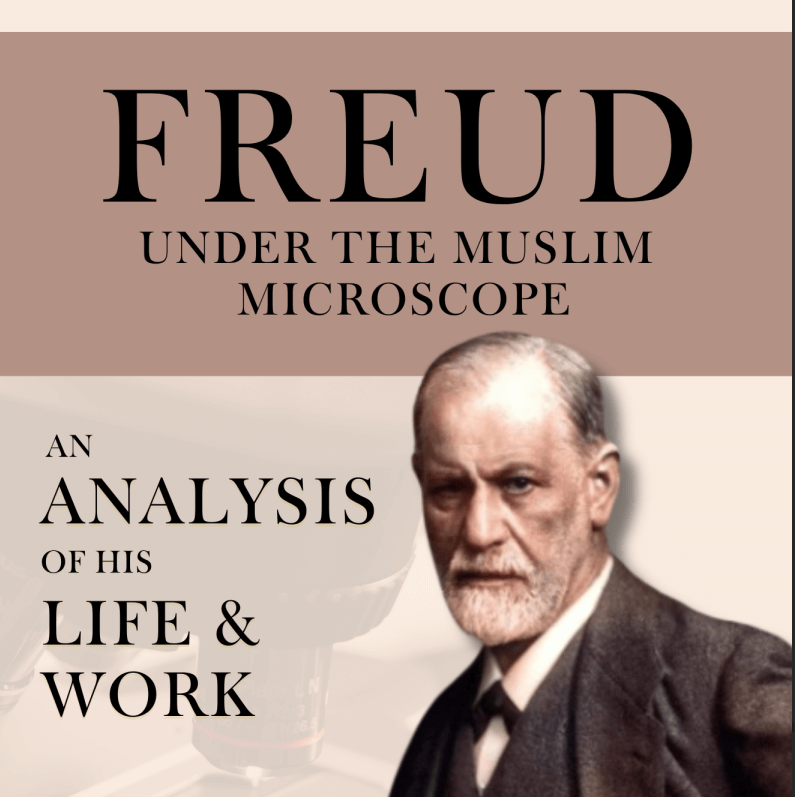 If you're ready to rethink Freud - not cancel him, but truly critique him - from an Islamic standpoint, then this book is a must-read. You can access it via Academia.edu and ResearchGate.
 Kamal Hassan’s Vision for Holistic Education at IIUM


