
IslamiCity
Listen PodCasts, Live Quran, Watch Videos @VideoHub

Since time immemorial, humanity has engaged in unending research driven by the desire to understand man's essence and purpose. Philosophers and religious scholars have long pursued the question of human existence, while anthropologists have explored the origins of man.
Biologists focused on the internal workings of the human body, and psychologists sought to understand the human mind, delving into areas such as learning, motivation, personality, psychotherapy, and creativity.
Although psychological inquiry dates back to ancient Greek philosophers, the Renaissance and Enlightenment periods in Europe introduced new paradigms that challenged religious perspectives. Charles Darwin's theory of evolution marked a turning point, proposing that humans evolved from apes and are fundamentally no different from animals.
This scientific perspective led many Europeans to abandon traditional religious explanations of human origins.
Building upon Darwin's ideas, Sigmund Freud (1856-1939) developed his theory of human personality, influenced by his Jewish heritage, clinical observations, and the scientific spirit of the time. Freud rejected religious views and posited that human behaviour is driven by the libido or Eros.
He theorized that personality results from the dynamic interaction between the id, ego, and superego, and emphasized that psychosexual development shapes every individual. Freud painted a rather grim and deterministic picture of humanity, viewing man as an intellectual beast prone to destruction.
This study aims to critically analyze Freud's views on human nature and personality development from an Islamic psychological perspective. The researchers contend that Freud's bleak perspective may have stemmed from various sociocultural and personal influences. In contrast, Islam offers a more positive, hopeful understanding of human nature.
This analysis serves to enrich the discourse around psychology, providing valuable insight for students, educators, psychotherapists, and scholars interested in Freud's legacy and the Islamic view of the human psyche.
This study provides a critical examination of Sigmund Freud's theory of personality from an Islamic perspective. It reflects on the historical, cultural, and philosophical foundations of Freud's views and contrasts them with the Islamic understanding of human nature, personality, and spiritual development.
Sigmund Freud developed his theories during a period of deep-seated anti-Semitism in Europe. As a Jew, Freud faced systemic discrimination and exclusion in academic and social spheres. The study suggests that Freud's intellectual work may have partly been a response to the prejudice he faced-a form of intellectual rebellion against the Christian-dominated culture of his time. Freud's writings often confronted and violated the Victorian norms of modesty, especially with respect to sexuality, childhood, and family life.
This study highlights that Freud himself viewed his life's work as a crusade for Jewish intellectual recognition in Europe. His willingness to introduce controversial ideas-such as infantile sexuality and the Oedipus complex-might be interpreted as a way to challenge or subvert the dominant cultural norms.
At the core of Freud's theory is the belief that human beings are driven largely by unconscious, instinctual desires-especially sexual ones. According to Freud, even infants derive sexual pleasure from breastfeeding, a view which is sharply rejected in Islam. Islam teaches that every human being is born pure and innocent-a concept known as Fitrah. The infant-mother bond in Islam is one of care, nourishment, and love, with no association with sexual gratification.
Freud's theories, particularly the Oedipus and Electra complexes, are seen as deeply troubling. These ideas not only introduce notions of childhood sexuality but also suggest that children harbour subconscious sexual desires for their opposite-sex parent.
The study by the authors argues that such views are psychologically damaging and grossly misrepresent the nature of familial relationships, particularly the sanctity of the mother figure.
In contrast, Islam views mothers with the highest regard. The Prophet Muhammad ﷺ emphasized the elevated status of mothers, famously stating that "Paradise lies at the feet of mothers."
Islam teaches that men and women, though biologically different, are equal in value and have complementary roles within the family and society. Freud's demeaning views on women are criticized as unjust and ignorant of the significant contributions women have made to civilization.
Freud's view of human nature is seen as largely pessimistic. Influenced by Darwin and Schopenhauer, Freud portrayed humans as driven by primal instincts, equating them with animals. He believed that psychological development is largely universal and bound by psychosexual stages, regardless of culture or upbringing.
This deterministic outlook suggests that human behaviour is primarily shaped by unconscious drives and that mental disorders arise from unresolved internal conflicts among the id, ego, and superego.
Islam, on the other hand, regards human beings as noble and divinely honoured creations. The Qur'an states: "Indeed, We have honoured the children of Adam" (Surah Al-Isra, 17:70). Human beings are made of body, mind, and soul, with the soul (Rūḥ) being a divine gift. This soul contains godly attributes-like compassion, mercy, and intelligence-as well as angelic and satanic tendencies.
The Islamic worldview sees life as a test in which humans must cultivate the divine and angelic qualities while resisting satanic inclinations. Humans are free to choose their path, and their rank can rise above angels or fall below animals depending on their moral and spiritual actions.
This study criticizes Freud for focusing almost exclusively on the darker aspects of the human psyche. His psychoanalytic model emphasizes internal conflict and neurotic symptoms, offering no holistic remedy beyond coping mechanisms.
Muslim scholars argue that Freud only scratched the surface of the psyche and ignored its higher spiritual potential. Islamic teachings offer a path for the soul's purification and development through religious practices such as Tilawah (Qur'an recitation), Istighfar (seeking forgiveness), Tazkiyat al-Nafs (soul purification), and Tawbah (repentance).
The Qur'an describes stages of the soul's development: starting from Nafs al-Ammarah (the commanding self), moving to Nafs al-Lawwamah (the self-reproaching soul), and finally reaching Nafs al-Mutmainnah (the soul at peace). This progression illustrates that spiritual growth and transformation are not only possible but central to the Islamic view of psychology.
Contrary to Freud's ideas on the human psyche, the authors draw on the insights of two prominent Islamic thinkers-Muhammad Iqbal (1877-1938) and Al-Ghazali (1058-1111)-to present an Islamic conception of the self that contrasts with Freud's views. Iqbal saw immense creative and spiritual potential in the human soul.
Rather than suppress the ego, he called for its strengthening and awakening through self-realization and creativity. For Iqbal, the awakened ego achieves closeness to God and contributes positively to civilization. He believed that through moral and spiritual development, humans can gain immortality in the hereafter-but this immortality must be earned through righteous action and worship.
Al-Ghazali, a classical scholar and Sufi mystic, focused more on the inward purification of the soul. He acknowledged the human ego's dual capacity for good and evil, in line with Qur'anic verses like Surah Ash-Shams (91:7-8), which speak of the soul being inspired with both righteousness and wickedness.
Al-Ghazali urged Muslims to purify their hearts through Qur'an reading, prayer, fasting, and meditation. Such practices help cleanse spiritual diseases and bring the soul closer to God. His teachings complement Iqbal's by providing a methodology for inner transformation.
By combining Iqbal's outward, active approach with Al-Ghazali's inward, contemplative method, Muslims can educate and elevate the soul, aligning their lives with divine purpose and fostering a just and peaceful world.
This study concludes by examining the evolution of Western psychology. Originally rooted in philosophy, Western psychology took a scientific turn during the Renaissance, marginalizing religious perspectives.
Over time, this empirical focus became dominant, especially in behaviourism, which studied observable behaviours while ignoring the inner life of the soul. Almost all Western schools of psychology created a major gap in understanding human nature.
Modern psychology became increasingly reductionist, focused on the "here and now", and unwilling to engage with deeper existential and spiritual questions. The term "psychology" itself, derived from the Greek psyche (soul) and logos (study), lost its original meaning as modern science excluded the soul from its studies.
In contrast, Islam offers a non-dichotomous worldview. It integrates religious and scientific knowledge and sees no conflict between faith and reason. Islamic psychology encompasses the physical, emotional, psychological, and spiritual dimensions of human beings. It emphasizes humanness, dignity, purpose, and the soul's journey back to God.
Islamic psychology focuses on four interrelated elements of the human being: Rūḥ (soul), Qalb (heart), Nafs (self/ego), and 'Aql (intellect). Some scholars view these as distinct, while others see them as expressions of the same spiritual essence. Regardless, these elements together provide a holistic framework for understanding human behaviour and mental well-being.
Despite its criticisms of Freud and Western psychology, this study does not reject Western contributions entirely. Scholars such as Malik Badri have argued that Muslims can benefit from Western psychological tools-like intelligence testing and behaviour therapy-as long as they do not conflict with Islamic principles.
Indeed, some modern behaviourist insights parallel those found in classical Islamic thought. This study expresses hope that Islamic psychology can serve as a bridge between conflicting paradigms in modern psychology.
If Buddhist concepts such as Nirvana have gained a place in Western transpersonal psychology, then Islamic ideas-rooted in the Qur'an and centuries of scholarly tradition-can also enrich the field. By drawing from both Western science and Islamic spiritual wisdom, psychology can become a more comprehensive and humane discipline.
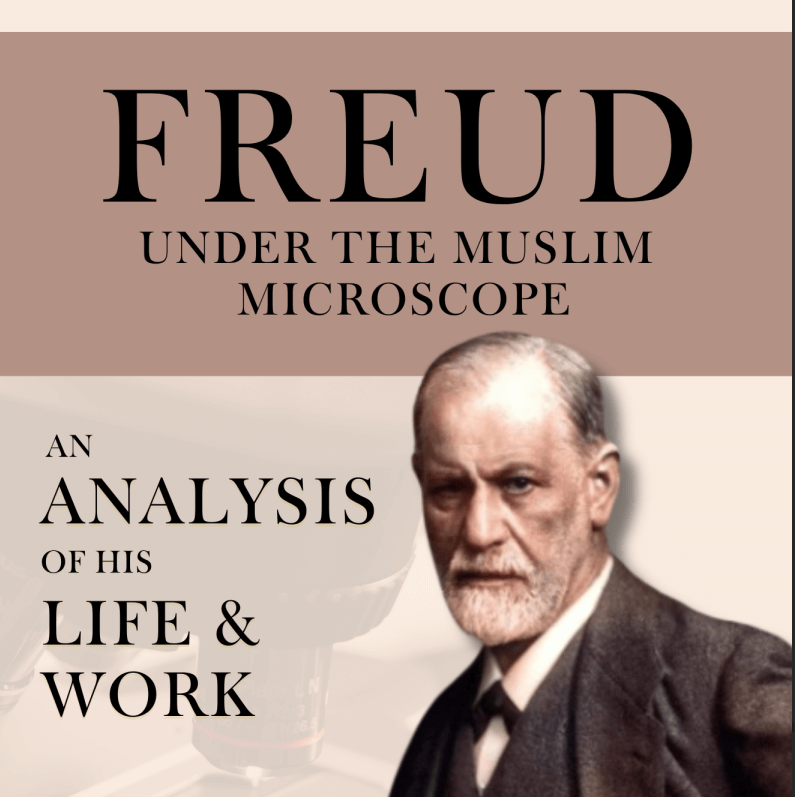
* This article serves as a prelude to the authors forthcoming eBook, Freud Under the Muslim Microscope: An Analysis of His Life and Work. A free downloadable PDF version of the book will soon be available in the public domain.
 Dr. Mohd Abbas Abdul Razak is a member of the academic staff in the Department of Fundamental and Inter-Disciplinary Studies, while Prof. Mohd Mumtaz Ali serves in the Department of Usuluddin and Comparative Religion. Both authors are affiliated with the International Islamic University Malaysia (IIUM), under the AbdulHamid AbuSulayman Kulliyyah of Islamic Revealed Knowledge and Human Sciences (AHAS KIRKHS).


 Redefining Psychology through Islamic Principles: Elevating Human Dignity a...