
IslamiCity
Listen PodCasts, Live Quran, Watch Videos @VideoHub

Abu ʿAbdallāh Muḥammad ibn Ismāʿīl al-Bukhārī, or Imam al-Bukahri, was born in 194 AH (809/810 CE) in the city of Bukhara, in present-day Uzbekistan. He came from a Persian family that had embraced Islam three generations before his birth. His father passed away when he was still an infant, leaving his upbringing in the care of his mother. Since his childhood, Imam al- Bukhari displayed remarkable dedication to learning. He studied under local scholars, immersing himself in the sciences of hadith and Islamic jurisprudence (fiqh). In his late teens, al-Bukhari traveled to Makkah with his mother and brother to perform the Hajj. Al-Bukhari remained in Makkah and Madinah for several years, where he learnt from some of the most eminent scholars of the time. He memorized both the texts (matn) and the chains of narration of hadith, while also mastering ʿilm al-rijāl, or the discipline concerned with evaluating the reliability of narrators.
Imam al-Bukhari's has excellent competencies in the isnad method, enabling him to contribute remarkably in the process of authenticating hadith. Imam al-Bukhari's works are fundamentally grounded in revelation (waḥy) and authentic transmission (isnād) of the Prophet Muhammad Hadith. He established rigorous criteria for accepting hadith, which included verifying the chain of narrators and assessing their integrity, memory, and moral uprightness. He distinguished authentic reports (ṣaḥīḥ) from weak (ḍaʿīf) or fabricated (mawḍūʿ) ones. These methodologies form the foundation of ʿUlūm al-Ḥadīth (the science of hadith).
The focus of his work lies in the Qur'an and Sunnah as primary sources of knowledge. He differentiated between naqlī (transmitted) and ʿaqlī (rational) knowledge, emphasizing the primacy of naqlī sources, especially hadith, in shaping religious epistemology. His framework set clear standards for authentic knowledge, stressing the importance of sanad (chain of narration) and matn (text/content) in verifying truth. He emphasized ʿadl (integrity) and ḍabṭ (accuracy) among narrators. His Ṣaḥīḥ al-Bukhārī is regarded as a knowledge canon because its structure reflects a robust epistemic framework for authentication. The selectivity of the documented hadith demonstrates epistemological precision.

Imam al-Bukhari's methodology for verification and authenticity is further explored under the concept of al-Jarḥ wa al-Taʿdīl, the science of narrator evaluation. This science establishes epistemic credibility by assessing the continuity of the isnād, and by avoiding shudhūdh (anomalies) and ʿillah (hidden defects). Imam al-Bukhari also emphasized objectivity and systematic rigor, demonstrated by his rejection of even trustworthy narrators' reports if the chain or content did not meet his exacting standards.
Imam al-Bukhari's work laid the methodological foundations for later scholars in the hadith sciences. He contributed to the Islamic epistemological tradition by balancing transmission, critical analysis, and ethical accountability. His work has offered valuable on transmitted knowledge and the role of reason in interpreting, understanding, and applying hadith. His chapter headings (tarājim al-abwāb) reflect rational inferences based on hadith content, demonstrating his use of ijtihād.
Imam al-Bukhari's focus was on the reality of information revealed by the Prophet Muhammad (PBUH), encompassing both the seen (material) and the unseen (ghayb), with the latter validated through revelation. The content he meticulously recorded and preserved covers various aspects of human nature, structure, and destiny. These include human behavior, consciousness, cognition, the soul, and existential questions about human identity and purpose.
Imam al-Bukhari's work emphasizes the essentiality of values and ethics at every level. His work highlights essential virtues such as truthfulness, trustworthiness, and sincerity (ikhlāṣ) in both the seeker and the transmitter of knowledge. His compilation was not merely academic but devotional and values laden. In other words, it was more than a scholarly exercise as it reflected a deep religious commitment and spiritual purpose rooted in strong ethical and moral values. Learning from his methodology shows a clear focus on treating knowledge as a foundation for upright conduct and a means to serve humanity. For him, knowledge is not to be hoarded or misused; it must benefit others.
With regard to the purpose of knowledge, Imam al-Bukhari's perspective is clearly reflected in the purpose behind his compilation of Ṣaḥīḥ al-Bukhārī. His goal was to preserve the most authentic teachings of the Prophet (PBUH) to guide human life. Imam al-Bukhari was known for his piety, scrupulousness, and truthfulness, emphasizing that knowledge must lead to taqwā (God-consciousness). For him, knowledge is not pursued for its own sake but is meant to lead to action, strengthen faith, and prepare individuals for success in both this world and the hereafter.
His work has been the focus of activities by the Imam Bukhari International Scientific Research Centre. The Centre is a research institution dedicated to the study, preservation, and dissemination of Islamic scholarship. The centre is located in Samarkand, Uzbekistan, within a rich cultural and academic environment. It is close to other historical sites such as the Mir Arab Madrasa and Shah-i-Zinda complex as well as the mausoleum of Imam al-Bukhari. In fact, Samarkand itself is a historic city renowned for its Islamic intellectual heritage.
By way of introduction, the Imam Bukhari International Scientific Research Center, established under the Cabinet of Ministers of the Republic of Uzbekistan, conducts research on the life, works, and Hadith compiled by Imam al-Bukhari. As a modern academic hub for Islamic studies in Central Asia, the Center supports scholars, researchers, and students of Hadith, Islamic studies, and Islamic heritage. Officially founded through a Presidential Decree on Mar 27, 2017, the Center actively engages with both national and international academic communities.
The Center's primary objectives are to:
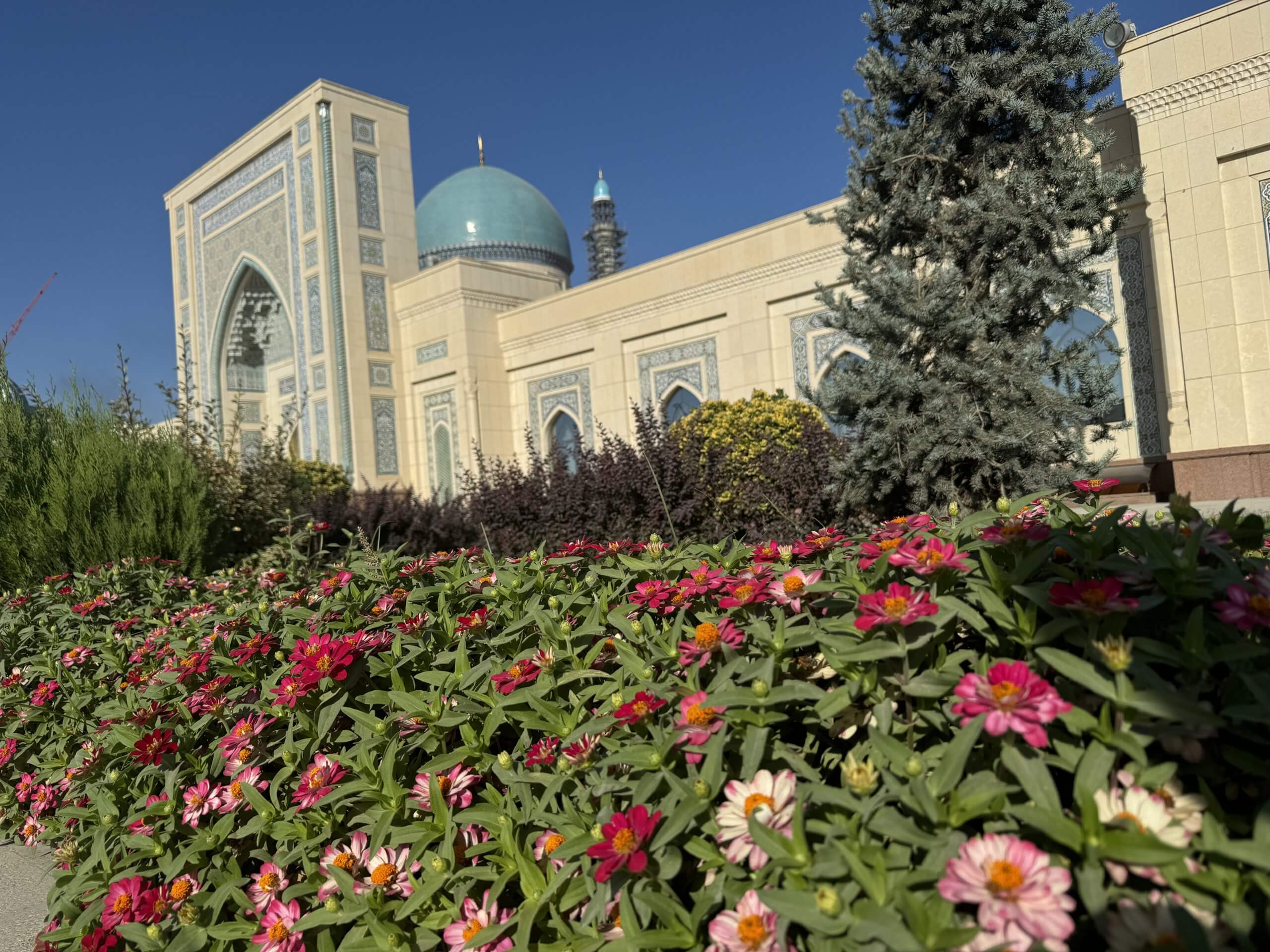

Since its establishment, the Center has published 89 scholarly works, including books, brochures, catalogs, and monographs. To prevent the misinterpretation of hadith and clarify their authentic meaning, it has produced 183 video rebuttals and 955 analytical reports. The manuscript collection has been enriched with 640 manuscripts, 831 lithographed books, and 114 historical documents. Furthermore, Memorandums of Understanding have been signed with 43 prestigious international organizations, research centers, and universities. Within the framework of the "Enlightenment Against Ignorance" initiative, the Center has organized 1,005 spiritual and educational events, highlighting the significance of the scholars' scientific heritage in shaping the moral education and upbringing of youth.
In addition to preserving classical scholarship, the Center addresses contemporary challenges by critically examining misleading religious narratives and destructive ideologies circulating on the internet and social media, providing scientifically grounded rebuttals that uphold authentic Islamic teachings.
Recognizing the importance of youth engagement, the Center plans to introduce "Religious- Educational Literacy Hours" in educational institutions. These programs will target inquisitive students at formative ages, equipping them with a sound understanding of enlightened Islam and the tools to resist extremist, dogmatic, or fanatical influences.
The Center also intends to expand its global outreach through the creation of an electronic platform. This platform will highlight the lives, scholarly contributions, and intellectual heritage of Imam Bukhari and other great scholars, while showcasing the Center's research activities to an international audience.
Finally, the Center is committed to preserving rare manuscripts, lithographed works, and historical documents. Through careful restoration and digitization, these invaluable resources will be safeguarded and made accessible for future generations, ensuring that the rich heritage of Islamic scholarship continues to inspire and educate.
The Imam Bukhari International Scientific Research Center plays a vital role in preserving and advancing the rich heritage of Islamic scholarship while fostering intellectual engagement across generations. By promoting rigorous research, critical inquiry, and educational initiatives, the Center not only safeguards the legacy of great scholars like Imam Bukhari but also cultivates informed, ethical, and reflective individuals. Its efforts to counter misinformation, nurture youth understanding, and facilitate international collaboration contribute to a culture of knowledge, mutual respect, and global harmony, positioning the Center as a beacon of academic excellence and the promotion of peaceful coexistence in an interconnected world.
Shukran Abd Rahman is a Professor of Industrial and Organisational Psychology at the Department of Psychology, AbdulHamid AbuSulayman Kulliyyah of Islamic Revealed Knowledge and Human Sciences, International Islamic University Malaysia. He is currently a Fellow Researcher at the Imam Bukhari International Scientific Research Center in Samarkand, Uzbekistan.
Dr. Shovosil Ziyodov is the current Director of the Imam Bukhari International Scientific Research Center in Samarkand, Uzbekistan. He has been leading various initiatives to preserve the legacy of Imam al-Bukhari, promoting rigorous research and fostering global academic collaborations.
 ChatILM: Enhancing Islamic Knowledge with AI


