
IslamiCity
Listen PodCasts, Live Quran, Watch Videos @VideoHub

The UN General Assembly has just (September 12) endorsed the New York Declaration on the two-state solution between Israel and Palestine. A day earlier, Israeli Prime Minister Netanyahu vowed that a "Palestinian state will not be established".
Israel managed to secure 10 votes, including those of the United States, out of the 193-member-strong General Assembly. Where does this development lead us? Let us examine the dilemma in the light of some historical developments.
On September 17, 1948, Israeli terrorists assassinated the Swedish diplomat and the Red Cross chief Count Folke Bernadotte in broad daylight in Jerusalem. However, unfortunately, very few people know about the remarkable man who devoted his life to the sake of humanity. The three assassins, one of whom, Yitzhak Shamir, a onetime mentor of Benjamin Netanyahu who later became Israel's prime minister, perceived Bernadotte as an anti-Semitic goon.
Bernadotte was no ordinary man; during the war years, he had successfully negotiated with Germany's Nazi administration the release of about 450 Danish Jews and more than 30,000 non-Jewish prisoners from a concentration camp. Most contemporary political leaders and diplomats held him in high regard. At the newly established United Nations, he developed some principles for humanitarian action representing the world body that later laid down the foundation of the UN Relief and Works Agency (UNRWA) - an institution that most members of the international community hold with admiration but Israel accuses of being anti-Semitic. Keeping in view Bernadotte's wartime contributions, the world body entrusted him to draft a plan to divide the territory into Arab/ Palestinian and Jewish parts to secure permanent peace in the area.
The Count was aware of the sensitivity of his mission: he knew about the plight of the Jewish people in Europe and the British desire to settle them in Palestine. He was also aware of the desires of both the United States and the Soviet Union that heavily favored Jewish migration to Palestine. After receiving the UN assignment to mediate between the Jews and Palestinians, he noted in his diary the difficulties he encountered. He wrote, "One must bear in mind the aspirations of the Jews, the political difficulties and differences of opinion of the Arab leaders" in addressing the issue. He also noted that one must keep the strategic interests of Great Britain, the financial commitment of the United States and the Soviet Union, the outcome of the war, and finally the authority and prestige of the United Nations."
Count Bernadotte was proud and confident of his responsibility. He refused to take precautions for his personal security. However, four assassins wearing IDF uniforms killed him in the Jewish quarter of Jerusalem, a day after submitting his recommendations. He was returning to Jerusalem after a meeting where he was engaged in negotiating with various parties in the region. Why was he assassinated? Who killed him? What was the intention of his killers? What did his assassins want to achieve by eliminating him? Moreover, finally, why does Dan Steinbock think that his assassination contributed to the demise of the two-state solution? Seventy-seven years later, European leaders have again made these questions relevant for world peace today.
The first question that we need to address in this connection is how the two-state idea emerged. The British Mandate authorities did not advocate partition; it was notably the first High Commissioner, Herbert Samuel, who wanted to ensure the migration and settlement of European Jews in Palestine. However, soon the Palestinians felt the pressure because the administration favored the settlers over the rights of the indigenous population. Increasing Palestinian protests convinced the Mandate administration to separate the migrants from indigenous Palestinians, and following a significant disturbance in 1936-37, the authorities constituted the Peel Commission, which recommended dividing the territory between Jews and Palestinians. In 1947, the UN General Assembly adopted Resolution 181 that formalized the idea of the partition of Palestine at the international stage. Interestingly, within less than a year, the UN mediator on the case was assassinated - a date that Steinbock identifies as the date of demise of the two-state solution. Has the world body been fooling itself with the idea of a two-state solution to the most critical crisis the world faces today? Let us examine this question further.
Most Western nations initially supported the idea of partitioning Palestine. However, some prominent American Jewish intellectuals, such as Rabbi Judah Leon Magnes, an expert in Jewish studies and the first chancellor and president of the Hebrew University of Jerusalem, believed that the partition of Palestine would be economically nonviable and unsustainable. He also predicted that the partition would lead to endless war in Palestine. Only later historical developments demonstrated how true Magnes was! Witnessing Israel's treatment of the Palestinians over the past decades, many other Jewish academics, such as Ilan Pappe, Avi Salom, Jeffrey Sachs, and many more, have expressed their reservations about the viability of a poorly equipped Palestinian state and a powerful Israeli state existing side by side.
Moreover, the UN resolution of November 29, 1947, demanded the return of all Palestinian refugees to their original homes, and both states maintain an economic union. Will the UN ensure this happens? Will Israel accept all conditions stipulated in the original and latter UN recommendations on the subject? Will Israel accept the idea of Jerusalem as an international city under international control? The two-state solution demands a positive response to these questions.
Repeated Israeli lies convinced many Westerners, Americans in particular, about the manufactured realities in Palestine. However, Israel's Gaza war is now exposing those lies to the public. Therefore, in our view, the so-called two-state solution is destined to fail.
Any lasting solution to such conflicts demands recognition of fundamental human dignity, and the two-state solution presented in the current context fails to recognize the dignity of the Palestinians. On the 77 th anniversary of Count Bernadotte's assassination, European nations should renew their resolve to demonstrate their respect and commitment to the humanity that he established.


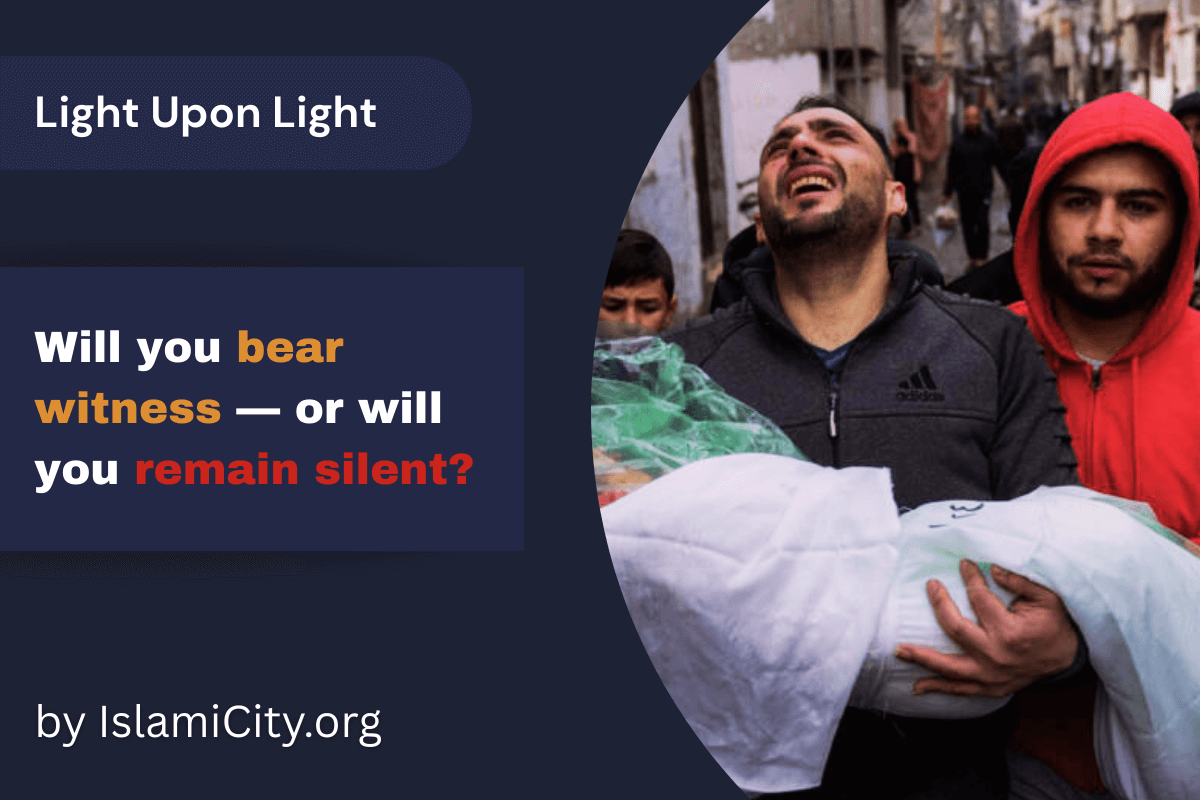 Will You Bear Witness — Or Will You Remain Silent - Light Upon Light by I...