
IslamiCity
Listen PodCasts, Live Quran, Watch Videos @VideoHub

I arrived in southern California in June for my field placement at a nonprofit working to uplift the Muslim community. While my research and work have been incredibly valuable, it is California itself that has taught me the most.
I was born and raised in Balochistan, a southwestern province of Pakistan often portrayed through a narrow lens: terrorism, honor killings, illiteracy and tribal structures. While these challenges are real, they are not the full story. Balochistan is also rich in culture, resilience, poetry, hospitality and community values. I carry that spirit with me wherever I go. Being selected for a fully funded master's scholarship at Notre Dame has become more than just an academic milestone; it has led to a personal journey from a misunderstood region to one of the world's leading institutions for peace studies.
Before coming to Notre Dame, I had never lived outside Balochistan. Every layer of this journey, first to Indiana and then to California, peeled back something in me. At Notre Dame, I experienced a sense of quiet reflection. The town of South Bend was slow-paced and wrapped in a cocoon of care. I would walk by the campus lakes and think about how far I'd come not just in miles, but in mindset. The Keough School's Kroc Institute for International Peace Studies has shaped how I understand conflict not as something far away or abstract, but as something personal, generational and structural.
Despite being a Catholic institution, I have found Notre Dame to be deeply inclusive. Christian students from nearby St. Mary's College joined us at the mosque for iftar, the meal eaten after sunset during Ramadan, and professors delayed the breaks during evening classes so Muslim students could break their fasts and pray. Even in a town rooted in Catholicism, the culture is respectful, curious and genuinely welcoming. It made me reflect on how interfaith harmony doesn't need to be named or declared, it can be practiced quietly and respectfully.
My classmates and I formed a bubble, an ecosystem of students from war-affected countries and conflict zones. We brought our personal stories from Ukraine, Uganda, the Democratic Republic of the Congo, Sri Lanka, Balochistan and beyond. We listened, reflected, debated and learned from each other. That bubble gave us space to process trauma and understand the complexity of peace not just as a concept, but as a lived practice. In many ways, this ecosystem was the first place where I felt seen not just as a Pakistani or a woman, but as a whole person.
Then came California. I thought I was prepared, but nothing readied me for the cultural shock I experienced here. I felt like I had entered a different country altogether. The pace was fast, conversations light, people self-driven. I moved in with housemates pursuing careers in Engineering and Science. Our interests diverged. While I was preoccupied with genocide prevention and peacebuilding, they talked about tech startups, live concerts and the TV show "Love Island." At one point, I found myself wondering, have I become too serious for this world? Am I the one who needs to lighten up or is there space for deep reflection in fast-moving societies like this one?
Everything felt foreign here, leaving me scrambling to decode conversations. One moment that left a deep mark was when a housemate told me she believed Islam and Muslims were two different religions. She had attended Catholic school all her life but had never been taught otherwise. This misunderstanding, while not malicious, reminded me how powerful inclusive education can be. Notre Dame never labeled itself as "interfaith," but it is in practice. That moment in California made me realize just how much Notre Dame's silent inclusivity had shaped my own growth.
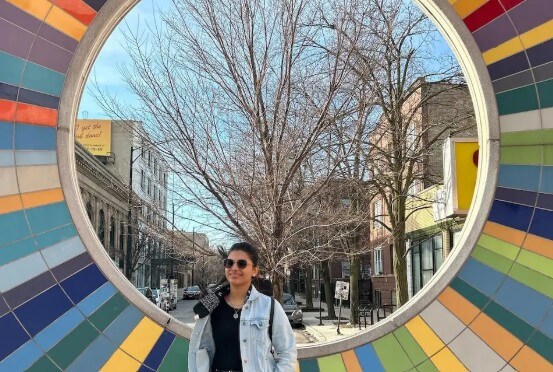
I found myself questioning my place here. How do I connect with people who have never met someone from my part of the world? How do I explain that Balochistan, though scarred by violence, is also a city of poets, mountain trails and centuries-old bazaars, and that not all veils are signs of oppression, and not all tribal codes are anti-women? Discomfort became my teacher.
California tested everything I had learned in peace studies. Being here made me ask: Can I still be a peacebuilder in an environment that doesn't reflect peace? And I believe the answer is yes. Because peace isn't just about big treaties and post-conflict recovery. It's about showing up in everyday life with compassion, especially when no one is watching.
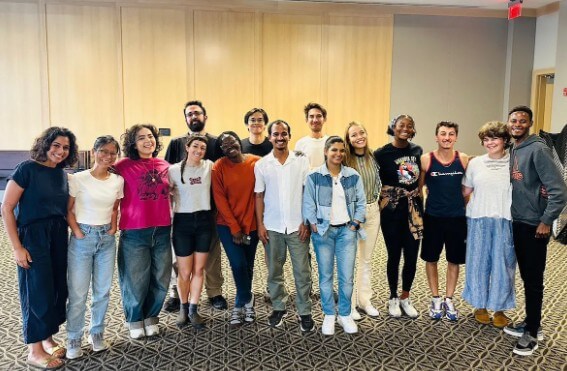
Living here has taught me to adapt without losing myself, to listen without agreeing, and to educate without preaching. It taught me how peace begins in conversations that are awkward, surprising and sometimes even uncomfortable. This kind of peacebuilding is hard. But it's also real! I realized the Notre Dame bubble wasn't a shelter from reality; it was a seedbed. And now, in California, it's my turn to carry the spirit of that bubble into the everyday chaos of the real world.
This journey from Balochistan to Notre Dame and now to California has reshaped how I think about peacebuilding. It has reminded me that real peace work happens not just in classrooms or institutions, but in conversations, in courage, in discomfort, in being curious rather than dismissive. So, I ask you: What does peacebuilding look like in your everyday life in your workplace, your conversations, your silences?
I have learned that peacebuilding is not a job title; it's a way of being. Even when it feels like those around you don't care about peace, you can choose to carry it within you.
Rida Ejaz is a master of global affairs student at the Keough School of Global Affairs majoring in international peace studies. As part of her field placement she volunteered in Southern California with IslamiCity, a global Muslim online community, where she led an AI ethics research initiative focused on ChatILM.ai, the only Islamic faith-aligned chatbot developed in the U.S. She currently is interning as a policy and advocacy assistant at the Alliance for Peacebuilding in Washington D.C.


 Uzbekistan’s Global Vision: Advancing Human Dignity, Regional Cooperation...