
IslamiCity
Listen PodCasts, Live Quran, Watch Videos @VideoHub

The last century of the Muslim world has been a story of not just territorial loss, but the occupation of the mind and identity of the Ummah. From Eastern Turkistan to Sudan to Yemen, the forces that shaped our modern reality were not only external-they infiltrated the very way Muslims viewed themselves, their religion, and their history.
Western powers did more than conquer lands; they sought to dominate the Muslim mind. They weren't merely content with the eventual fall of the Ottoman state-they feared its resurgence. To preempt this, they promoted narratives and policies that led Muslims to censor their own scripture, undermine their heritage, and question the legitimacy of institutions like the Ottoman Empire. Today, some even measure modern Muslim states against the standards of Ottoman governance-and invariably find them lacking.
The example of Muhammad Ali Pasha in Egypt illustrates how modernization was used as a tool to weaken Islamic governance. By opening the first Western consulate in Jerusalem and implementing Tanzimat-inspired reforms, the Ottomans were pressured to adopt Western systems. Reforms were justified as necessary "modernization," but in reality, they shifted power away from Sharia-centered governance toward a secular, costly, and ultimately dysfunctional system.
The Ottoman Millet system, which allowed religious communities to govern their own affairs-marriage, inheritance, courts-was revolutionary in its fairness and effectiveness. Yet, the Tanzimat reforms disrupted it, forcing expensive parallel legal systems and upsetting the delicate balance that had lasted centuries. What was once a thriving and stable system became fragmented, paving the way for foreign influence and internal dissent.
Sultan Abdul Hamid II recognized the dangers of these shifts and sought to preserve the unity of the Ummah through Islam. His vision extended far beyond the Ottoman heartlands-from Thailand to London-using projects like the Hejaz railway to connect the Islamic world spiritually and practically. Yet, even his efforts were undermined by nationalist movements, which pushed for ethnically defined states rather than a unified Ummah.
Abdul Hamid's resistance to Zionist and nationalist pressures demonstrates a strategic understanding: Palestine's security was intertwined with the unity of the Muslim world. By blocking Jewish immigration and opposing nationalist agendas, he sought to protect the sacred lands and maintain a broader Islamic identity.
The seeds of Arab nationalism, encouraged by British and Western interests, further fractured the Ummah. Letters and propaganda urged local leaders to reject Ottoman authority, painting the Turks as outsiders and rallying support for new nation-states. These manipulations exploited religious and ethnic differences, undermining centuries of Muslim governance and solidarity.
By turning communities against the Ottoman state, colonial powers created an enduring legacy: a fragmented Ummah struggling with internal divisions while external powers continue to dictate political and social outcomes.
The story of the last century is a cautionary tale: losing land is only part of the struggle; losing identity and unity is far more consequential. Activism today is not just about resisting occupation or injustice-it is about reclaiming the intellectual, spiritual, and cultural integrity of the Ummah.
The faults of the modern world order have been exposed. History shows us that creating a new, just, and equitable order is possible if the Ummah collectively engages with its principles, heritage, and responsibility. From Eastern Turkistan to Sudan to Yemen, the lesson is clear: the liberation of lands and hearts must go hand in hand.


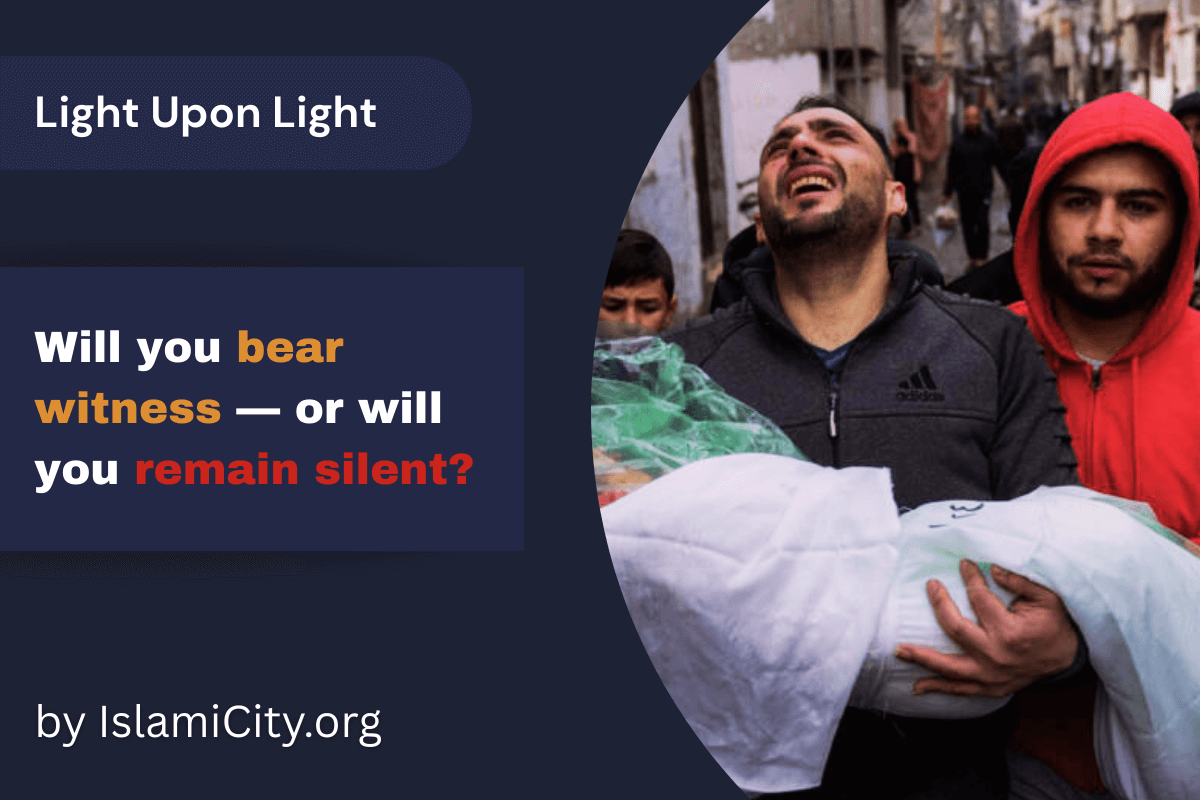 Will You Bear Witness — Or Will You Remain Silent - Light Upon Light by I...