
IslamiCity
Listen PodCasts, Live Quran, Watch Videos @VideoHub

Across the world, universities have long been driven by a predominant goal, that is to produce graduates who are ready for the workforce. Teaching and learning processes are geared toward measurable learning outcomes, mainly the job skills, competencies, and attributes aligned with employability. While this focus has value, it also reveals a critical blind spot, in that it only stands as an education designed primarily to serve the economy and often neglects the deeper human need to become whole, relational, ethical, and reflective individuals. Preparing students to function as workers is not the same as preparing them to thrive as human beings who can relate meaningfully with others, act responsibly toward their environment, and live with inner balance and purpose.
For decades, many universities have centered their mission on producing graduates who are "workforce-ready." Curricula, assessments, and learning outcomes largely emphasize work skills, job competencies, and attributes aligned with economic demands. While this approach has material value, it reveals a deeper concern, that the education system has become focused on economic survival rather than insaniyyah (human wholeness). As a result, it risks neglecting the development of individuals as ethical, reflective, and relational servants of God who capable of contributing to social harmony and moral upliftment.
In Islam, education (tarbiyah) is not merely the transfer of skills, but the cultivation of the human soul, referred to as edification. It entails the process of nurturing individuals to become accountable beings who understand their purpose, that is to know God, to act with justice, and to serve creation. Preparing students to function as workers is not the same as preparing them to live purposefully, relate with compassion, and make decisions grounded in values and divine accountability.
Thus, humanity-centric education becomes not only a global necessity, but a duty. It does not reject job skills, but recognizes their insufficiency when detached from moral character, empathy, and moral intelligence. Without this balance, societies face rising workplace conflicts, spiritual emptiness, mental health struggles, and the erosion of compassion, all are the signs of what the Qur'an calls fasad (corruption) that results when knowledge is divorced from ethics.

In her conceptual framing for the Global Academic Leadership Excellence Programme (GALEP 2.0), Academician Prof. Emerita Datuk Dr. Asma Ismail highlights the need for universities to equip graduates not only to do work, but to serve humanity responsibly. She emphasizes that in an era of lifelong learning, micro-credentials, and deep industry-education integration, technical competencies alone cannot sustain societies. Instead, universities must cultivate values-based competencies rooted in ethical judgment, systems thinking, empathy, creativity, resilience, and global awareness.
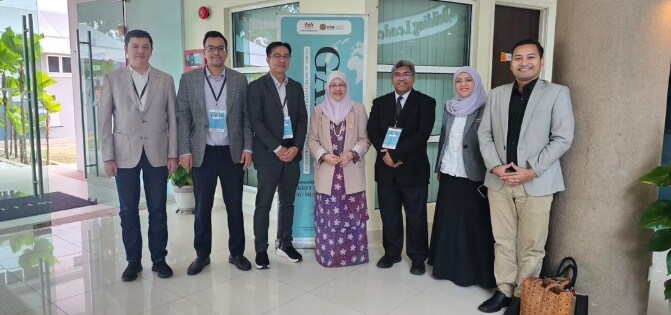
As higher education undergoes profound and rapid transformation, lifelong learning is becoming the norm, evolving in tandem with shifting career landscapes. At the same time, flexible and personalized pathways, such as micro-credentials, are reshaping how learning is designed, accessed, and recognized. Education is becoming modular, stackable, and portable, transcending institutional and national boundaries. There is also increasing fusion between learning and work, where industry engagement is no longer an option but a structural reality. These changes require universities to not only modify curricula, but to rethink the philosophy of education itself, to ensure that despite the change in the mode of learning, the content and outcome of it is still in line with the aim to nurture humanity-centric individuals, who possess wisdom), balance, and excellence personality attributes. Stated another way, even as modes of learning evolve, the content and outcomes must remain aligned with the higher purpose of nurturing humanity-centric individuals, who embody positive and productive characters.
Prof. Asma argues that job competencies, while still necessary, are no longer sufficient in a world shaped by volatility and complexity. Future graduates must be equipped with critical and systems thinking, creativity, adaptability, ethical judgment, empathy, resilience, and cultural as well as global awareness. These are not merely workplace skills as they are life-enabling virtues that allow individuals to become ethical leaders, responsible citizens, and compassionate human beings, in line with the Islamic worldview of humans as khulafa' (vicegerents) on earth.
In responding to the current transformative era, higher education leadership must become visionary, ethical, and collaborative. higher education leaders must be capable of anticipating change rather than simply reacting to it. They must engage in cross-border collaboration and knowledge sharing, leveraging networks like GALEP for collective benefit. Leadership must move beyond personal and institutional interests, embracing a mindset that prioritizes societal well-being, national development, and global good. This is deeply aligned with the Islamic concept of leadership as amanah (trust), grounded in service, justice, and moral responsibility.
Another essential dimension is the alignment of higher education strategies with national governance and policy frameworks. The Malaysian Higher Education Blueprint, for example, shows how a country can shape long-term educational transformation through innovation, collaboration, and values-based leadership. Young academic leaders must therefore study their own governance structures, understand policy ecosystems, and appreciate how national agendas shape institutional practice. Engaging in policy reflection and dialogue becomes necessary for transformation that is both structurally sound and ethically guided.
Although many of Prof. Asma's examples are drawn from Malaysia, the principles she outlines are universal. They apply to diverse systems, whether in ASEAN, OIC regions, Africa, Europe, or the Middle East. Each society faces its own challenges, yet all share a common need, that is to cultivate a humanity-centric education system that nurtures ethical, holistic, values-driven graduates. Curriculum transformation is central to this vision. To remain relevant and meaningful, curricula must be reimagined to integrate interdisciplinary and experiential learning, embed ethics and moral reasoning, embrace technological and digital literacy, strengthen systems thinking and problem-solving, and deepen partnerships with industry and communities. This ensures that graduates are not only employable but equipped to navigate complexity and contribute meaningfully to the world. Importantly, this resonates with classical Islamic educational philosophy, which never separated knowledge from ethics, intellect from spirituality, or learning from social responsibility.
The leadership model needed for such a paradigm shift emphasizes long-term institutional and societal futures rather than short-term gains. Decisions must be guided by moral clarity, ethical responsibility, and collective benefit. Leaders must cultivate collaboration, innovation, and global connectivity, while nurturing resilience, adaptability, and lifelong learning among students and educators.
Young academic leaders therefore play a pivotal role. They must be equipped with knowledge of global higher education trends, the ability to navigate complex leadership challenges, the values to lead with humility and integrity, and the vision to pursue transformations that are profound, meaningful, and sustainable.
Ultimately, the transformation of higher education requires more than structural reform. It calls for a fundamental reorientation of purpose, from producing graduates who are merely job-ready, to cultivating morally grounded, values-driven, humanity-centered individuals capable of shaping a better future. This shift requires systems thinking, ethical grounding, visionary leadership, global connectivity, and curriculum reform rooted in meaning and societal good. Graduates of the future must be competent and compassionate, skilled and spiritually anchored, employable and accountable to Allah. This is the true purpose of education in the Islamic tradition which does not only aim to develop minds, but to form souls upon truth, justice, and mercy.
Shukran Abd Rahman is a Professor of Industrial and Organisational Psychology at the Department of Psychology, AbdulHamid AbuSulayman Kulliyyah of Islamic Revealed Knowledge and Human Sciences, International Islamic University Malaysia.
 University Uprising for Gaza


