
IslamiCity
Listen PodCasts, Live Quran, Watch Videos @VideoHub

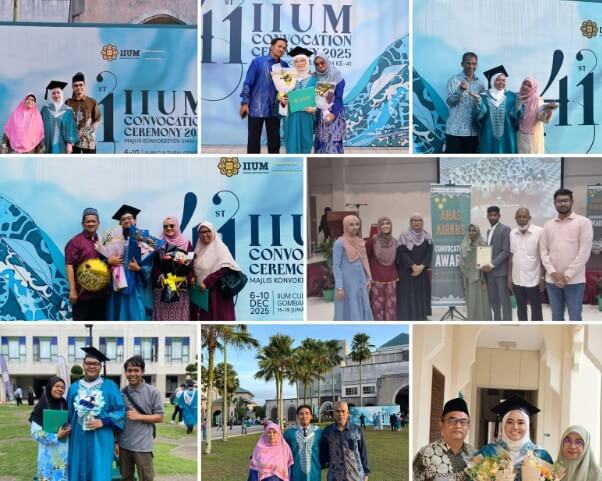
The air inside the hall is thick with a specific kind of electricity, the hum of anticipation, the rustle of synthetic robes, and the murmur of thousands of hushed conversations. It is convocation day.
For the students seated in neat, endless rows, this moment is the culmination of many long years. It is the finish line of a marathon run on caffeine, anxiety, and determination. They sit there, adjusting their mortarboards, thinking back to the tears shed over impossible deadlines, the sweat of rushing to morning lectures, and the duas whispered before final exams. Today, the struggle is validated. Today, they are champions.
As I look around the hall, my gaze settles on the audience. I see the faces of parents, grandparents, and siblings. I see a father wiping a tear with the back of his rough hand; I see a mother beaming, her phone raised high to capture a blurry photo of a child she once rocked to sleep. Their pride is palpable. It is a time of joyous celebration, a tangible tribute to their hard work and sacrifice.
But as the ceremony begins, and the first name is called to thunderous applause, the scene before me begins to blur. The pomp and pageantry of this worldly ceremony fade slightly, overlaid by a heavier, more profound realisation. As I watch a young graduate grasp their scroll with a beaming smile, I cannot help but recall the stirring verses of Surah Al-Haqqah.
I watch a student walk off the stage, beaming at their parents, holding their scroll aloft. It brings to mind verses 19-20 from Surah Al-Haqqah. The Qur'an tells us of a strikingly similar scene where the joy of success cannot be contained:
"As for those given their records in their right hand, they will cry happily, 'Here everyone! Read my record! I surely knew I would face my reckoning.'"
The parallel shakes me. On that Day, the Day of Judgment, there will be those who step forward with that same radiant joy but magnified infinitely. They will not be holding a degree in Human Sciences or Islamic Studies; they will be holding the record of their life.
Imagine the scene. Just as these graduates want their parents to see their success, the believer on that Day will want the entire assembly of humanity to witness their triumph. "Read my record!" they will call out. They will not hide their book; they will proudly display it.
Why? Because the book is filled with tears and sweat of a different kind. It records the fajr salah performed while the world slept. It records the charity given when money was tight. It records the anger swallowed, the forgiveness granted, and the sins resisted. Just as the graduate knew this day would come and prepared for it with due diligence, the believer says, "I surely knew I would face my reckoning." They prepared. They studied the revelation. They passed the test.
But on the Day of Judgment, no one is absent. Everyone must attend the Convocation of the Divine.
I think of the verse that follows, the terrifying counter-narrative to the joy of the right hand:
"And as for those given their record in their left hand, they will cry bitterly, 'I wish I had not been given my record, nor known anything of my reckoning!'" (Surah Al-Haqqah, 25-26)
The contrast is shattering. While the graduate in the dunya raises their scroll, wishing to be seen, the doomed soul in the akhirah wishes to be invisible. Ya laytani, "Oh, if only!"
They will look at their book and see a transcript they cannot deny. Instead of credits earned, they will see salah missed. Instead of assignments submitted, they will see trusts betrayed. The tragedy is not just the punishment; it is the sheer regret. The realisation that the semester is over, the exam is finished, and there are no re-sits. The wish to have never been given the book at all is a wish for non-existence, a desire to escape the crushing weight of absolute accountability.
But the heavenly record is meticulous. The Qur'an reminds us of the absolute precision of that accounting in Surah Az-Zalzalah:
"So whoever does an atom's weight of good will see it, and whoever does an atom's weight of evil will see it." (Surah Az-Zalzalah, 99:7-8)
This is where the ultimate criterion of our lives comes into play: ikhlas (sincerity).
The Prophet (ﷺ) articulated this foundational principle in an authentic narration:
"Verily, actions are but by intentions, and every person shall have only that which he intended." (Sahih al-Bukhari and Muslim)
This is the key differentiation. A student might graduate with First Class Honours to please their parents or to secure a high-paying job. That is a valid worldly motivation. But in the spiritual realm, intention is the ink with which our book is written. If we prayed only to be seen as pious, the page remains blank. If we gave charity only to be thanked, the credit is void.
I realise that we are all still students. The semester of life is currently in session. Our book is currently still being written. We still have time to edit our chapters, to erase sins with repentance, and to fill the margins with good deeds.
My heart settles on one of the supplications most frequently recited by The Prophet (ﷺ), a perfect dua for the duality of our existence. We do not need to shun the world to win the hereafter. We ask Allah for the best of both. As the graduates hug their parents, I whisper the dua for us all, for the students of knowledge and the students of life:
رَبَّنَا آتِنَا فِي الدُّنْيَا حَسَنَةً وَفِي الآخِرَةِ حَسَنَةً وَقِنَا عَذَابَ النَّارِ
"Our Lord! Give us in this world that which is good and in the Hereafter that which is good, and save us from the torment of the Fire." (Surah Al-Baqarah, 2:201)
May we all receive our books in our right hands. May our final graduation be one of eternal joy. And may we say, on that Day, to our loved ones and to the beloved Prophet (ﷺ) : "Here! Read my record! I knew this day would come."
Rabiah Tul Adawiyah Mohamed Salleh is Associate Professor of Linguistics at AHAS KIRKHS, International Islamic University Malaysia. Her work centres on language, faith, and identity, and engages critically with the decolonisation of knowledge in linguistic scholarship.
 Faith in Action: Educating for Peace, Justice, and Human Dignity


