
IslamiCity
Listen PodCasts, Live Quran, Watch Videos @VideoHub

On December 18, 2025 in a major policy change President Donald Trump signed an executive order that will expand access to cannabis. The move was long anticipated and would mark the most significant shift in US drug policy. The order directed the U.S. attorney general to reclassify cannabis from a Schedule I narcotic to Schedule III narcotic placing it under the same category as Tylenol and anabolic steroids.
Speaking in the Oval Office during the signing ceremony, Trump said that people have been "begging" for the change, particularly those in "great pain" from ailments including "incurable pain", cancer, seizure disorders and veterans with service-related injuries.
Before this in April 2024 during the Biden administration, the Department of Justice initiated a process to reschedule cannabis to the less-restrictive Schedule III. The Trump executive order expedited the process of rescheduling, a long anticipated move that marked the most significant shift in US drug policy in decades. The order directed the US attorney general to reclassify cannabis from a Schedule 1 narcotic, to a Schedule III drug - placing it under the same category as Tylenol with codeine. Cannabis will remain illegal at the federal level, but classifying it as a Schedule III narcotic would allow expanded research into its potential benefits.
Several Republican lawmakers cautioned against the move, with some arguing it could normalize cannabis use. The president compared cannabis to prescription painkillers that have legitimate uses "but can also do irreversible damages."
Cannabis plants have been grown since the 3rd millennium BCE, and it has been subject to legal restrictions since the 14th century. The possession, use, and cultivation of cannabis is illegal in most countries since the 20th century. Uruguay became the first country to legalize the recreational use of cannabis In 2013. Other countries to do so are Canada, Georgia, Germany, Luxembourg, Malta, South Africa, and Thailand. In the U.S., the recreational use of cannabis is legalized in 24 states, 3 territories and the District of Columbia. In Australia, it is legalized only in the Australian Capital Territory.
The medical use of cannabis is legal with a medical recommendation in 40 states, four out of five permanently inhabited U.S. territories, and the federal District of Columbia. Ten other states have laws that limit the psychoactive compound tetrahydrocannabinol, and allow access to products rich in a non-intoxicating component of cannabis.
The recreational use of cannabis is legal in 24 states, three U.S. territories, and the District of Columbia. Another seven states have decriminalized its use.
It's Illegal to Transport Cannabis Across State Lines. Cannabis is a Schedule I controlled substance, meaning that under current federal law, it's illegal based on its classification as a drug with a high potential for abuse and lacking accepted medical use. Individuals or businesses transporting marijuana across state lines could face federal drug trafficking charges if apprehended by law enforcement. Penalties for this federal crime include significant jail time and fines.
The severe penalties apply even if a cannabis business is legally licensed in two states and simply wants to ship its cannabis products from one legal state to another. Whether shipping between far-away states like Oregon and Massachusetts or neighboring states such as New Mexico and Colorado or Arizona and California, it would violate federal laws to ship any amount of cannabis product interstate.
The new classification also has tax amplifications for state-authorized cannabis dispensaries, as current regulations bar them from tax deductions.
Trump's order is puzzling because government agencies including the primary watchdog, the Centers for Decease Control and Prevention classify it illegal.
Since 1960s Native American self- determination movements have resulted in positive changes in the lives of Native Americans. The population of Native Americans in the U.S. is estimated between 3.1 million and 8.7 million, of which 20% live in Alaska Native villages.
White Americans are the majority in every census-defined region (Northeast, Midwest, South, and West) and 44 out of 50 states, except Hawaii, California, Texas, New Mexico, Nevada, and Maryland. Those identifying as white alone or in combination (including multiracial white Americans) are the majority in every state except for Hawaii and California.
The region with the highest proportion of White Americans is the Midwest, at 74.6% per cent followed by the Northeast at 64%. Non-Hispanic whites make up 73% of the Midwest's population, and 62% of the Northeast. The US regions with the smallest share of White Americans are the West with 51.9% and the South with 57.7%. Non-Hispanic whites are a minority in the West with 47.1%. In the South, non-Hispanic whites make up 54% of the population.
Throughout the 17th and 18th centuries, European and American slave merchants purchased enslaved Africans who were transported to the Americas and forced into slavery in the American colonies and exploited to work in the plantations for production of crops such as tobacco, wheat, rice, sugar and cotton. This brutal system forcibly brought millions of Africans, and established a legacy that profoundly shaped American future history. Enslaved people organized rebellions alongside an abolitionist movement.
Currently 55% of African American population lives in the South. A majority of other official groups reside in the West, which is home to 42%of Hispanics and Latin Americans and 46% of Asian Americans.
By 2100, the U.S. population is expected to stabilize, grow moderately, or decline depending heavily on future immigration levels with a future that is also expected to be more diverse.
U.S. Census projections indicate that the non-Hispanic withe people will become a minority below 50% of the total population around the year 2045, with some estimates placing it slightly earlier or later, driven by higher growth among racial and ethnic minorities and an aging population with fewer births than deaths. By 2020, white children were already a minority, and this demographic shift towards a "majority-minority" nation is expected to become fully realized by mid-century.
The U.S. also admits a limited number of people through temporary work visas. There is a strong demand for visa for highly skilled workers, which many immigrant workers rely on while they wait for an immigrant visa to become available.
Asylum seekers are individuals already present in the United States who apply for protection from within the United States. There is no cap on the number of asylum seekers who may be approved each year.
The playbook includes Border Patrol, ICE, and other feds going through areas where they think immigrant are living and working, and arresting or pulling over anyone they seem like looks undocumented. The Trump administration has argued in court - and the supreme court agreed -that they should be able to stop someone based on whether they seem like they're undocumented, including considering their race.
Individuals from seven countries will not be able to travel to the United States starting Thursday, according to updated CBP guidance obtained by ABC News.
ABC news on December 31, 2025 reported that earlier this year President Donald Trump signed executive orders limiting travel from Burkina Faso, Laos, Mali, Niger, Sierra Leone, South Sudan and Syria -- with those restrictions now going into effect Jan. 1, 2026. This applies to both immigrants and nonimmigrants, according to the CBO document dated Dec. 29, 2025.
The travel ban continues restrictions on those from Afghanistan; Burma (Myanmar); Chad; Republic of the Congo; Equatorial Guinea; Eritrea; Haiti; Iran; Libya; Somalia; Sudan; Yemen from entering into the United States. There are also partial travel restrictions on people from Venezuela and Cuba, according to the document. It comes amid new restrictions on H1-B visas taking effect earlier this week.
President imposed immigration restrictions despite the fact that his parents immigrated from Scotland and his wife Melania Trump is an immigrant from Slovania.
Immigration is vital to the U.S. because it drives economic growth, fills essential labor gaps, boosts innovation, strengthens social programs like social security, and supports population growth. Immigrants start businesses at high rates, pay significant taxes, and fill crucial roles in sectors from healthcare to technology, all the while contributing to a more dynamic and competitive nation.
Without immigration, the US would face shrinking population, slower economic growth significant labor shortages ( especially in essential sectors like agriculture, construction and healthcare0 increased strain on social security/Medicare as the workforce ages. Essentially, economies would contract, innovation would slow and demographic imbalance would worsen as immigrants often fill crucial jobs. In essence, without immigration, the US would be a world less vibrant, smaller economy struggling to support aging population and maintain current levels of innovation and services.
An article in the Forbes reported that immigrants will be America's only source of labor force growth in the economy after 2052 according to National Foundation for American Policy. Long before then, the number of Americans of prime working age will stagnate, and U.S. economic and living standards will languish without immigrants entering the the U.S. labor force.
Immigrant workers play a key role in the U.S. labor force, Americans are getting older and with the U.S. born population aging and growing slower, immigrants have become an essential part of American labor force growth.
American Immigration Council on February 25, 2025 reported new data: Immigrants keep economy strong, as congress considers wasting billions on mass deportation. New data analysis shows how immigrants are contributing billions of dollars to the U.S. economy, even as the Trump administration and Congress are pushing for a budget that includes unprecedented funding for mass detention and deportation. Immigrants are helping make the United States a more prosperous and thriving country: by building housing wealth, keeping social services like Social Security and Medicare solvent, and filling in as a much-needed labor force in sector like STEM, healthcare, and agriculture.
The Immigration Council included three areas as top findings as briefly discussed in the following:


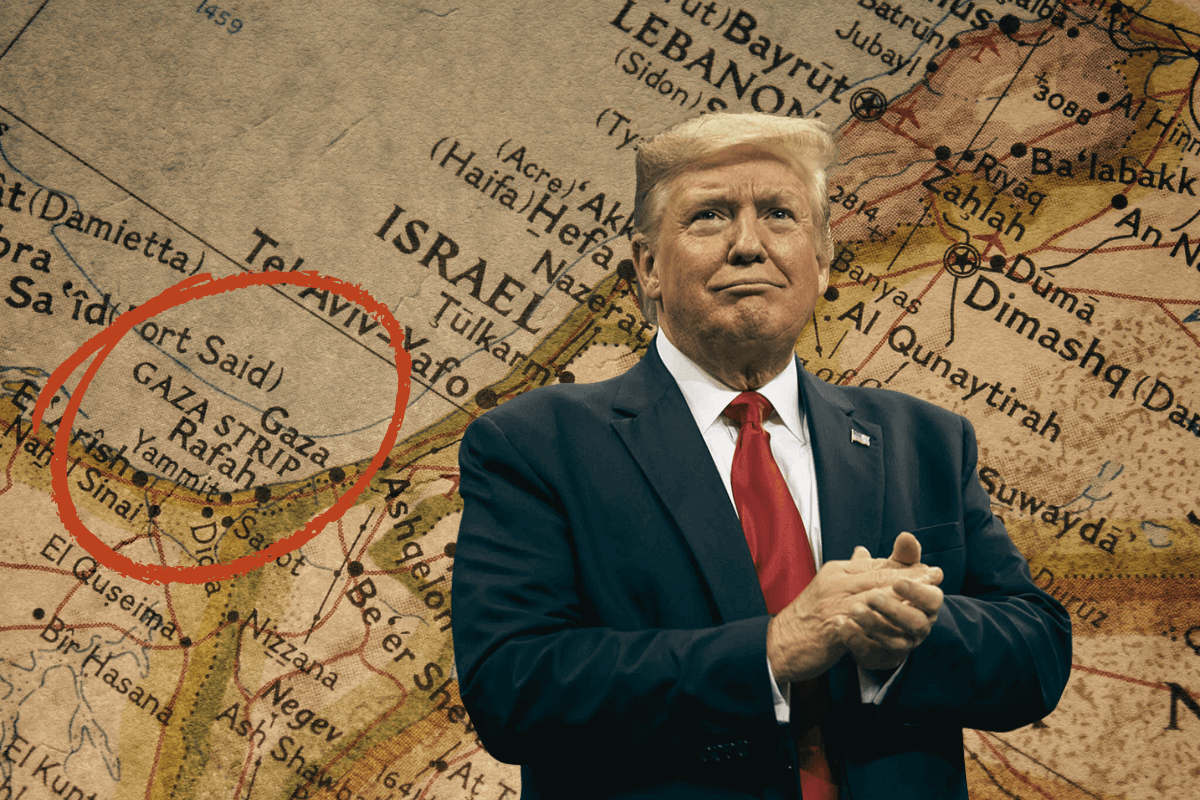 Trump Takes the Lead on Gaza – But Excludes Hamas, Raising Eyebrows