IslamiCity
Listen PodCasts, Live Quran, Watch Videos @VideoHub

For years, U.S. policy toward Venezuela has been wrapped in the language of democracy and human rights. Elections were denounced, sanctions imposed, and pressure justified as moral duty.
Yet the recent rupture in Venezuela has stripped away that comforting narrative. What has become clear-again-is that Venezuela has never been only about democracy. It has always been about power.
At the center of Washington's interest lies oil. Venezuela holds some of the world's largest proven petroleum reserves, and even in decline its crude remains strategically valuable. Decisions on sanctions licensing, waivers, and enforcement are not symbolic gestures; they determine who controls revenue, which markets stabilize, and which geopolitical actors gain leverage. Energy security, not idealism, remains the quiet driver beneath policy rhetoric.
Venezuela is also a geopolitical pressure point. For years, China, Russia, and Iran used Caracas as a foothold in the Western Hemisphere-through loans, security cooperation, and sanction-evasion networks. Any political shift in Venezuela therefore reverberates far beyond Latin America. A realignment in Caracas alters bargaining power in Beijing, Moscow, and Tehran. This is why Venezuela repeatedly resurfaces in U.S. strategic thinking even when other crises dominate headlines.
Migration has further transformed Venezuela policy into a domestic U.S. issue. Hundreds of thousands of Venezuelans now live in the United States under humanitarian protections administered by the Department of Homeland Security. Their ability to work and remain in the country depends on Washington's decisions. As a result, Venezuela is no longer a distant foreign problem-it shapes labor markets, housing pressures, and electoral politics at home, particularly in states like Florida and Texas.
The Venezuelan diaspora has thus emerged as a powerful, if uneven, political actor. Though not numerically dominant, it is geographically concentrated and institutionally connected. Business networks, advocacy groups, donors, and media voices are structurally closer to U.S. policymakers than civil actors inside Venezuela, who operate under repression and institutional collapse. This has shifted the center of influence away from Caracas and toward Washington.
Religion adds another layer. Venezuela remains overwhelmingly Christian, and diaspora politics often draw on moral language-freedom versus tyranny, dignity versus corruption. This framing resonates deeply in U.S. political culture. Yet moral clarity can also narrow policy choices. When politics becomes a moral crusade, compromise is dismissed as betrayal, even when it might reduce suffering or stabilize institutions.
The global consequences are significant. International law and sovereignty debates have intensified, with allies as well as adversaries questioning precedent. Latin American governments are caught between opposing authoritarianism and fearing the normalization of unilateral intervention. Energy markets brace for sudden shifts in enforcement and supply.
The Venezuela crisis thus marks the end of illusions. It reveals how democracy rhetoric often masks harder interests, how diaspora communities can wield power without territory, and how global order increasingly operates in the gray space between law and force. What happens next will not only shape Venezuela's future-it will signal to the world whether rules still constrain power, or merely follow it.
The majority of Venezuelan Muslims trace their roots to Arab migration-especially from Lebanon, Syria, and Palestine-dating back to the late 19th and early 20th centuries. Smaller communities include migrants from South Asia (India, Pakistan) and North Africa, as well as Venezuelan converts. Most Muslims are Sunni, with small Shiʿa communities.
Muslims are concentrated in major urban and commercial centers of Caracas, Maracaibo, Valencia, and Puerto La Cruz / Barcelona. These cities host mosques, Islamic centers, and halal businesses.
Venezuela has dozens of mosques and Islamic centers, including prominent ones in Caracas and Maracaibo. Muslim organizations focus on religious education, charity, and cultural preservation rather than overt political mobilization. The community is widely regarded as law-abiding, economically active, and socially integrated, particularly in trade and small-to-medium enterprises.
Muslims in Venezuela have generally avoided high-profile political confrontation and have not been central actors in regime-opposition struggles. Unlike in some countries, Islam has not been a major political fault line in Venezuelan society. During the economic collapse, many Muslim families-like other middle-class Venezuelans-emigrated, joining diaspora communities in the U.S., Latin America, and Europe.
In the Venezuelan diaspora-especially in the United States-Muslims remain a minority within a minority. Venezuelan-American political advocacy is overwhelmingly shaped by Christian (Catholic and evangelical) networks, not Muslim institutions. This matters when analyzing lobbying power and moral framing in U.S. debates about Venezuela.
Muslims in Venezuela form a small, historically rooted, largely Arab-descended community that has played a quite economic and cultural role, not a dominant political one. Their limited numbers mean they are not a major driver of Venezuelan domestic politics or U.S.-based Venezuelan lobbying-but they are part of the country's plural social fabric and its global diaspora story.
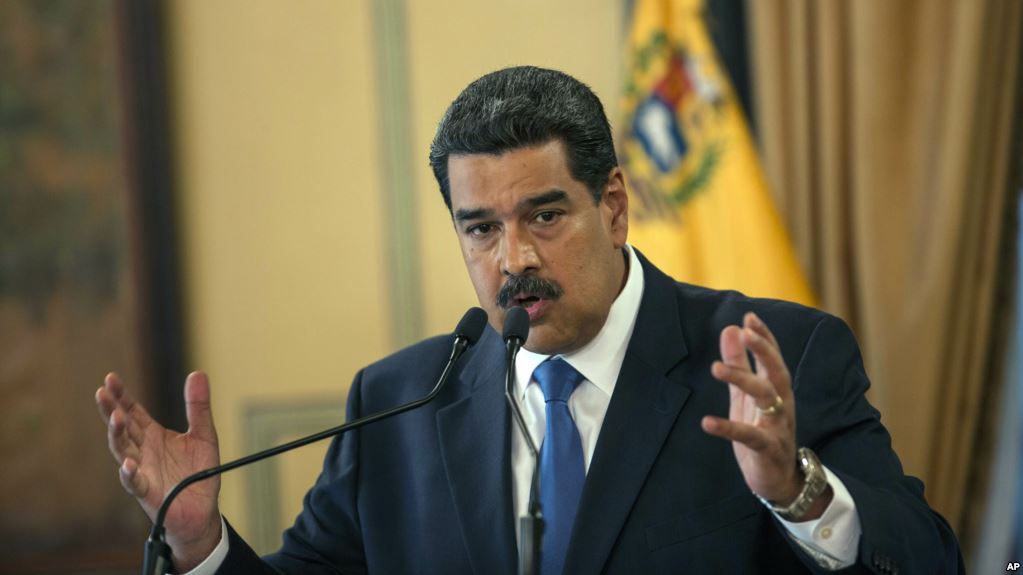 Gaza Rallies for Caracas: On the West’s Dangerous Game


