
IslamiCity
Listen PodCasts, Live Quran, Watch Videos @VideoHub

Every age meets knowledge through the instruments it forges. Clay tablets once frightened those who trusted memory alone; parchment unsettled those who feared that wisdom, once written, would lose its soul; the printing press was denounced for loosening the grip of scholars over sacred texts. Each time, the anxiety was not about ink or paper, but about who would now be allowed to ask questions.
Artificial Intelligence arrives in our time as another such mirror-vast, fast, and unsettling. It gathers fragments of human thought, arranges them into language, and returns them to us with unsettling ease. And so, the old fear returns, dressed in new terms: What if it misguides? What if it speaks falsely? What if it is trusted where only scholars should speak?
These concerns are not without sincerity. Truth has always been fragile in careless hands. Yet sincerity alone does not make an argument sound, and caution, when stretched beyond reason, becomes its own form of injustice.
The mistake lies in a quiet confusion: a tool has been mistaken for an authority. Artificial Intelligence does not claim knowledge; it claims no piety, no lineage, no ijtihād. It does not issue verdicts, nor does it swear by God. It retrieves, compares, synthesizes, and speaks only because it has been asked to speak. To fear it as a muftī is to fear a book for writing words, or a library for holding many voices at once.
Classical scholars, whose caution is often invoked against AI, lived amid far more treacherous landscapes of knowledge than ours. Manuscripts were copied by tired hands, texts were abridged without warning, attributions shifted with generations, and false narrations traveled faster than correction. Yet the scholars did not burn books because some were flawed. They trained minds instead-teaching how to weigh, compare, verify, and doubt responsibly.
They read what they disagreed with. They studied what they rejected. They sharpened their intellects against error, not by fleeing it, but by recognizing it.
If the mere possibility of error were sufficient cause for prohibition, then no human voice could be trusted. Scholars err-sometimes innocently, sometimes tragically, sometimes in the service of power. History records not only mistaken fatwas, but cruel ones, delivered with confidence and defended with eloquence. Yet Islam never responded by silencing scholars. It responded by demanding evidence, accountability, and reason.
Ironically, when used with discipline, AI can expose the very distortions it is accused of spreading. It can place interpretations side by side, reveal disagreement where certainty was falsely claimed, and return neglected voices to the conversation. It does not enforce a school, a sect, or a temperament. It mirrors what exists-and mirrors, by their nature, make people uneasy.
The Qur'an never feared questions. It feared arrogance, negligence, and the refusal to think. Again and again, it asks not for obedience without understanding, but for reflection: Will you not reason? Will you not consider?
To warn against blind reliance on any source-including AI-is wise. To demand verification is ethical. But to discourage engagement altogether is to confuse protection with paralysis. Knowledge has never been preserved by locking doors; it has been preserved by teaching people how to walk carefully through open ones.
Artificial Intelligence is not a guide, nor a guardian of truth. It is a lens-wide, imperfect, and shaped by those who look through it. The responsibility therefore remains where it has always been: with the human conscience. Tools do not corrupt belief. Untrained judgment does.
And so, the task before us is not to fear new mirrors, but to teach ourselves-and our communities-how to look into them without losing our moral balance. The future of faith has never depended on fewer questions, but on better ones.
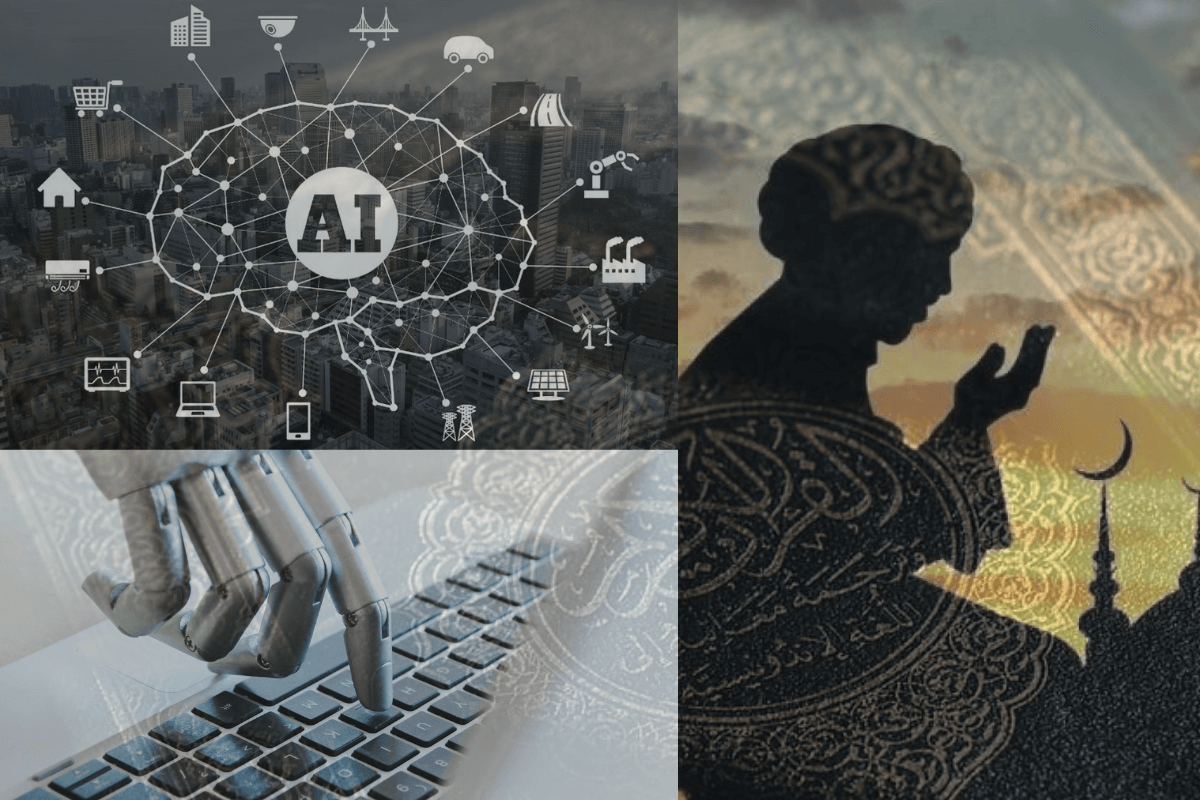 AI and Islam: Navigating the Path Between Progress and Ethics


