
IslamiCity
Listen PodCasts, Live Quran, Watch Videos @VideoHub

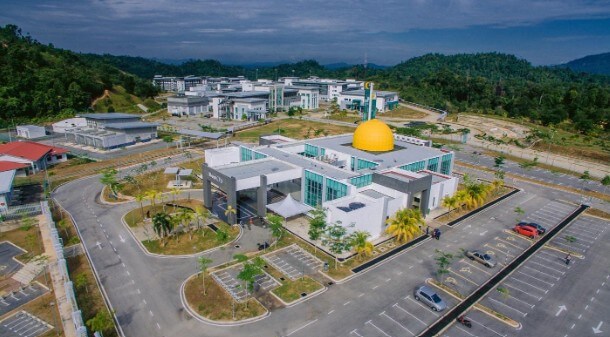
The essential role of foundation studies in shaping the intellectual and moral direction of the university has been strongly underscored by the Rector of the International Islamic University Malaysia (IIUM), Prof. Emeritus Datuk Dr. Osman Bakar, notably in his 2026 New Year Address and reaffirmed during a subsequent workshop with the management and academic leaders of the IIUM Foundation Centre.
On both occasions, he emphasized that foundation studies are not merely a preparatory stage, but the conceptual, philosophical, and epistemological bedrock of the entire university education. This renewed emphasis invites deeper reflection on the meaning of university readiness and the strategic function of foundation programs in cultivating students who are not only academically capable, but also intellectually grounded, ethically oriented, and prepared to engage in higher learning as a civilizational endeavor. The following section recapitulates the main inputs gathered from these two sessions.
By and large, University Readiness refers to the state of intellectual, moral, spiritual, and academic preparedness that enables students to engage meaningfully in university-level learning. It goes beyond basic preparedness in language proficiency, study skills, or subject knowledge. Rather, it encompasses readiness to think in terms of principles, big concepts, and foundations that underlie different fields of knowledge.
More fundamentally, university readiness involves the capacity to unify or integrate different sources of knowledge, to understand the human being holistically (not merely in technical or empirical terms), to situate one's discipline within a broader worldview, and to pursue knowledge as a civilizational and ethical responsibility rather than merely as a means to obtain credentials. In this sense, higher education is not simply about training for employment, but about forming individuals who can contribute meaningfully to society as responsible citizens and builders of civilization.
Some universities, such as the International Islamic University Malaysia (IIUM), articulate this vision through specific philosophical frameworks, for example Tawhidic Epistemology, which emphasises the integration of revelation, reason, and empirical inquiry within a unified worldview. While such frameworks are institution-specific, they illustrate a broader point in that university readiness must be rooted in a coherent philosophy of knowledge and education, rather than confined to technical or procedural competencies alone.
For this reason, the basic conceptual foundations of knowledge must be established early, particularly at the foundation or pre-undergraduate stage. Students need first to acquire the guiding philosophy and worldview of their institution before moving into disciplinary specialization. Without this grounding, higher education risks producing graduates who are technically competent but intellectually disoriented and morally unanchored.
Foundation studies therefore play a decisive role in shaping the quality of the entire academic ecosystem. Undergraduate teaching and learning depend heavily on the conceptual preparedness of students entering degree programs. If the foundation is weak, the entire structure of higher learning is compromised. University readiness, in this sense, ensures that students do not merely "enter" the university, but are prepared to embrace its intellectual, moral, and civilizational missions.
This requires careful curriculum design, thoughtful pedagogy, meaningful classroom engagement, and valid and reliable assessment of knowledge. It also requires the integration of worldview, ethics, and disciplinary perspectives into teaching and learning. In this way, foundation studies serve as the conceptual and philosophical base upon which all subsequent undergraduate learning is built.
University readiness should therefore be cultivated at the earliest stage of university life, that is before disciplinary specialization, before immersion in technical or professional training, and before the fragmentation of knowledge sets in. In other words, readiness must be built first, not repaired later. When foundation studies fulfil this role effectively, many conceptual and philosophical gaps need not be addressed again at the undergraduate level.
This also means that lecturers at the foundation level are not merely content deliverers. They are builders of intellectual and moral foundations. The responsibility for university readiness is thus shared among foundation studies centers, the wider university, and the learners themselves.
Second, conceptual and foundational learning must be prioritized. This involves focusing on principles, big ideas, and fundamental theories across the natural sciences, social sciences, humanities, and related fields, rather than merely on fragmented information or procedural skills.
Third, a philosophical orientation is needed to recover the love of wisdom. Students should be trained to appreciate the philosophical dimensions of knowledge, to seek meaning rather than merely information, and to pursue understanding grounded in truth rather than perpetual doubt or relativism.
Fourth, a holistic understanding of the human being should be cultivated. Education should help students see that the human person is not merely biological or psychological, but also spiritual, moral, intellectual, and social. This anthropological depth is crucial for forming responsible and reflective graduates.
Fifth, worldview integration is necessary to connect ultimate meaning with empirical and social realities. Students should be guided to see how their fields of study relate to larger questions of purpose, value, and responsibility, and how knowledge can be oriented toward the common good rather than fragmented or purely instrumental ends.
Finally, curriculum and pedagogical alignment must ensure coherence between foundation studies and undergraduate programs. When this alignment is achieved, students leave the foundation stage with strong conceptual foundations, clear intellectual orientation, and a developing sense of moral and civilizational purpose.
Shukran Abd Rahman is a professor of Industrial and Organisational Psychology in the Department of Psychology, AbdulHamid AbuSulayman Kulliyyah of Islamic Revealed Knowledge and Human Sciences, International Islamic University Malaysia. His research areas include career development, change and development of higher education institutions, organizational behavior, academic culture, and employability of students in higher learning institutions.
 Ibn Khaldun: His Life and Works


