
IslamiCity
Listen PodCasts, Live Quran, Watch Videos @VideoHub

On February 16, President Shavkat Mirziyoyev held a meeting dedicated to further strengthening social protection of the needy population during the month of Ramadan. In recent years, large-scale reforms have been consistently implemented in Uzbekistan, aimed at enhancing human dignity, social protection of the population, and building a just society.
As enshrined in the Constitution of Uzbekistan, Uzbekistan, as a social state, considers ensuring the well-being of citizens, supporting the needy, and strengthening the atmosphere of kindness in society to be its priority. These principles are especially evident during the month of Ramadan, and the values of generosity and solidarity are strengthened by practical actions. The President emphasized that during the blessed month, it is a noble value to inquire about the well-being of the needy, lonely, and needy citizens, and to provide practical assistance to families in difficult situations.
The meeting was informed about the complex of measures developed for this purpose under the slogan "Ramadan - the month of kindness, harmony and gratitude." For their implementation, it was decided to allocate 750 billion soums to the "Waqf" charity public fund and 300 billion soums through the National Agency for Social Protection. The allocated funds are intended to provide one-time financial assistance to needy families, cover the costs of treatment and surgical operations for people with disabilities.
At a videoconference meeting held in January of this year, the President noted that various radical and extremist ideas are trying to poison the minds of our youth through information technologies today, and this problem cannot be solved only with punishment and prohibition.
At the same time, the President placed special emphasis on protecting women, who are the mothers of society and educators of the future generation, from the influence of destructive ideas, and supporting them both spiritually and materially. In this process, it was emphasized that it is necessary to socialize, financially support, work individually with their families, provide medical and psychological assistance, and ensure their employment through vocational training.
The President emphasized the need to form a clear and transparent list of needy families in each mahalla, and to provide assistance equally and fairly, regardless of the religion, nationality, and social origin of citizens. The responsible agencies were instructed to establish strict control in this regard.
On February 6 of this year, a meeting of the Fatwa Board under the Organization of Turkic States (OTS) was held in Samarkand. It was decided that the first day of Ramadan in 2026 will fall on Thursday, February 19, and Eid al-Fitr will fall on Friday, March 20. Ramadan is not just a month of fasting. It is a blessed period when intentions are corrected, the heart is purified, and a person rediscovers himself.
If we look at history, Ramadan fasting was made obligatory in 622 AD, two years after the Prophet Muhammad (peace be upon him) migrated from Mecca to Medina, on the 18th day of Sha'ban. Since then, Muslims all over the world have been celebrating it with joy. In particular, Ramadan has been revered as a holy and great month in our country since ancient times. This month holds a special place not only in the religious but also in the spiritual life of our people.
With the arrival of Ramadan, a unique spiritual atmosphere, purity, love and solidarity are formed in the country. Feelings of patience, tolerance and compassion are strengthened among people. Values such as respect for the elderly, honor for the young, and helping those in need are further revived. One of the beautiful traditions of our people is that neighbors, relatives, friends and brothers gather around the iftar table, pray and have spiritual conversations.
During the month of Ramadan, acts of charity are widespread. Under the pretext of charity, alms, zakat, and charitable events, the situation of low-income families, orphans, and the sick is reported. This further strengthens social cohesion in society. Tarawih prayers, recitation of the Quran, and spiritual and educational conversations increase in mosques, calling people to goodness, purity, and honesty.
Ramadan is not only a month of worship, but also a month of education - a time to restrain the ego, abandon bad habits, and strengthen good character. Ramadan is a month of mercy, forgiveness, and salvation (freedom from hell). In its first ten days, Allah's mercy is poured out, in the second ten days, the sins of repentant servants are forgiven, and in the third decade, believers and Muslims are freed from hell.
It was narrated from Salman Al-Farsi (may Allah be pleased with him) that: "The Messenger of Allah ﷺ said: 'It is a month whose beginning is mercy, whose middle is forgiveness, and whose end is freedom from Hellfire.'" These three virtues are among the most important characteristics of the month of Ramadan. Because the great dream of every believer is first to attain the mercy of Allah Almighty, then to be purified from sins, and to be saved from Hellfire and to enter Paradise. Indeed, Ramadan is a month of Allah's mercy and blessings for believers.
Assoc. Prof. Dr. Otabek Mukhammadiev is Deputy Director of Imam Bukhari International Scientific Research Center, Samarkand, Uzbekistan
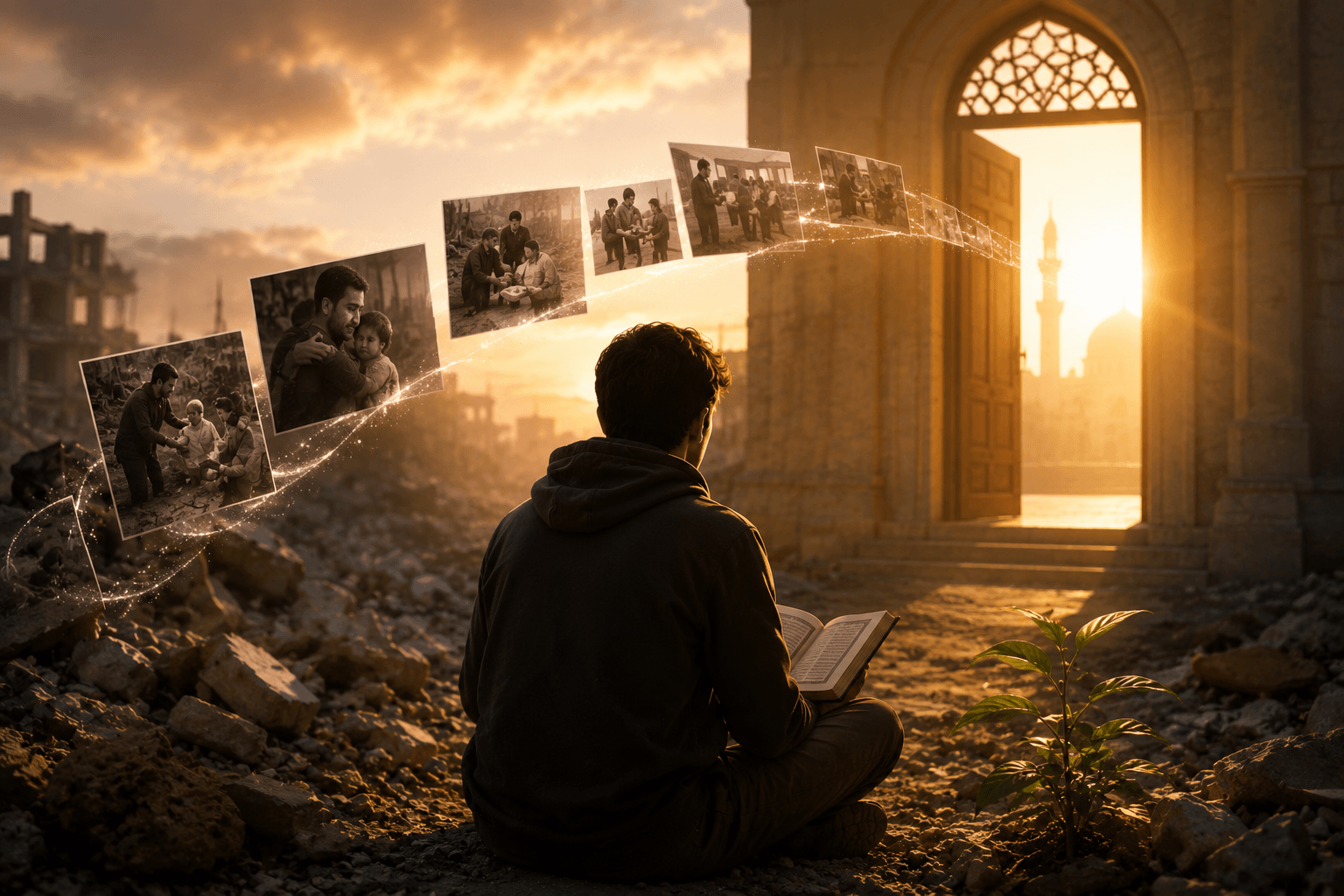 How Compassion During War Has Led Many to Discover Islam


