
IslamiCity
Listen PodCasts, Live Quran, Watch Videos @VideoHub

It is one of the most searched questions online.
Not just from strangers - but from friends, spouses, children, and parents.
How do I forgive when they never apologized?
Why should I forgive when they moved on like nothing happened?
Is forgiving even fair?
We live in a time where "cut them off" is advice, where blocking someone feels like empowerment, and where holding onto anger seems justified. Yet late at night, when everything is quiet, many of us realize something uncomfortable:
We are still carrying it.
The conversation.
The betrayal.
The humiliation.
The disappointment.
And it is heavy.
Forgiveness, especially when the wound runs deep, can feel impossible. It is not a small irritation that fades with time. It is the kind of pain that settles in the chest and lingers for years. But Islam does not leave us alone with that weight.
Before speaking about forgiveness, we must say this clearly: Islam does not ask you to ignore injustice.
Allah says in the Qur'an:
"The recompense of an evil is an evil like it. But whoever pardons and makes reconciliation - his reward is with Allah." (42:40)
Notice the balance in this verse.
Allah acknowledges justice. If you were wronged, that wrong is real. Your pain is not imaginary. Your anger is not sinful by default. You are allowed to seek fairness.
But then Allah invites you to something higher.
"His reward is with Allah."
When you forgive for His sake, the matter is no longer simply between you and the person who hurt you. It becomes a transaction between you and Allah. And anything entrusted to Allah is never lost.
In Surah An-Nur, Allah asks:
"Let them pardon and overlook. Would you not love that Allah should forgive you?" (24:22)
This question is deeply personal.
Would you not love that Allah forgives you?
Each of us carries sins we hope no one discovers. We have mistakes we regret and shortcomings we wish could be erased. Every single one of us stands in need of Allah's mercy.
And here, Allah connects the forgiveness we extend to others with the forgiveness we hope to receive ourselves.
If you want My mercy, show mercy.
It is not that forgiving someone erases your right to justice. Rather, it elevates you spiritually. It purifies your heart in a way revenge never could.
The greatest example of forgiveness is Muhammad ﷺ.
When he returned to Mecca after years of persecution, he was no longer vulnerable. He had strength, followers, and authority. The very people who had mocked him, tortured his companions, boycotted his family, and plotted his assassination stood before him in fear.
They expected revenge.
Instead, he said:
"There is no blame upon you today. Go, for you are free."
He did not forgive because they deserved it. He forgave because he embodied mercy. He forgave because his heart was anchored in Allah, not in vengeance.
He also taught:
"The strong person is not the one who overpowers others, but the one who controls himself at the time of anger." (Sahih al-Bukhari & Sahih Muslim)
Forgiveness is not weakness. It is strength under control. It is power restrained. It is anger surrendered to Allah.
One of the greatest misconceptions is that forgiveness requires you to return to harmful situations.
It does not.
Forgiveness does not mean you:
Islam does not command you to stay where you are harmed. Protecting yourself is not a contradiction to forgiving someone.
Forgiveness is internal. Boundaries are external.
You can protect your heart and still release resentment. You can close a door without poisoning your soul.
Because holding onto anger does not punish the one who hurt you. More often, it slowly reshapes you - making the heart harder, the smile rarer, the peace more distant.
Allah describes the people He loves as:
"Those who restrain anger and pardon people - and Allah loves the doers of good." (3:134)
To be among those whom Allah loves is not a small station. It is an honor beyond what any apology could provide.
Unforgiveness keeps the wound alive.
You replay conversations in your mind. You imagine what you should have said. You relive moments from years ago as if they happened yesterday.
But when you forgive for Allah's sake, something shifts.
You are no longer waiting for an apology.
You are no longer dependent on their acknowledgment.
You are no longer chained to their behavior.
You become free.
The Prophet ﷺ promised:
"Allah increases a servant in honor who forgives others."
The world may see forgiveness as weakness. But Allah calls it elevation. The increase may not be visible to people. It may not trend online. But it is recorded in the heavens.
And that record is the only one that ultimately matters.
Forgiving someone does not mean denying justice. It means trusting Allah's justice.
Allah is Al-'Adl - The Most Just.
No injustice escapes Him.
No tear is unseen.
No oppression is forgotten.
On the Day of Judgment, when we stand in desperation for even one sin to be erased, imagine Allah saying:
"You forgave My servant when you were hurt. Today, I forgive you."
There is no loss in forgiving for Allah. There is only elevation, purification, and hope for a mercy greater than we can imagine.
Begin with sincerity, not perfection.
You do not have to feel ready. You do not have to call them today. You do not even have to tell them.
Start with du'a: "Ya Allah, I want Your forgiveness. Help me forgive."
Ask Him to remove bitterness from your chest. Ask Him to heal what was broken. Ask Him to replace anger with tranquility.
Forgiveness in Islam is not weakness. It is worship. It is surrender. It is choosing Allah over the ego. And every time you forgive for His sake, you step closer to the mercy you yourself are seeking.
May Allah make us among those who forgive - and among those who are forgiven. Ameen.
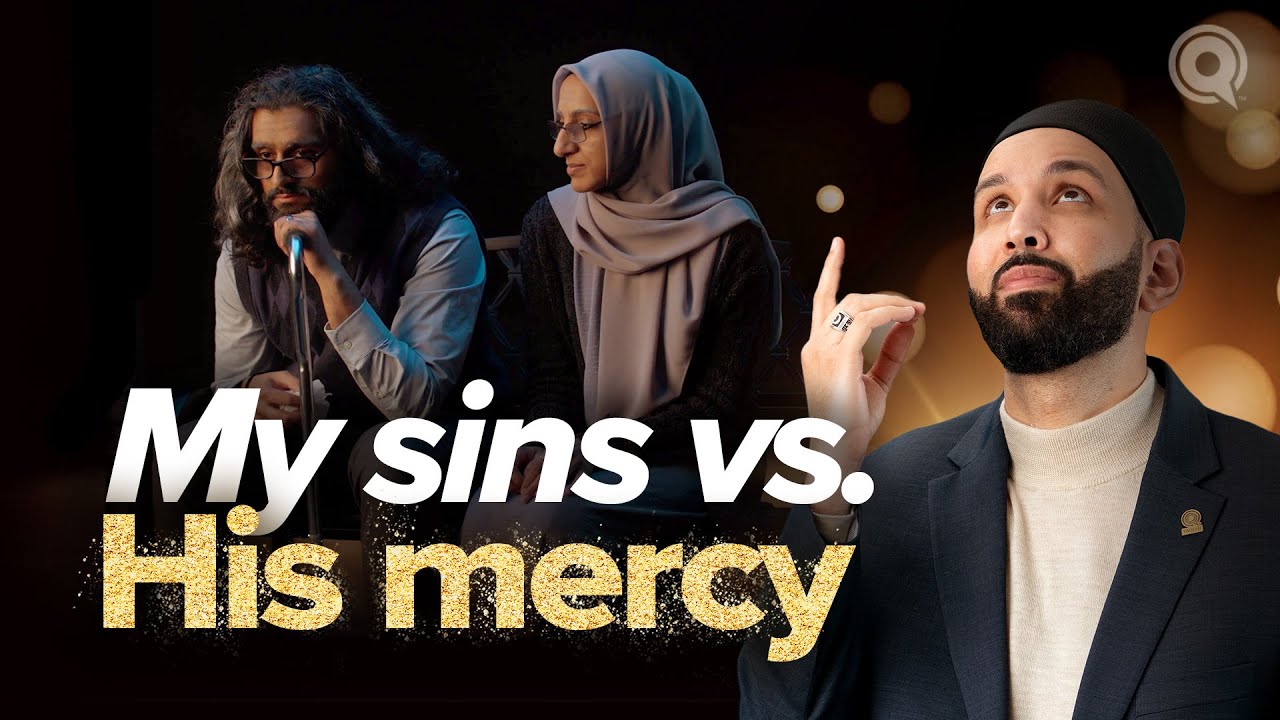 Will Allah Still Forgive Me?

