
IslamiCity
Listen PodCasts, Live Quran, Watch Videos @VideoHub

Beneath the tempestuous waves of political history and the intricate currents of theological divergence, the vast ocean of the Islamic faith is sustained by profound, shared depths. The overwhelming majority of Muslims, across both the Sunni and Shīʿa traditions, draw their spiritual lifeblood from the same foundational beliefs and sacred practices.
To understand the relationship between these two great branches of Islam is to recognize that they are not two disparate rivers, but rather two banks of the same majestic river, flowing toward the same divine ocean.
At the heart of both traditions lies an unbreakable structural unity, anchored in the Core Creed, or ʿAqīdah. Both Sunnis and Shīʿas affirm the absolute unity of God (Tawḥīd), the finality of the Prophethood of Muḥammad (peace be upon him), and the Day of Judgment. They share an unwavering belief in angels and divine decree (Qadar). Perhaps most crucially, there is no separate Qur'an; the sacred text is identical in both traditions, serving as the immutable bedrock of their faith [1].
This unity extends into the rhythm of daily life through the Five Pillars of Islam. Both traditions bear witness to the Shahādah (the declaration of faith), bow in Ṣalāh (prayer), observe Ṣawm (fasting during the holy month of Ramadan), give Zakāh (charity), and undertake the Ḥajj (pilgrimage to Mecca). While the choreography of prayer may exhibit slight variations-such as the positioning of hands or the combining of daily prayers-the fundamental structure and sacred obligation remain universally shared.
Furthermore, both traditions are bound by a deep, abiding love for the Prophet and his family (Ahl al-Bayt). They revere the Prophet profoundly and respect his Companions, though they may differ in the degree and historical evaluation of the latter. The core disagreement has never been over the centrality of the Prophet, but rather over the contours of political and spiritual succession in the wake of his passing.
In the realm of Islamic Law, both branches have cultivated intricate jurisprudential systems, rigorous methodologies for legal reasoning, and robust ethical frameworks. The Jaʿfarī fiqh of the Twelver Shīʿas and the various Sunni madhhabs draw from the same wellsprings of legal authority-the Qur'an, the Sunnah, and reasoned deduction-even as they trace different chains of authority and arrive at distinct specific rulings.
The most significant divergence emerged in the immediate aftermath of the Prophet's death, concerning the rightful leadership of the Muslim community. The Sunni position maintains that leadership, or the Caliphate, was a political office to be determined through community consultation, affirming Abū Bakr as the rightful first Caliph. In this view, the Caliph is a political administrator, bereft of divine infallibility or a protected lineage.
Conversely, the Shīʿī position-predominantly held by the Twelver majority-asserts that leadership, or the Imamate, was divinely ordained. They believe that ʿAlī ibn Abī Ṭālib was the designated successor, and that the Imams who followed him possess special spiritual authority and infallibility (ʿismah). This constitutes the theological core of the divide, encompassing profound questions of authority, legitimacy, and spiritual guidance [2].
This divergence echoes through their respective Hadith collections. While Sunnis rely primarily on canonical collections such as those by Bukhārī and Muslim, Shīʿas turn to compilations like Al-Kāfī and Tahdhīb al-Aḥkām. The distinction lies not in a rejection of the Sunnah, but in the chains of transmission through which the Prophet's words and deeds are preserved.
Historically, this divide has shaped the evaluation of the Prophet's Companions. Sunnis generally regard most Companions as upright figures of reverence. Shīʿas, however, hold ʿAlī and the Ahl al-Bayt in unique veneration, often offering historical critiques of certain early political actors. This difference is deeply emotional, etched into the collective memory and frequently intensified by political currents.
Ritual differences, though visible, remain secondary. The Shīʿī practice of combining daily prayers, the use of a turbah (clay tablet) during prostration, and slight variations in the call to prayer (adhan) are branches on the same tree, not separate roots.
| Sunni School of Law (Madhhab) | Estimated Proportion of Sunnis | Geographic Distribution |
|---|---|---|
| Hanafi | ~45% | Central Asia, South Asia (Pakistan, India, Bangladesh), Turkey, the Balkans, and parts of the Levant [5]. |
| Maliki | ~25% | North Africa, West Africa, and parts of the Persian Gulf [5]. |
| Shafi'i | ~28% | Southeast Asia (Indonesia, Malaysia), East Africa, Egypt, Yemen, and Kurdish regions [5]. |
| Hanbali | ~2% | Predominantly in Saudi Arabia and Qatar, with growing influence globally through Salafi movements [5]. |
| Shīʿa Branch | Estimated Proportion of Shīʿas | Geographic Distribution and Notes |
|---|---|---|
| Twelver (Imamiyyah) | ~85% | The absolute majority of Shīʿas. They form the majority population in Iran, Iraq, Azerbaijan, and Bahrain, with significant communities in Lebanon, Pakistan, and India [2]. They believe in twelve divinely ordained Imams, the last of whom is in occultation. |
| Ismaili (Sevener) | ~10% | A transnational community of 12-15 million, primarily located in South Asia, Central Asia, East Africa, and Western diasporas [2]. Known for their esoteric interpretation of faith, the largest group (Nizaris) follows the living Aga Khan. |
| Zaydi (Fiver) | ~5% | Concentrated almost exclusively in Yemen, where they historically constituted around 40-45% of the population [2]. Their jurisprudence is often noted for its proximity to Sunni schools. |
Can these differences be resolved? Full theological uniformity is neither likely nor necessary. Religious pluralism within traditions is a historical norm; just as Christianity has its Catholic and Protestant branches, and Buddhism its Theravāda and Mahāyāna, Islam accommodates its own internal diversity.
Resolution does not demand the erasure of difference, the rewriting of history, or a forced theological synthesis. Instead, it requires the reframing of difference. A realistic vision for the future involves:
The Qur'an commands: "And hold fast all together to the rope of Allah and do not be divided." (3:103). This divine injunction does not deny the existence of difference; rather, it prohibits destructive division. The "rope" is the revelation itself, not political alignment.
Sunnis and Shīʿas share the same God, the same Prophet, the same Qur'an, the same Qiblah (direction of prayer), and the same pillars of worship. Their differences-rooted in the historical interpretation of leadership and the theology of authority-are profound, yet they are not civilization ally fatal. Unity in essentials. Diversity in interpretation. Mercy in disagreement. The river has two banks, but it is still one river. The future of Muslim civilization depends not on erasing its complex history, but on the steadfast refusal to weaponize it.
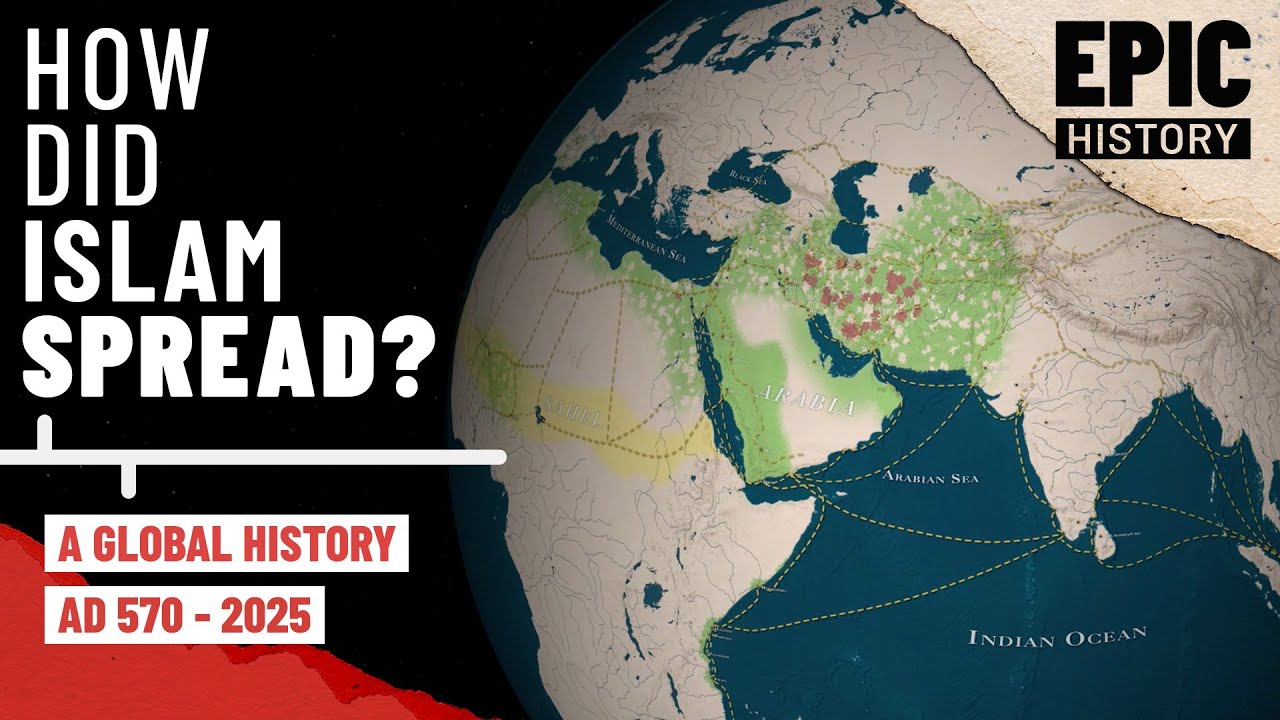 How Did Islam Become A Global Religion?


