Ramadan is a month of restraint.
It is a month in which believers discipline appetite, temper speech, purify intention and renew their covenant with Allah. It is a month in which power is meant to be humbled and the heart softened.
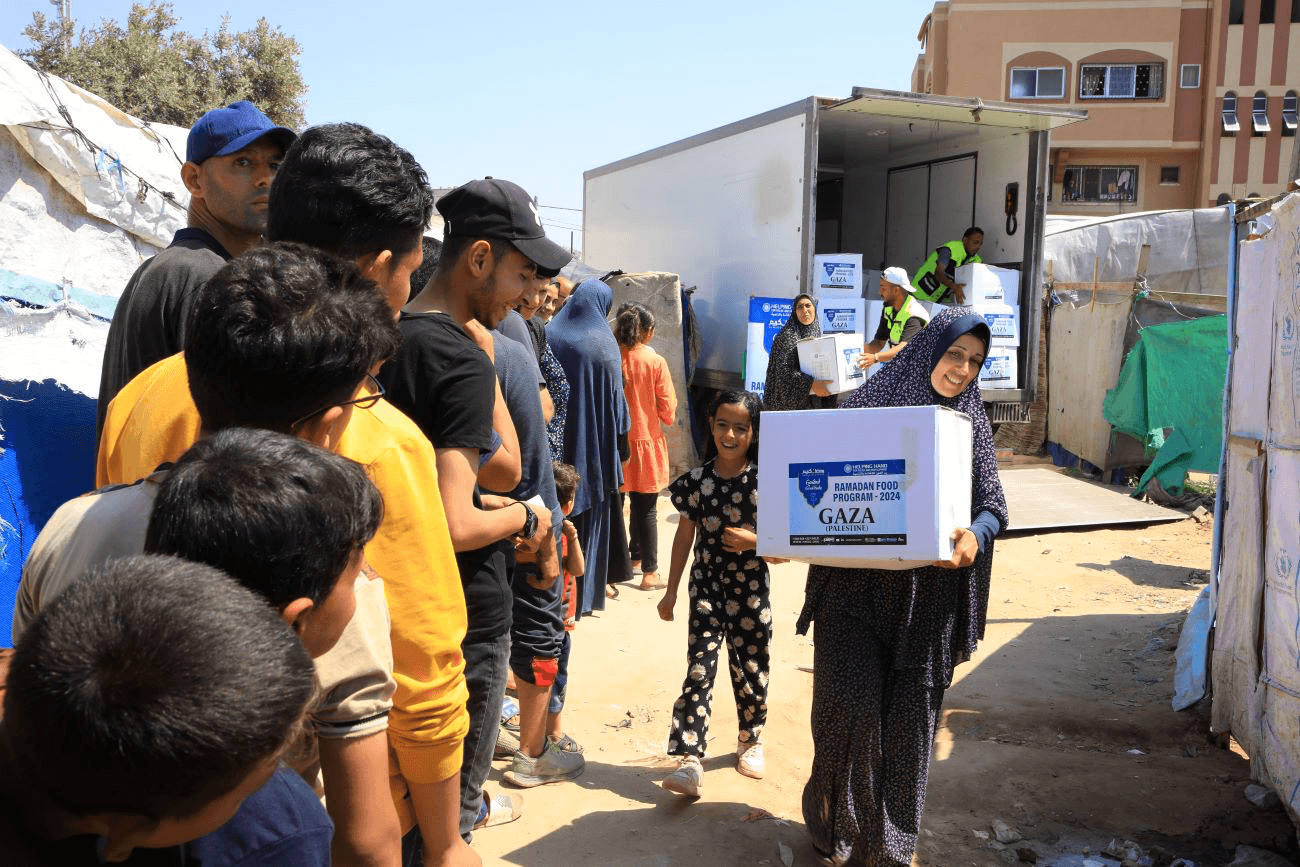
Yet as Muslims fast this year, Gaza continues to endure devastation on a scale that has shaken global conscience.
According to the United Nations Office for the Coordination of Humanitarian Affairs (OCHA), by early 2026 more than 73,000 Palestinians had been reported killed since October 2023, with women and children comprising a significant proportion of casualties, and vast sections of civilian infrastructure destroyed. UN agencies including UNRWA and the World Health Organization have repeatedly warned of catastrophic humanitarian conditions, mass displacement and famine risk.
Ramadan does not suspend reality. It intensifies it.
The Qur'an reminds us:
"O you who believe, fasting is prescribed for you as it was prescribed for those before you, that you may become righteous."
(Qur'an 2:183)Taqwa is not private spirituality alone. It shapes how we view injustice, power and responsibility.
Justice Is Not Selective
Among the most consequential yet under-discussed developments during this conflict has been the deepening strategic alignment between the government of India under Prime Minister Narendra Modi and the government of Israel under Prime Minister Benjamin Netanyahu.
For decades, India was regarded as a leading voice of post-colonial diplomacy and supported Palestinian self-determination. In recent years, however, its foreign policy has shifted toward a more security-centered and interest-driven approach.
In 2026, Prime Minister Modi addressed the Israeli Knesset and reaffirmed solidarity with Israel following the October 7 attacks. While the speech emphasized the suffering of Israeli civilians, it offered limited direct reference to the scale of Palestinian civilian casualties documented by international organizations.
Policy shifts are legitimate subjects of sovereign decision-making. Yet for Muslims observing Ramadan, the moral lens must remain consistent.
The Qur'an commands:
"O you who believe, stand firmly for justice, as witnesses for Allah, even if it be against yourselves..."
(Qur'an 4:135)Justice cannot be invoked for one people and abstracted for another.
The Ethics of Arms and Commerce
Defense cooperation forms a central pillar of the India-Israel relationship.
According to data from the Stockholm International Peace Research Institute (SIPRI), India has been among the largest importers of Israeli arms in recent years. Joint ventures between Indian and Israeli firms produce advanced defense technologies, including unmanned aerial systems.
Investigative reporting has indicated that certain military systems produced through Indo-Israeli cooperation were delivered under existing contracts during the Gaza conflict period. Shipments of military-related materials from India to Israel during the war also drew attention after European authorities blocked a vessel carrying explosives in 2024.
The Government of India has maintained that these transactions are consistent with national interest and contractual obligations.
The policy debate is complex. Yet the ethical principle is clear.
Allah says:
"And cooperate in righteousness and piety, but do not cooperate in sin and aggression."
(Qur'an 5:2)This verse does not prohibit trade or defense cooperation in general. It calls for moral discernment. When civilian harm reaches extraordinary levels, cooperation must be examined through the lens of accountability.
Ramadan sharpens that examination.
Labor, Dignity and Moral Entanglement
Following restrictions placed on Palestinian workers after October 2023, India facilitated the deployment of thousands of workers to Israel, particularly in construction sectors. Parliamentary data confirms these labor transfers.
From a purely economic perspective, such arrangements may appear transactional.
But economic integration during a time of intense humanitarian crisis raises broader moral questions.
Trade between India and Israel has grown significantly - from approximately $200 million in the early 1990s to between $6 and $7 billion annually in recent years. Much of this growth has accelerated in the past decade.
Commerce is not inherently unjust. Islam recognizes trade as lawful and dignified. But trade in times of mass suffering cannot be insulated from ethical reflection.
The Prophet ﷺ said:
"The merciful are shown mercy by the Most Merciful. Show mercy to those on earth and the One above the heavens will show mercy to you." (Tirmidhi)
Ramadan is a season of mercy. Economic decisions should not be detached from that consciousness.
Majoritarian Narratives and the Muslim Condition
Observers and human rights organizations have noted that both India and Israel are experiencing strong currents of majoritarian nationalism. In India, critics argue that policies associated with Hindutva ideology have marginalized Muslim communities domestically. In Israel, debates continue regarding the rights and status of Palestinians under occupation and within the state.
Security narratives increasingly frame Muslim populations - whether domestic minorities or neighboring peoples - as sources of instability or threat.
For Muslims worldwide, this is not an abstract geopolitical issue. It is a lived reality.
The Qur'an reminds humanity:
"O mankind, We created you from a male and a female and made you peoples and tribes that you may know one another." (Qur'an 49:13)
Civilization is built on recognition, not exclusion.
Law, Amanah and the Weight of Accountability
In Islamic thought, power is never ownership. It is amanah - a trust.
Allah says:
"Indeed, We offered the Trust (al-Amanah) to the heavens and the earth and the mountains, and they declined to bear it... but man undertook it." (Qur'an 33:72)
Political authority, economic influence and military capacity are not ends in themselves. They are trusts that will be accounted for.
The Maqāṣid al-Sharī'ah - the higher objectives of Islamic law - seek the preservation of life (ḥifẓ al-nafs), dignity (karāmah), religion, intellect and property. When civilian life is devastated, when hunger spreads, when displacement becomes normalized, the preservation of life - the foremost maqṣad - demands moral attention.
In January 2024, the International Court of Justice issued provisional measures in proceedings concerning Israel's conduct in Gaza. UN agencies have consistently warned of humanitarian catastrophe.
States retain sovereignty in foreign policy. But sovereignty does not remove amanah. It intensifies it.
Ramadan teaches that power is temporary and accountability is permanent.
"So whoever does an atom's weight of good will see it, and whoever does an atom's weight of evil will see it." (Qur'an 99:7-8)
Policies justified in terms of national interest will still stand before divine accounting.
No alliance escapes hisāb.
A Ramadan Reckoning
Ramadan is not merely abstention from food and drink. It is training in moral consciousness.
If fasting does not awaken awareness of injustice, it risks becoming habit without transformation.
The Prophet ﷺ reminded us that many who fast gain nothing from their fasting except hunger and thirst.
The tragedy of Gaza confronts the Muslim conscience with uncomfortable questions:
Do we speak of justice only when it serves us?
Do we excuse harm when it aligns with strategic interest?
Do we measure power by dominance or by restraint?
The Maqāṣid remind us that the preservation of life is sacred.
Amanah reminds us that authority is a trust.
Ākhirah reminds us that history is not the final court.
In a world reorganizing itself into new strategic blocs, Muslims are called not to rage but to principled steadfastness - ṣabr anchored in justice, not passivity.
For on the Day when alliances dissolve and power structures collapse, there will be no defense contracts, no geopolitical doctrines, no national interest.
There will only be deeds.
A Ramadan Supplication
O Allah, You entrusted humanity with amanah and made justice the measure of truth.
In this month of Qur'an, remind us that power is a test and authority is a trust.
O Allah, preserve life where it is threatened, protect the innocent, and relieve those facing hunger and displacement.
O Allah, guide leaders to policies that preserve life (ḥifẓ al-nafs), protect dignity (karāmah), and honor the trust placed upon them.
O Allah, do not let our fasting be ritual without reform, nor our prayer be devotion without justice.
Make us among those who stand for truth even when it is against ourselves.
Make our alliances alliances of righteousness, not aggression.
Shield us from complicity in oppression, whether by action, silence or benefit.
O Allah, when we stand before You on the Day of Reckoning, let our record reflect mercy, restraint and courage.
You are Al-Ḥakam, The Ultimate Judge.
You are Al-ʿAdl, The Perfectly Just.
You are Ar-Raḥmān, The Boundless in Mercy.
To You we return.
Āmīn.


 A Drop of Water Means Life: Inside HHRD Gaza Water Relief Effort


