
IslamiCity
Listen PodCasts, Live Quran, Watch Videos @VideoHub

Diplomacy often moves quietly, in whispers across marble corridors and coded statements written in the careful language of ministries. Yet sometimes a gesture speaks loudly-an ambassador recalled, a flag lowered to half-presence, a chair left empty at the table of nations.
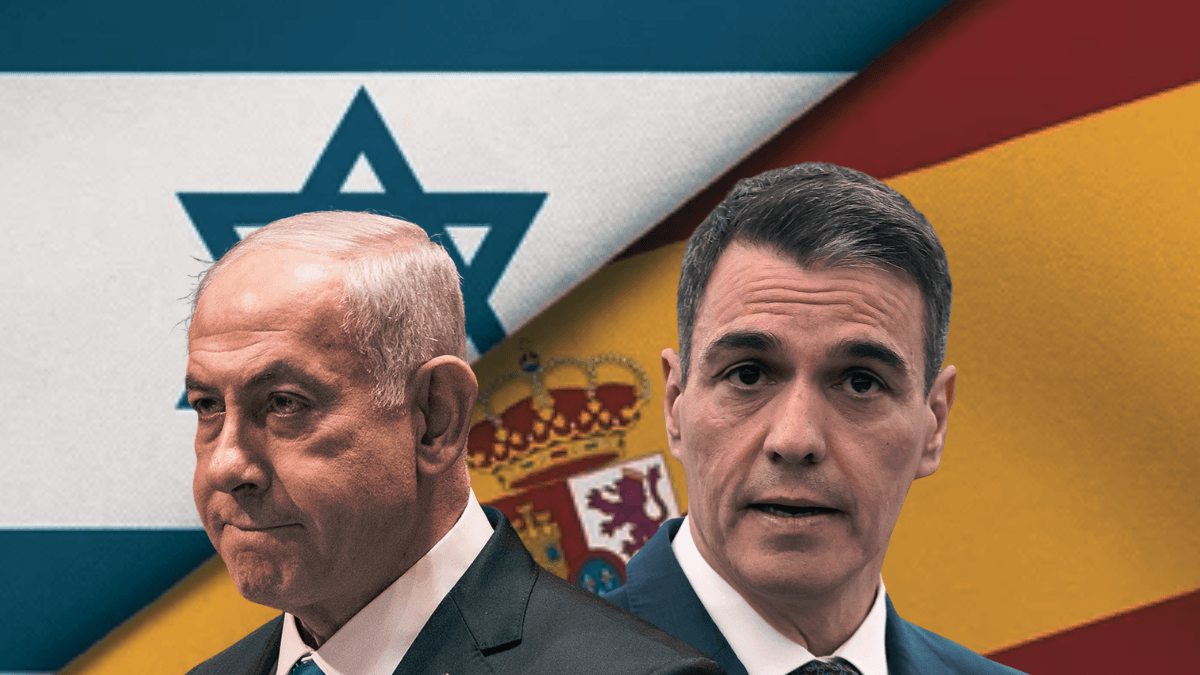
Spain's decision to withdraw its ambassador from Israel was such a gesture: not the severing of relations, but a visible cooling of them, a signal written in the grammar of international diplomacy.
Spain's government has been one of the most outspoken European critics of Israel's military campaign in Gaza following the escalation of violence in 2023-2024. Madrid argued that the scale of civilian suffering and destruction required stronger condemnation and diplomatic pressure. In May 2024, Spain-along with Ireland and Norway-formally recognized the State of Palestine, a step that angered the Israeli government.
Diplomatic tensions escalated: ambassadors were recalled, statements sharpened, and relations grew strained. The withdrawal of Spain's ambassador from Tel Aviv does not mean a complete break. Embassies remain open and are run by lower-ranking diplomats known as chargés d'affaires.
But in diplomatic symbolism, the absence of an ambassador is a deliberate signal: relations continue, yet trust has diminished. Spain's move reflects a broader debate in Europe about the balance between historical solidarity with Israel and growing concern for Palestinian rights and humanitarian law.
Yet in 1492, the Alhambra Decree expelled Jews who refused conversion, dispersing Sephardic communities across the Mediterranean and the Ottoman world. Today the Jewish population of Spain is relatively small. The estimated Jewish population of about 40,000-50,000 concentrated mainly in Madrid, Barcelona, Valencia, and Málaga.
Spain has approximately 30-40 synagogues and Jewish community centers. The modern community is diverse: descendants of Sephardic returnees, Israeli expatriates, North African Jews, and Latin American Jews who migrated to Spain in recent decades. Spain has also attempted symbolic reconciliation. In 2015 it passed a law allowing descendants of expelled Sephardic Jews to obtain Spanish citizenship.
Israel exports include high-tech electronics and cybersecurity technology, medical equipment and biotech products, irrigation and water technologies, fertilizers and chemicals, and software and digital systems Technology cooperation, especially in agriculture and water management, has been an important part of the relationship.
Spain's relationship with Jews, with Israel, and with the Middle East carries centuries of memory. The land that once expelled Jews now grants citizenship to their descendants. The country that preserved Andalusian convivencia-moments of Muslim, Jewish, and Christian coexistence-now debates again the responsibilities of conscience in a divided world.
Diplomacy moves slowly through the currents of history. Ambassadors come and go, but the deeper currents remain: faith, memory, justice, and national interest. Spain's recall of its ambassador may be temporary. Yet it reminds us that diplomacy is not only about trade agreements and security alliances. It is also about the moral stories nations tell about themselves-about the kind of world they believe should exist. And in that sense, the empty ambassadorial chair becomes more than a procedural act. It becomes a symbol: a quiet but unmistakable sentence in the language of history.


 The Monkey’s tail: How Netanyahu’s ambitions expose Israel’s vulnerab...