IslamiCity
Listen PodCasts, Live Quran, Watch Videos @VideoHub

Modern wars are rarely fought on strategy alone. Beneath military calculations and diplomatic maneuvering lies another layer-one of meaning, narrative, and belief. Increasingly, some contemporary conflicts are not merely explained through geopolitics, but reframed as part of a divine or prophetic order. When this happens, war risks being transformed from a contest of interests into a perceived fulfillment of destiny.
The ongoing tensions involving the United States, Israel, Iran, and their respective allies are, at their core, rooted in familiar strategic concerns: regional security, nuclear deterrence, power projection, and alliance systems. Yet alongside these material realities, a parallel interpretive framework has gained traction in certain রাজনৈতিক, religious, and media spaces-one that casts the conflict in theological and even apocalyptic terms.
This process can be described as geotheological framing: the reinterpretation of geopolitical events through religious narratives, sacred symbolism, and prophetic expectation. In this framing, conflicts are no longer simply about territory or influence; they are woven into a larger story about the destiny of nations, the unfolding of sacred history, and, in some cases, the end of the world.
Importantly, this does not mean wars become purely religious in cause or conduct. Rather, political objectives and theological narratives begin to intertwine. Strategic decisions remain, but they are increasingly justified, understood, or even motivated through a lens that transcends conventional politics.
Wars are not only fought on battlefields-they are also fought in the realm of interpretation. Narratives give conflicts meaning, mobilize populations, and justify sacrifice. When leaders or influential voices invoke religious imagery or prophecy, they elevate the stakes of conflict beyond negotiation.
In such contexts, compromise can appear not just undesirable, but morally or spiritually illegitimate. If a war is seen as part of a divine plan, then negotiation risks being framed as disobedience to that plan. Diplomacy, which depends on flexibility and mutual concession, becomes far more difficult to sustain.
Scholars of political theology have long observed that religion does not replace political interests-it amplifies and reshapes them. Belief systems provide a language through which power struggles are moralized, often casting one side as righteous and the other as inherently evil. This moral absolutism can intensify conflicts and narrow the space for peaceful resolution.
History offers numerous examples of conflicts interpreted through sacred narratives. The medieval Crusades remain among the clearest illustrations. When Pope Urban II called for the First Crusade in 1095, the campaign was framed not as a conventional պատերազմ, but as a divinely sanctioned mission. Participants believed they were enacting God's will, securing salvation through violence.
The consequences were profound. The capture of Jerusalem in 1099 was accompanied by mass قتل, carried out with a sense of धार्मिक justification. The certainty of divine mandate removed moral restraint and elevated brutality into perceived righteousness.
Similar patterns have appeared in other contexts. European colonial expansion often invoked a "civilizing mission" grounded in religious justification. Even during the Cold War, political leaders sometimes framed the संघर्ष as a cosmic battle between good and evil, imbuing geopolitical rivalry with moral and quasi-religious significance.
These examples reveal a recurring dynamic: when political conflicts are embedded in sacred narratives, escalation becomes more likely and restraint more difficult.
In the present context, segments of Western discourse-particularly within certain evangelical and ideological circles-interpret Middle Eastern conflicts through biblical prophecy. References to end-times scenarios, apocalyptic battles, and sacred geography increasingly appear in media commentary and political rhetoric.
Within this framework, events involving Israel and its regional adversaries are sometimes seen as steps toward a predetermined eschatological outcome. Territorial disputes, military confrontations, and diplomatic crises are recast as symbols within a larger prophetic timeline.
This perspective does not dominate policymaking, but its influence is not negligible. It shapes public opinion, informs ideological commitments, and can exert pressure on political actors. In some cases, it contributes to a worldview in which conflict is not only inevitable, but necessary.
The fusion of theology and geopolitics carries significant risks. At the strategic level, states continue to pursue rational objectives-security, deterrence, and influence. But when these objectives are framed within a divine narrative, decision-making can shift in subtle yet consequential ways.
First, compromise becomes harder. If concessions are seen as مخالفة to divine will, leaders may face ideological resistance even when negotiation is strategically advantageous.
Second, conflicts can escalate more easily. When opponents are cast as existential or even metaphysical enemies, limited جنگ can take on the character of total struggle.
Third, misinterpretation increases. Actions taken for strategic reasons may be interpreted by others as ideologically or religiously motivated, deepening mistrust and سوء الفهم.
Finally, public discourse becomes polarized. Theological framing tends to simplify complex realities into binary moral categories, reducing the space for nuanced analysis.
Geopolitical conflicts are never just about material interests-they are also about meaning. The narratives societies construct around war shape how those wars are fought, justified, and ultimately resolved.
Framing war as a divine mandate is not a new phenomenon, but in a modern context of advanced weaponry and global interdependence, its consequences can be particularly dangerous. When strategy gives way to theology, and diplomacy is overshadowed by prophecy, conflicts risk becoming not only more intractable, but more destructive.
Understanding this dynamic does not require accepting the theological claims themselves. It requires recognizing their influence. Ignoring the role of belief in shaping political behavior means overlooking a critical dimension of modern conflict-one that operates not on the battlefield, but in the minds of those who interpret it.
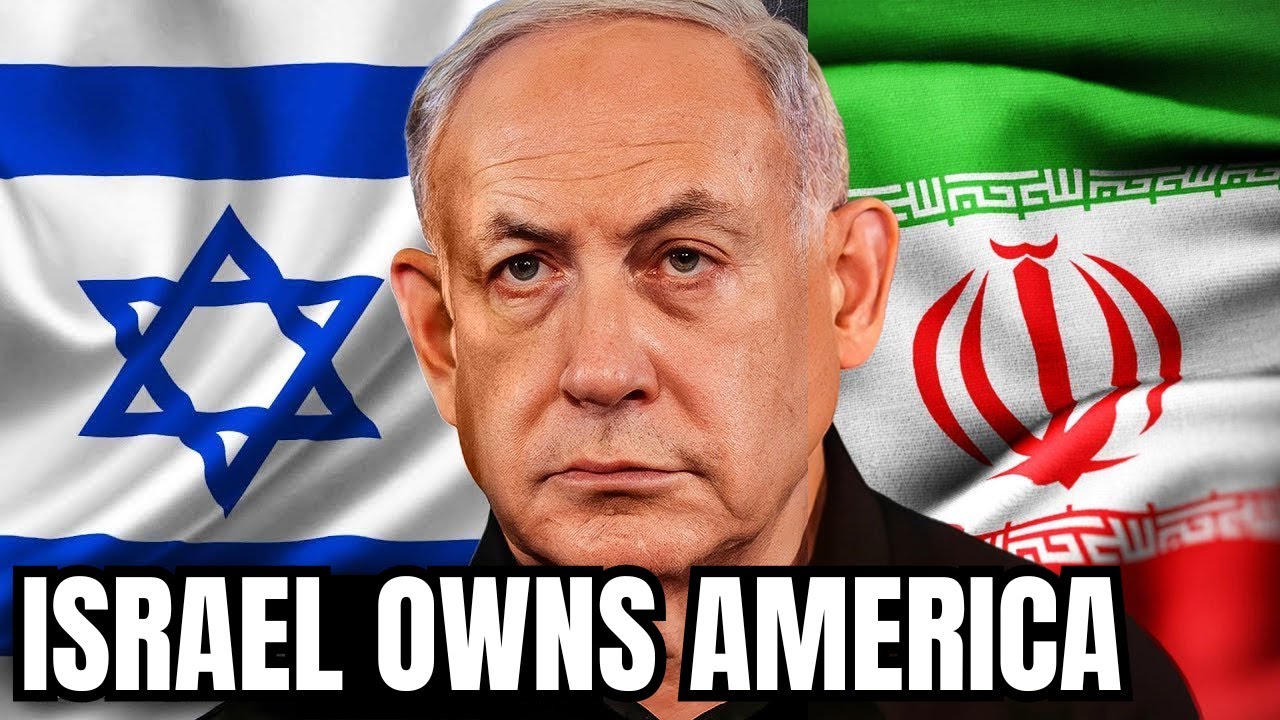 The Truth Behind America’s War Against Iran