
IslamiCity
Listen PodCasts, Live Quran, Watch Videos @VideoHub

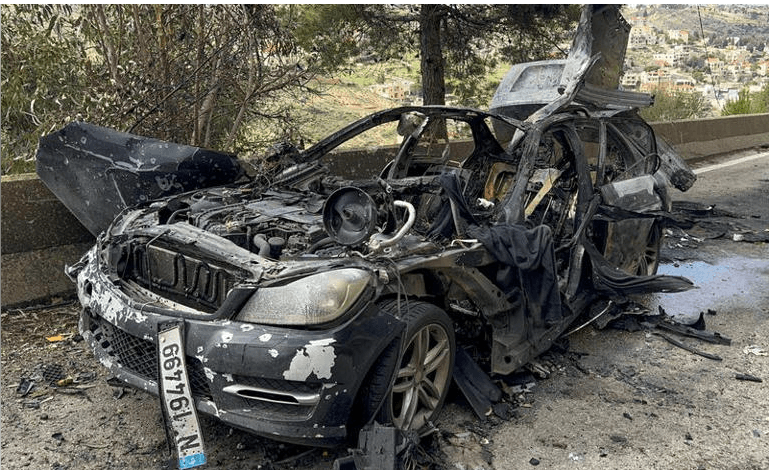
Fatima Ftouni, a Lebanese journalist working with Al Mayadeen, was killed in an Israeli airstrike while traveling in a clearly marked press vehicle near the village of Jezzine in southern Lebanon. Her death has ignited widespread grief, anger, and debate, with many describing her as one of the most powerful voices documenting the human cost of war.
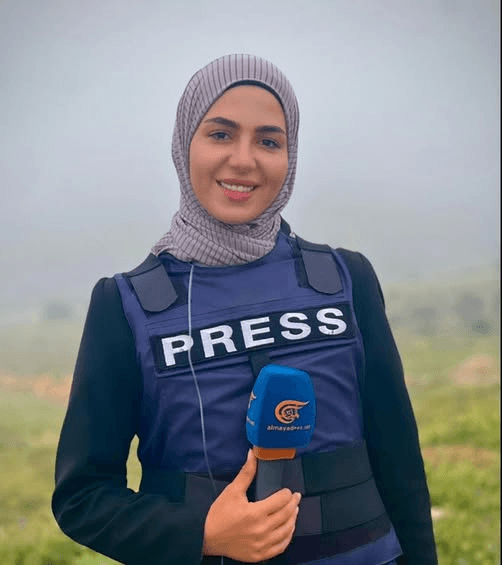
Fatima was killed alongside her brother, Mohammed Ftouni, a cameraman for Al Mayadeen; Ali Shohaib, a veteran reporter for Al Manar TV; and a medic. Another journalist was injured in the strike.
Only weeks before her death, Fatima had lost seven relatives in an Israeli attack on her home. Her emotional reporting from the rubble spread widely online, turning her into a symbol of resilience and underscoring the dangers faced by journalists in conflict zones. She was known for choosing to report from the front lines rather than from a distance.
Critics argue that even if such allegations were true, they do not fully explain the decision to strike a marked press vehicle carrying multiple journalists. Similar justifications have been used in past incidents involving the deaths of media workers.
Since the escalation of conflict following the October 7, 2023 attacks, more than 240 journalists and media workers-most of them Palestinian-have reportedly been killed in areas including Gaza and the occupied West Bank. This has made coverage of the conflict one of the most dangerous assignments in the world.
Supporters of Hezbollah within Lebanon argue that the group maintains significant local support due to its historical role in resisting Israeli occupation, particularly the withdrawal from southern Lebanon in 2000 after nearly two decades of control.
Amid ongoing hostilities, reports indicate that dozens of Lebanese medics have been killed, highlighting the risks faced not only by journalists but also by humanitarian workers operating in conflict zones.
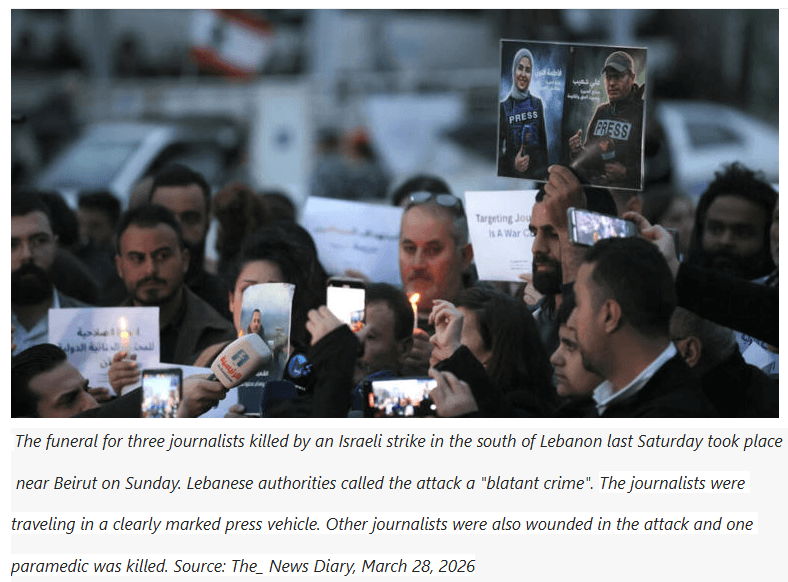
In addition, Time reported on March 30, 2026, that at least 11 journalists and 47 medics had been killed in Lebanon since the beginning of the war on October 7, 2023.
These figures have intensified calls from international observers for accountability and adherence to international humanitarian law, which classifies the deliberate targeting of civilians, journalists, and medical personnel as potential war crimes.
Those who knew Fatima recall her determination, her refusal to remain neutral in the face of suffering, and her deep connection to the communities she covered. Among the few remnants left behind were her torn press vest, her helmet, and a Palestinian keffiyeh gifted to her during her reporting in Gaza.
In one remembered exchange, a friend told her: "One day we will meet at the Palestinian-Lebanese border." Fatima replied, "Insha'Allah, we will pray together in Al-Aqsa Mosque in Jerusalem."
Following her death, Lebanese journalist Zeinab Farhat wrote:
"Fatima did not plead with the international community to protect us... Fatima built all her hopes on the belief that we must possess strength, because strength alone protects us. They killed Fatima, but they did not kill the strength within her."
Fatima's own words continue to circulate widely:
As wars continue to unfold, voices like hers-documenting suffering, loss, and resilience-remain both essential and increasingly at risk.
Mahmoud El-Yousseph is a Palestinian freelance writer and retired U.S. Air Force veteran. He writes on U.S. foreign policy, Middle East affairs, and justice. Email: [email protected]
 The Destruction of Madinah and The Greater Israel


