
IslamiCity
Listen PodCasts, Live Quran, Watch Videos @VideoHub

The undeniable fact is that the Muslim ummah today, on the world stage, is largely a consuming rather than a producing community. Yet the greatest tragedy lies not in material consumption, but in the persistent underperformance regarding the most vital and irreplaceable asset: knowledge. Here the true colors of our consumerism are revealed. Muslim youth are dispatched to Western (and Eastern, though predominantly Western) institutions to study; Western universities are invited to our shores to establish themselves and operate freely; our libraries overflow with Western epistemological outputs; and both leaders and followers alike have been molded according to Western ideas and values. Exceptions exist, but they cannot overturn the overwhelming rule.
As a result, Muslim minds, souls, and entire beings have been tailored and sustained by alien systems of thought and conduct. The ummah breathes the Western cultural and (un)civilizational ethos without even realizing it, for such is the consequence of being fed their ideas and standards for generations. These are unwholesome and malnourishing substances, incompatible with the organic civilizational orientation and growth of genuinely Muslim individuals and societies. Thus, in terms of human and social development, Muslims are rendered sluggish at best, incapacitated at worst.
This predicament could not have come at a worse time. Amid the genocide in Gaza perpetrated by the axis of evil of the institutionalized West-led by the criminal United States and the even more criminal Israel-and as they continue to wage wars of attrition, whether in words or deeds, against all "noncompliant" Muslims and everything Islamic, many Muslims feel compelled to awaken and act. However, no sooner do we attempt to rise than we realize how weak and debilitated we are. We are effectively disabled, and in many cases enslaved, by the West. Thus, our choices are reduced to either acting for them and with them, or not acting at all.
It is not rocket science to pinpoint where the awakening and renaissance of the Muslim ummah must begin. It lies in the field of epistemology, and in the resultant education systems and intellectual culture. But first things must come first: the sedimented legacies of Western intellectual enslavement must be addressed. Without doing so, little can be attained in other fields, in view of the fact that knowledge is the mother of every visible and invisible cultural and civilizational engagement. Knowledge is the cause; everything else is the effect. As the saying goes, it is the power that controls and dictates the rest.
At the same time, we must be fair and pragmatic. Western knowledge should not be rejected wholesale-despite its unwholesomeness and impurity for the tawhidic mind and soul-on account of two reasons. First, not everything in Western epistemology is entirely impure or unacceptable; some elements are more problematic than others. Second, Muslims cannot simply discard everything around them and return to square one, starting from scratch.
The best option is to pursue the Islamization of Western knowledge: to reject what is incompatible with the Islamic tawhidic worldview, morals, and values, and to work on producing authentic alternatives. Meanwhile, those components that are compatible-or only slightly problematic-should be accepted, purified, and absorbed into the body of Islamic epistemology. In this way, knowledge becomes once again the lifeblood of civilizational renewal, rather than the instrument of alien domination.
As part of the process, Western knowledge itself must be deconstructed-that is, critically examined and unpacked to reveal the assumptions, values, and power structures embedded within it. It should be dissected and exposed in a systematic yet accessible manner, so that its flaws become discernible to all: scholars, students, and even ordinary people. Only then will it be clear why such knowledge is dangerously inappropriate, and why calls for Islamizing it are warranted. This effort must also be seen as a way of demystifying it, stripping away its false aura, and declaring openly that the "emperor has no clothes."
Much has been said about the purposes, objectives, and methods of the Islamization of knowledge. Repeating or adding anything new here is not the goal. Instead, the goal is to further justify the appropriateness and urgency of this process, because time is of the essence.
Muslims cannot continue consuming Western knowledge-knowledge which the West simultaneously uses to perpetuate servitude, oppression, and outright slaughter of Muslim peoples, including the innocent. Likewise, Muslims cannot and must never continue cooperating with Western educational institutions which, in the face of genocides and atrocities, not only failed to condemn them but in many cases justified them, even penalizing faculty and students who dared to speak out. Like so, they are complicit in the crimes.
It is preposterous-and suicidal-to send our children to such institutions or to invite them into our midst, when we know full well who they are and what they represent. The Gaza genocide tore away their last masks. Their knowledge-its ideological underpinnings, objectives, and applications-was always anti-Islamic. Why then expect the institutions themselves to be otherwise? This is consistency at its most brutal.
The vicious circle of dealing with the West must stop. New relations must be redefined to exhibit Muslims as independent and equal partners. Before dealing with the personnel, institutions, and establishments of the West, they ought first to be asked to "identify" themselves and declare their allegiances. Only then can Muslims know with whom they are truly engaging. For too long, Western institutions have cloaked themselves in the guise of neutrality and universalism, while in reality serving ideological agendas that are hostile to Islam and complicit in oppression. To proceed without demanding such identification is to risk further entanglement in deception and servitude.
Why Western knowledge is problematic for Muslims, and why it must be revisited, deconstructed, and reoriented, is - additionally - because of the following.
In this manner, Descartes, a seminal figure of the French Renaissance in the emergence of modern philosophy and science, spoke of the unity of knowledge. According to his novel approach, the Western philosophical drive aimed to systematize knowledge into a coherent whole, rooted in rational and philosophical metaphysics-emphasizing both the newly found freedom of human reason and the legacies of classical philosophy, while moving towards secularization-and from that basis branching into the applied sciences.
This spelled the rise of foundationalism, whereby newly articulated metaphysics and rational principles were required before moving outward. Natural philosophy was projected as mediator: physics, the trunk of the tree of knowledge, represented the emphasis on rationalized nature and liberal reason as the bridge between abstract truths and practical life. Finally, the applied sciences were seen as the fruits of this active symbiosis between metaphysics and natural philosophy. Disciplines such as medicine, mechanics, subjective morals, and others formed the branches, underscoring the Western epistemological concern with material utility, material progress, and relative ethical application.
This means that all disciplines are organically connected, not isolated. Bacon insisted on the necessity of a universal science-a summary philosophy (philosophia prima)-that studies the most general principles common to all disciplines. This "primitive philosophy" is the trunk or stem from which the branches of theology, natural science, and the humanities grow.
Bacon wrote: "Therefore it is good, before we enter into the distribution and partition of knowledge, to erect and constitute one universal science, by the name of philosophia prima, primitive or summary philosophy, as the main and common way, before we come where the ways (knowledge branches) part and divide themselves."
Muslims should recognize that if the causes are contaminated, so too are the effects. They must cultivate the discernment to perceive this, a discernment that Western epistemology works tirelessly to suppress. If a river is poisonous and impure at its source, it remains poisonous and impure at every stage downstream. Drinking from it anywhere, in any amount, is fatal. Such is the relationship between Western sciences and their conceptual and ideological foundations within the organically interrelated aspects of the tree of knowledge.
Indeed, there is nothing on that tree that a Muslim can consume freely, and very little that can be consumed even with maximum caution, unless preceded by deliberate efforts of purification and Islamization.
Put plainly, much of Western knowledge is not "halal" for Muslims. For example, how can the entire body of the humanities be acceptable when such sciences are embedded in evolutionary notions that regard man as soulless and originating from apes-nothing more than an advanced breed of monkey, to quote Stephen Hawking? How can the social sciences be acceptable when societies are conceived as mere compendiums of former apes whose mission is self‑worship, coupled with perennial conflict with heaven and the Creator? How can the natural sciences be acceptable when nature is elevated as the only ultimate reality, seen as the origin and end of all things, the sole domain that defines life and its animate and inanimate realities?
Finally, how can science be acceptable when it has strayed into scientism? Science, once a method of inquiry into the natural order, has been absolutized into an ideology. It no longer confines itself to studying phenomena but claims authority over metaphysics, morality, and ultimate meaning. In scientism, science is worshipped as the only valid path to truth, reducing revelation, transcendence, and divine wisdom to irrelevance. This is not science as a tool, but science as a creed; it is an idolatry of human reason and material reality. Despite their ostensible prestige, sciences are blasphemous in essence: degrading rather than uplifting, dehumanizing rather than ennobling.
No single chest can contain two hearts, nor can a person be at two places at one time or wear two hats simultaneously. Similarly, no Muslim can genuinely live by two worldviews-Western and Islamic-at once. To attempt such duality is to deceive oneself, given that knowledge and civilization are indivisible wholes. One cannot serve two masters, nor walk two divergent paths.
Such efforts at double‑allegiance are not signs of balance but of hypocrisy, and even of self-disloyalty. To claim allegiance to tawhid while concurrently consuming and living by Western profane epistemology is a contradiction that corrodes faith and integrity. Islam demands wholeness and sincerity; Western knowledge demands submission to its own metaphysical roots. To try to reconcile the two without distillation and refinement is to betray oneself, one's community, and ultimately one's Creator.
No wonder, then, that the epistemology of Islam-which preceded that of the West by centuries-was also inclined to models that were virtually tree‑like. Muslim scholars equally emphasized the unity and organic interconnection of knowledge, yet always anchored it in revelation and tawhid. Unlike Descartes or Bacon, their trees grew from the Qur'an and Sunnah as both roots and trunk, with branches extending into revealed and rational sciences.
Foremost among these epistemologists were al‑Farabi (870-951), al‑Ghazali (1058-1111), and Ibn Khaldun (1332-1406). With minor elaborative and methodological variations, they were unanimous that all sciences must be subordinated to revelation. Accordingly, religious sciences form the trunk of the Islamic knowledge tree, while worldly sciences are branches that must serve faith. Rational sciences are permissible only when they do not contradict revelation.
Osman Bakar, a leading contemporary authority in Islamic epistemology, has comprehensively dealt with the subject in his seminal works "The History and Philosophy of Islamic Science" and "Classification of Knowledge in Islam." His scholarship demonstrates how the Islamic tree of knowledge, unlike its Western counterparts, is entrenched in revelation and oriented towards transcendence, ensuring that all branches of inquiry remain nourished by the divine source.
Such terms as usul al‑fiqh (roots, sources, or foundations of jurisprudence) and usul al‑din (roots, sources, or foundations of religion) are themselves evocative of this organic metaphor within Islamic sciences. It is no wonder that the same metaphor is found in the Qur'an, in Surah Ibrahim (14:24), where Allah says: "A good word is like a good tree, whose root is firm and whose branches reach to the sky."
Islamic epistemology consciously mirrors this image. Knowledge rooted in tawhid grows into a civilizational tree that sustains all its constituents-great and small, worldly and spiritual. Thus, the very vocabulary of Islamic scholarship, with its emphasis on usul, reflects the Qur'anic vision of knowledge as a living, unified organism.
As unconventional as it may seem, the first reference and source in every science of Islam-from the humanities and social sciences to the natural and applied sciences-is the Qur'an, followed by the Sunnah. Only thereafter do specialized references and sources from respective fields come into play. To reach the branches one must first go through the roots and the trunk.
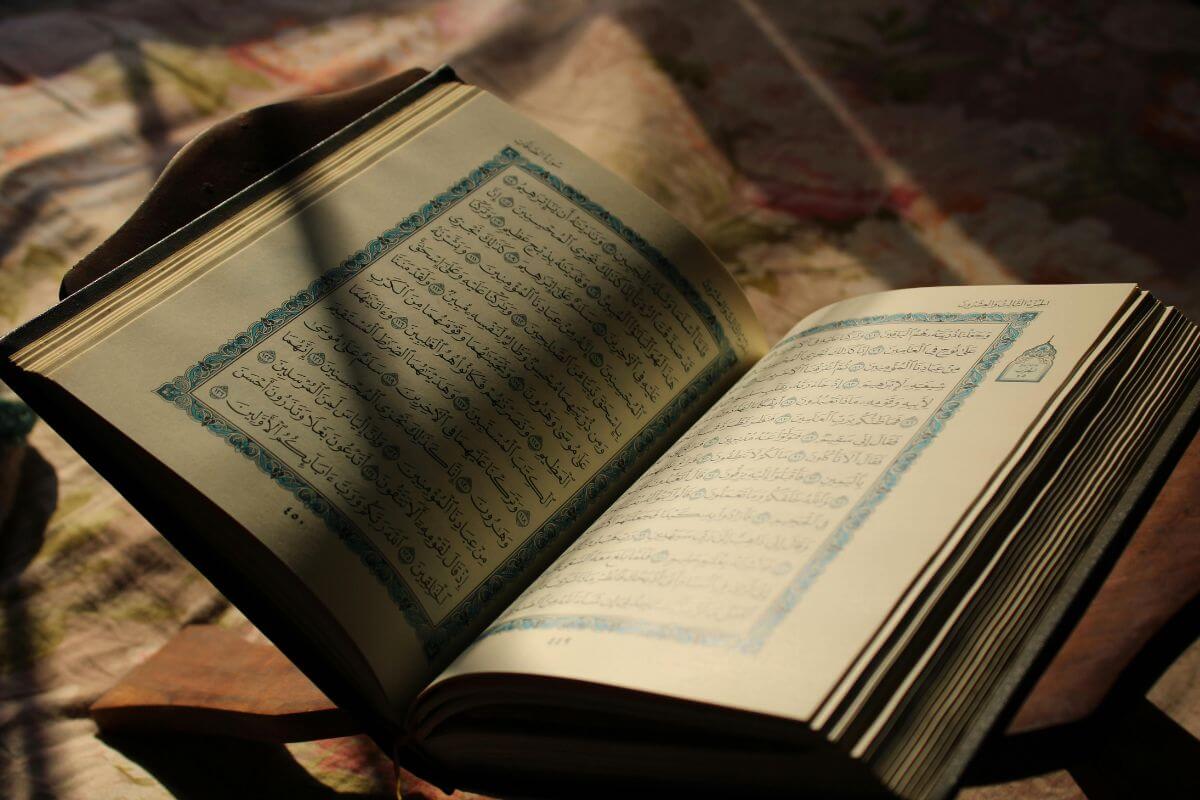
A person cannot be truly learned, educated, or wise-indeed, not even an expert in his field, whatever it may be-without first learning and knowing the Qur'an and the Sunnah. These are the origins and sources that nourish not only all knowledge but also the people associated with it. The Qur'an is therefore called ruh (soul), for it gives life and sustains. Without this soul, both knowledge and people are lifeless.
It goes without saying, based on the above, that it would be epistemologically aberrant for Muslims to simply extract branches of Western knowledge and graft them onto the organic structures of their Islamic institutional frameworks, especially when these are intended to revive Islamic societies, systems of life, cultures, and civilization. Such an attempt to fuse two bodies of knowledge that originate from fundamentally different sources, roots, and underlying assumptions- each carrying dissimilar existential and ideological genes-can only yield incoherent and unstable results. The outcome is neither authentically Western nor genuinely Islamic, and thus remains unappealing to both.
These anomalies reflect the broader trajectory-indeed, the stagnation-of the Muslim world over the past two centuries, often characterized by a pattern of one step forward and two steps back. This is hardly surprising, because that which is internally inconsistent cannot endure; it neither develops in a natural manner nor sustains itself over time. It is a freak of sorts. Consequently, such hybrid constructs are eventually discarded and, more swiftly still, forgotten.


 Tawhid and the Crisis of Reality: Why Humanity Needs a Truthful Imagination