
IslamiCity
Listen PodCasts, Live Quran, Watch Videos @VideoHub

There are certain forces in life that do not make noise, yet they shape everything about us. They shape the way we speak, the way we react, the way we treat others, and even the way we worship Allah. One of the most powerful of these hidden forces is the ego.
It is not something we can see or touch, yet it lives quietly within every one of us. It influences our relationships, our character, our emotional state, and ultimately our Hereafter. If left unchecked, it can slowly destroy our deeds, damage our credibility, and distance us from Allah without us even realizing it.
The ego, often referred to in Islam as part of the nafs, is the part of us that constantly focuses on "me, myself, and I." It is connected to our desires, our thoughts, and our need for validation. Allah reminds us in the Qur'an, "Indeed, the soul is inclined toward evil" (Surah Yusuf 12:53), highlighting that within us exists a natural tendency that must be controlled and refined. The ego pushes us to prioritize ourselves above others, to feel entitled, and to expect a certain level of treatment. It creates a false image within us, making us believe we are more deserving, more important, or more right than we actually are.
However, the ego itself is not entirely evil. It is a test from Allah. It can either control us, or we can control it. If we obey it blindly, we become slaves to our desires, reactions, and pride. But if we discipline it, it can become a tool for growth and motivation. Allah says, "He has succeeded who purifies it, and he has failed who corrupts it" (Surah Ash-Shams 91:9-10). This shows that success lies not in eliminating the ego, but in mastering it. A healthy ego can push a person toward الخير, toward wanting to please Allah, improve themselves, and build better relationships. But when it is left unchecked, it transforms into something dangerous.
An unhealthy ego reveals itself in subtle ways. It shows when a person struggles to listen but loves to speak, when they become defensive at the slightest criticism, or when they feel the constant need to prove themselves right. It appears in arguments that bring no benefit, especially in today's world of social media, where people argue endlessly just to win rather than to understand. It shows when someone expects from others but hesitates to give, or when they criticize more than they encourage. One of the most dangerous forms of ego is when it hides behind religion-when a person corrects others not out of sincerity, but out of a desire to feel superior. In such cases, the focus is no longer Allah, but the self.
When the ego grows unchecked, it develops into arrogance, known in Islam as kibr. The Prophet ﷺ defined arrogance clearly when he said, "Arrogance is rejecting the truth and looking down on people" (Sahih Muslim). This means that arrogance is not simply about feeling proud; it is about refusing to accept what is right and viewing others as inferior. A person may know the truth, yet reject it because accepting it would hurt their pride. They may look down on others due to wealth, status, knowledge, or even acts of worship. This is why arrogance is so dangerous-it corrupts both belief and character.
The warning against arrogance is severe. The Prophet ﷺ said, "Whoever has an atom's weight of arrogance in his heart will not enter Paradise" (Sahih Muslim). This hadith does not mean that a person who has ever felt pride is doomed, but rather it warns against allowing arrogance to settle in the heart as a constant state. When arrogance becomes part of a person's identity-when they consistently reject truth and look down on others-it becomes a serious spiritual disease.
At the same time, Islam makes an important distinction between arrogance and natural human preferences. A companion once asked the Prophet ﷺ whether liking nice clothes and shoes was a form of arrogance. The Prophet ﷺ replied, "Allah is beautiful and loves beauty." This shows that Islam does not forbid looking good or enjoying blessings. The difference lies in intention. If a person dresses well out of appreciation and gratitude, there is no harm. But if it is done to feel superior or to gain praise, then it becomes a problem of the heart.
Arrogance can appear in everyday situations more often than we realize. It shows when someone refuses to admit they are wrong, even when the truth is clear. It appears when advice is rejected simply because it came from someone else. It can be seen when a person believes their opinion is always correct, or when they cannot tolerate being challenged. It even appears when someone uses phrases like "fear Allah" not out of sincerity, but out of a desire to assert dominance. These small moments reveal what is truly inside the heart.
Islam removes every false standard of superiority. It is not wealth, status, race, or appearance that determines a person's worth. Allah says, "Indeed, the most noble of you in the sight of Allah is the most righteous of you" (Surah Al-Hujurat 49:13). True value lies in sincerity and God-consciousness, and even that is not something a person should claim for themselves. Only Allah truly knows the state of each heart.
The reality of the Hereafter further humbles us. The Prophet ﷺ taught that no one enters Paradise purely because of their deeds, but only through the mercy of Allah. Even he ﷺ said that he himself would not enter Paradise without Allah's mercy. This reminds us that no matter how much we do, there is no place for ego or self-righteousness.
To fight the ego, a person must actively go against it. This means learning to accept feedback instead of rejecting it, listening more than speaking, and admitting mistakes without hesitation. It means giving to others without expecting anything in return, avoiding pointless arguments, and reminding oneself constantly of their origin and their end. Visiting the sick, helping those in need, and remembering death all soften the heart and weaken the ego.
The Prophet ﷺ is the perfect example of humility. Despite being the best of creation, he never allowed ego to define him. He accepted advice, forgave those who wronged him, and never elevated himself above others. His strength was not in dominating people, but in controlling himself.
In the end, the greatest battle is not with others, but within ourselves. It is the battle between ego and sincerity, between pride and humility. Every time our ego is challenged, we are given a choice: to defend ourselves for the sake of pride, or to humble ourselves for the sake of Allah. That choice, repeated over time, shapes who we become. And it may ultimately determine whether our actions bring us closer to Allah-or take us further away.
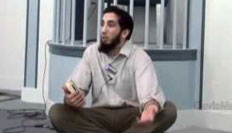 Special: Islam and Ego - Nouman Ali Khan


