
IslamiCity
Listen PodCasts, Live Quran, Watch Videos @VideoHub

The Qur'an presents itself not merely as a book of guidance but as the ultimate resource of history. Before the future can be built, the past must first be purified and set aright. Countless edifices of supposed civilization rose upon the ruins of distortion and deceit.
Life, according to the Qur'anic worldview, is defined by conflicts-both internal within the soul and external within societies. These conflicts are not superficial contests of power, wealth, or territory; rather, they are manifestations of the unfailing confrontation between truth and falsehood.
The Qur'an insists that history is not the story of empires, geopolitical communities, or nationalistic agendas, but of peoples aligned with truth versus those entrenched in falsehood. This essay explores this civilizational dialectic, drawing upon Qur'anic examples, historical patterns, and the enduring resilience of Islamic civilization.
For example, the Qur'an repeatedly narrates the confrontation between Pharaoh, the archetype of tyranny, and Prophet Musa, the bearer of divine truth. Pharaoh represents the ancient Egyptian civilization, with its grandeur, wealth, and power, yet hollow in its values. Musa, armed not with armies but with revelation, challenged Pharaoh's falsehood.
Despite Pharaoh's apparent dominance, his civilization collapsed under the weight of its arrogance and oppression. The Qur'an immortalizes this episode to demonstrate that civilizations built on falsehood cannot endure, while truth, even if persecuted, ultimately prevails.
Similarly, Nimrud symbolizes the Mesopotamian pseudo-civilization, intoxicated by power and self-deification. Prophet Ibrahim confronted Nimrud's falsehood with the simplicity of monotheism. Ibrahim's rejection of idolatry and his insistence on truth exposed the emptiness of Nimrud's empire. The Qur'an records Ibrahim's survival and triumph, while Nimrud's legacy vanished.
These examples illustrate that civilizations which silence prophets and suppress truth betray their own hollowness and are destined to perish. When light and shadow are pitted against each other, the battle is no battle, for falsehood vanishes by its nature.
Those do not deserve to be called civilizations in the first place. The Qur'an records them as signs of failure, guiding believers not towards imitation, but towards avoidance.
Why is this so? Because oppression is inherently unsustainable. The oppressed never sleep; their yearning for freedom and justice cannot be extinguished. Falsehood, by definition, is fragile-it collapses dragged down by its own worthlessness. Ultimately, it is because Almighty Allah has pledged His support to the weak and oppressed.
Leaders who persist in colonizing and oppressing fail to learn from history. In passing, are they not supposed to be visionary and wise? Why is their reasoning ability impaired?
One explanation for this paradox lies in the nature of power and human ego. Those who wield power often operate under illusions of permanence and exceptionalism. They believe that their case is different, that their strength guarantees success, and that history's lessons do not apply to them. This arrogance blinds them to the deeper dynamics at play.
Another factor is the short-term logic of political and economic gain. Immediate benefits-territorial expansion, resource acquisition, or strategic dominance-often overshadow long-term consequences. The cost, however, is immense: the destruction of infrastructure, the loss of innocent lives, and the perpetuation of cycles of violence. Ironically, many such conflicts eventually end at negotiation tables or in withdrawal, returning to a condition not far removed from the original state.
Humanity, it seems, often learns only through hardship. We learn our ignorance and weakness, our smallness in the grand scheme, but only when it is too little, too late. One of the Qur'an's goals is to expose such foolishness and to lay the foundation for a better and more righteous future.
It is in this light that, despite centuries of invasions and occupations, lands such as Afghanistan, Iraq, Yemen, Syria, Egypt and Palestine-among others-continue to exist as they have, sustained by their peoples, while their colonizers have long receded into history.
Encounters with such histories often evoke a profound reflection: where are those invaders, oppressors, and perpetrators of injustice? The lands remain, and their people persevere with dignity, yet those who once sought dominion over them have disappeared.
The case of the failing (un)civilizational experiment of the West in contemporary times led by the U.S. - it goes without saying - is the next chapter. All things considered, it is ensnared by the traps of history.
The memory of the fallen persists in honor, while the legacy of their aggressors lies buried beneath the debris of failed ambitions and discredited power. In this sense, such lands stand as silent repositories of history, bearing witness to the collapse of misguided and unjust enterprises.
Muslims never oppressed or colonized; they conveyed truth, liberated people from servitude to humans, and invited them to worship Allah alone. Islamic civilization was built not on invasions and occupations but on tabligh (conveying the message). This is why Islamic civilization lives on: it was built differently, on faith, humanity, and respect. It was about giving, not taking; it was about serving, not subjugating and exploiting.
Distinct from other civilizations-Romans, Greeks, Persians, Egyptians, Babylonians-which fell and went extinct, Islamic civilization cannot die. It embodies truth, and truth cannot perish. Empires such as the Ottomans, Abbasids, Umayyads, Andalusians, and Mughals may have collapsed, yet Islamic civilization remains. It transcends empires and political systems, rooted instead in values, principles, truth, humanity, and virtue. States and empires may support and facilitate it, but they are not essential for its survival.
Even today, though Muslim states are weak and disunited, Islamic civilization thrives at individual, collective, and partly institutional levels. Its axis is the humanity of people-their minds and souls-not materialism or quantity. It is about building people, not things. It is about Almighty Allah preserving His Islam as the only truth, not about the permutations of human interactions and relationships with it.
It is, therefore, a grave mistake to claim that Islamic civilization fell at the beginning of the twentieth century. No-it was the Ottoman Empire that fell, not Islamic civilization. The civilization may have declined somewhat in terms of its performance following an aftershock, but its trajectory continues uninterrupted.
As a heavenly gift, Islamic civilization creates people, communities, states, and systems; it is never the other way around. Islamic civilization is not constructed or evolved-it is bestowed, revealed, and sustained by divine truth. It is nothing less than that truth itself.
The Qur'an teaches that such are the laws of sunnatullah-divine patterns as immutable as natural laws. Just as gravity governs the physical world, truth governs the moral world. Falsehood must collapse; truth must prevail.
This is why, at the end of the day, Gaza will endure, Iran will stand, the Muslim ummah will unite, and Islamophobia will fail. Humiliation and defeat are the destiny of the enemies of truth and heaven, however things may appear on the skin‑deep surface. Divine laws are unstoppable.
Muslims must remain patient, sincere, steadfast, and devoted, knowing that sacrifice is both necessary and honorable. Martyrs embody this reality, living and dying for Islam-the only way of Allah. To die with dignity is better than to live without it. Honorable material poverty and difficulty are nobler than ease and luxury steeped in ignominy and shame.
Muslims succeed only with Islam, not with nationalism. It is high time to understand that there is no other option. History and the present both testify that nothing works for Muslims except Islam. It is time to awaken, to decolonize minds and souls. Other alternatives are offered only as part of the colonial perpetuation of our decline and estrangement from ourselves. They are poisoned chalices.
Enemies have divided Muslims by exploiting narrow interests, exhibiting thereby that unity under Islam remains the only path to victory. Jihad-struggle in all its forms-must be revived to unite the ummah. Jihad has been systematically extinguished because they knew where Muslim strength lies-not in oil, gold, dazzling skyscrapers, sheer numbers, or geopolitics, but in the bond with Islam and its source: Almighty Allah.
Because Islam is a global and most powerful phenomenon, all the forces of evil have united against it-and against us. The existential paradigm of conflict continues, assuming unprecedented dimensions. Hence the ubiquitous presence of Islamophobia.
They permit Muslims the shell of form, but the essence is withheld. They let Muslims possess not assets, but distractions.
Everything makes sense to those malignant global forces except the reality that there is no god but Allah, and that humanity ought to live morally and civilizationally accountable lives. Nothing unites them better than a malicious design against truth, like vultures circling their prey.
Even their humanity has been sidelined and at times completely shut off. This explains why there is virtually no institutional condemnation of the ongoing genocide in Gaza by any official segment of the Israel-West axis of evil, nor of the looming threat of genocide in Iran.
Their hatred of Islam and of Muslims-the last remaining manifestations of normalcy-is greater than their love of humanity. Their devotion to satanic greed and destructive selfishness far outweighs the angelic innocence of Gaza's and Iran's children, as well as the children and innocents across the Muslim world.
Indeed, history is not merely a record of what has happened; it is a testament to what must happen. The triumph of truth is not an exception-it is the rule. The future, in this perspective, belongs to Islam and to those who align themselves with it. The divine help (nasr) is ever near.


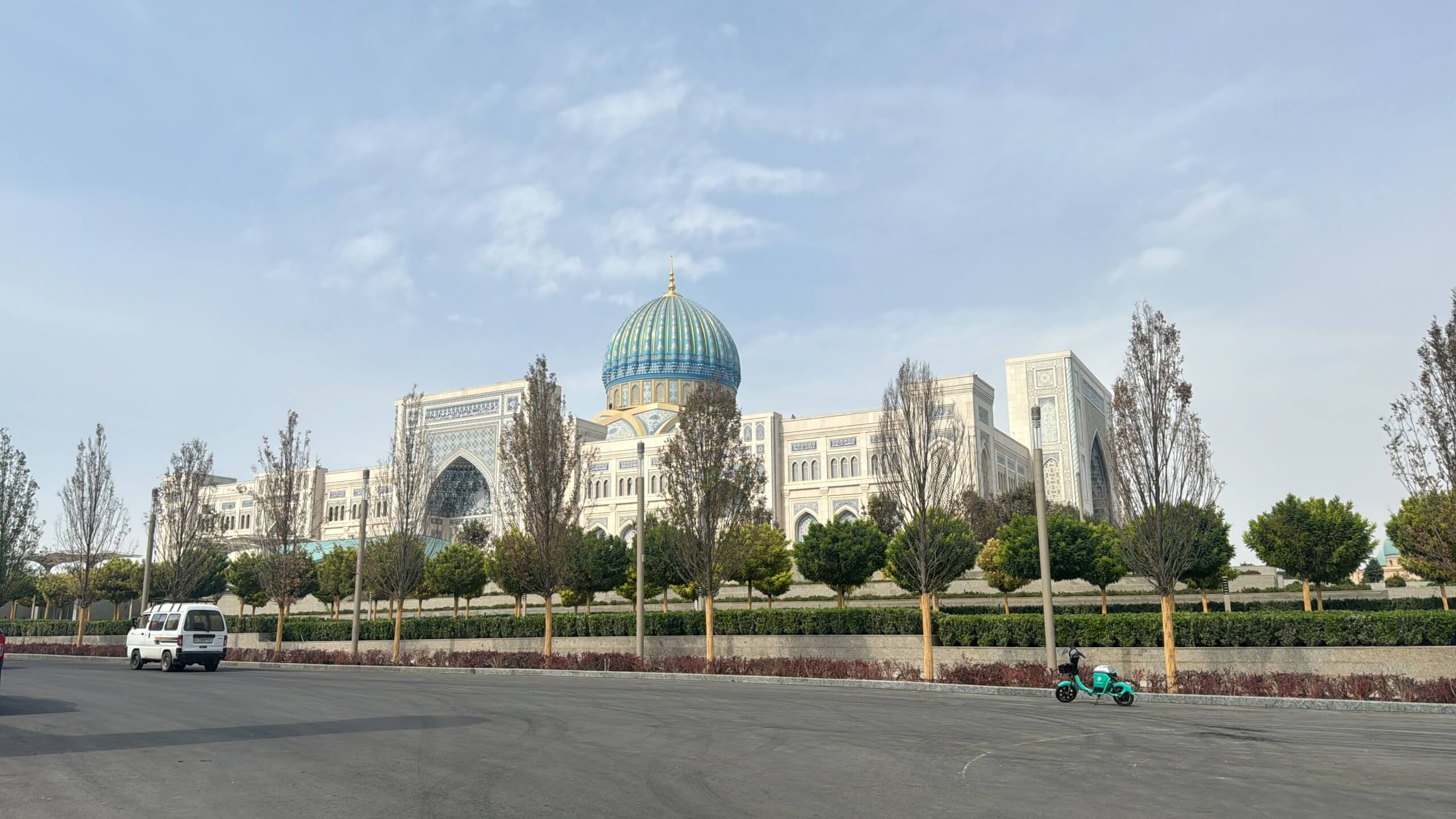 The Center for Islamic Civilization of Uzbekistan in Tashkent: A New Global...