
IslamiCity
Listen PodCasts, Live Quran, Watch Videos @VideoHub

The United States of America is a highly developed world's largest market economy
The United States has a highly developed and diversified market-oriented and world's largest economy by nominal GDP of $21.4 trillion generating nearly half of global economic output since 1960. It is the second largest by purchasing power parity (PPP) after China which has $44.3 trillion on a per capita basis.
The U.S. dollar is the world's foremost reserve currency with widespread international usage. Since the end of World War 11, US economy has achieved relatively steady growth, low unemployment and inflation along with rapid advances in technology. The American economy has high productivity, a well-developed transportation infrastructure and extensive natural resources.
The top manufacturing countries globally by gross output value
The U.S. is the world's largest importer and second largest exporter of goods after China. China exports $3.8 trillion, U.S. $2.1 trillion, and Germany $1.8 trillion. Together these three powerhouses dominate global trade driven by large-scale manufacturing and industrial bases.
The U.S. imports approximately $4.1 trillion worth of goods and services annually, roughly $3.4 trillion in physical goods and $700 billion in services primarily from Mexico, China and Canada.
Americans have the sixth highest highest average household and employee income among OECD member states.
The U.S. started as a British settlement along the Eastern seaboard in the 17th and 18th centuries, and gained independence on July 4, 1778. The 13 American colonies severed their political connections to Great Britain. The Declaration of Independence summarized their motivation and confirmed an official alliance with the Government of France.
Another report by The United Nation organization on its 75th anniversary on December 8, 2020 proclaimed "Inequality- Bridging the Divide." And it said, "Today, wherever the people live, they don't have to look far to confront inequalities. Inequality in its various forms is an issue that will define our time. Confronting inequalities has moved to the forefront of many global policy debates as a consensus has emerged that all should enjoy equal access to opportunity. 'Leave no one behind' serves as the rallying call that all of the 2030 Agenda for Sustainable Development.
Overall, since the 1990s total global inequality (inequality across all individuals in the world ) declined for the first time since the 1820s. Reinforcing this trend we have mostly seen income inequality between countries decline. Yet income inequality within countries has risen, this is the form of inequality people feel on a daily basis.
Inequalities are not only driven and measured by income , but are determined by other factors -gender, age, origin, ethnicity, disability, sexual orientation, class and religion. These factors determine inequalities of opportunity which continue to persist, within and between countries. In some parts of the world, these divides are becoming more pronounced. Meanwhile, gaps in newer areas such as , access to online and mobile technologies are emerging. The result is a complex mix of internal and external challenges that will continue to grow over the next twenty-five years.
Today, 71 percent of the world's population lives in countries where inequality has grown. This is especially important because inequalities within countries are the inequalities people feel day to day. month to month, year to year. This is how people stack and compare themselves with their neighbors, family members, and society, Since 1990, income inequality has increased in most developed countries and some middle =income countries including China and India.
The UN Inequality report 2026 based on data compiled by 200 researchers also found that the top 10% earn more than the other 90% combined while the poorest half earn less than 10% of the globe. The gap between America's wealthiest and everyday citizens has been less than in generations.
A Guardian newspaper report December 10, 2025 said that just 0.001 of the world's population control three times the wealth of the entire bottom half of humanity according to a report that argues global inequality has reached such extremes that urgent action has become essential.
The value of people's assets was even more concentrated than income, or earnings from work and investments, with the richest 10% of the world's population owning 75% of the wealth as the bottom half.
Wealth gap in the United States only seems to be getting bigger every day. According to Forbes the divide between rich and poor is clearer than ever with billionaires in the U.S. worth nearly $8.22 trillion dollars - that's over a quarter (25.8%) of the nation's GDP. America has 902 in 2025 is home to the most billionaires in the world's 3,000 billionaires, followed by China at 450, India at 205, Germany at 171. Among 10 richest billionaires are 1, Elon Musk with near $830 billions, 4. Mark Zuckerberg, over $210 billion, and 5. Jeff Bezoss close behind.
Oxfam America reported on November 3, 2025 that in the past year, the wealth of the 10 richest U.S. billionaires surged $698 billion, as Oxfam warned Trump administration policies risk driving U.S. inequity to new heights. Between 1989 and 2022, a top 0.1% U.S. household gained $39.5 million, a top 1% household gained $8.35 million, and a bottom 20% household gained less than $8,500. As many across the country struggle with rising costs, Oxfam calls on policymakers to deliver for ordinary people by rapidly reducing extreme inequality - including through tackling concentrated power, investing in public services, and reforms to social protection, tax, and labor laws.
One year on from the 2024 election of President Trump, new research from Oxfam shows how decades of intensifying inequality in the U.S. have culminated in a new American oligarchy, characterized by record levels of wealth concentration and outsized political power. Between 1989 and 2022, the poorest household in the top 1% gained 987 times more wealth than the richest household in the bottom 20%. In the last year alone, the 10 richest U.S. billionaires grew $698 billion richer, and the assets of the top 0.1% reached their highest share on record (12.6%).
On June 2025 Oxfam UK reported "New wealth of top 1% surged by over $33.9 trillion since 2015 - enough to end poverty 22 times over." It said, "The world's richest one per cent increased their wealth by more than $33.9 trillion in real terms since 2015, according to new Oxfam analysis published ahead of the world's largest development financing talks in a decade. This is more than enough to eliminate annual poverty 22 times over at the World Bank's highest poverty line of $8.30 a day. The wealth of just 3,000 billionaires has surged $6.5 trillion in real terms since 2015, and now comprises the equivalent of 14.6 per cent of global GDP."
Oxfam's new briefing paper, "From Private Profit to Public power: Financing Development, Not Oligarchy", coincides with the fourth International Conference on Financing for Development which starts on the 30 June,2025 hosted by Spain in Seville and attended by over 190 countries.
Wealthy governments are making the largest cuts to life-saving development aid since records began in 1960. Oxfam's paper found that G7 countries alone, who account for around three-quarters of all official aid, are cutting aid by 28per cent for 2026 compared to 2024.
David Vine, a professor at the American University in Washington wrote on September 26, 2015 a somewhat detailed article on America's Global Military Bases Actually Undermine National Security. Here's how? (Except for the pictures Almost all of it reproduced here).
The article said, "With the U.S. military having withdrawn many of its forces from Iraq and Afghanistan, most Americans would be forgiven for being unaware that hundreds of U.S. bases and hundreds of thousands of U.S. troops still encircle the globe. Although few know it, the United States garrisons the planet unlike any country in history and the evidence is on view from Honduras to Oman, Japan to Germany, Singapore to Djibouti.
Like most Americans, for most of my life, I rarely thought about military bases. The late scholar and former CIA consultant Chalmers Johnson described me well when he wrote in 2004, "As distinct from other peoples, most Americans do not recognize - or do not want to recognize - that the United States dominates the world through its military power. Due to government secrecy, our citizens are often ignorant of the fact that our garrisons encircle the planet."
To the extent that Americans think about these bases at all, we generally assume they're essential to national security and global peace. Our leaders have claimed as much since most of them were established during World War II and the early days of the Cold War. As a result, we consider the situation normal and accept that U.S. military installations exist in staggering numbers in other countries, on other peoples' land. On the other hand, the idea that there would be foreign bases on U.S. soil is unthinkable.
While there are no freestanding foreign bases permanently located in the United States, there are now around 800 U.S. bases in foreign countries. Seventy years after World War II and 62 years after the Korean War, there are still 174 U.S. "base sites" in Germany, 113 in Japan, and 83 in South Korea, according to the Pentagon. Hundreds more dot the planet in around 80 countries, including Aruba and Australia, Bahrain and Bulgaria, Colombia, Kenya, and Qatar, among many other places. Although few Americans realize it, the United States likely has more bases in foreign lands than any other people, nation, or empire in history.
Oddly enough, however, the mainstream media rarely report or comment on the issue. For years, during debates over the closure of the prison at the base in Guantánamo Bay, Cuba, nary a pundit or politician wondered why the United States has a base on Cuban territory in the first place or questioned whether we should have one there at all. Rarely does anyone ask if we need hundreds of bases overseas or if, at an estimated annual cost of perhaps $156 billion or more, the U.S. can afford them. Rarely does anyone wonder how we would feel if China, Russia, or Iran built even a single base anywhere near our borders, let alone in the United States.
"Without grasping the dimensions of this globe-girdling Baseworld," Chalmers Johnson insisted, "one can't begin to understand the size and nature of our imperial aspirations or the degree to which a new kind of militarism is undermining our constitutional order."
Alarmed and inspired by his work and aware that relatively few have heeded his warnings I've spent years trying to track and understand what he called our "empire of bases." While logic might seem to suggest that these bases make us safer, I've come to the opposite conclusion: In a range of ways our overseas bases have made us all less secure, harming everyone from U.S. military personnel and their families to locals living near the bases to those of us whose taxes pay for the way our government garrisons the globe.
We are now, as we've been for the last seven decades, a Base Nation that extends around the world, and it's long past time that we faced that fact.
Some are city-sized "Little Americas" - places like Ramstein Air Base in Germany, Kadena Air Base in Okinawa, and the little known Navy and Air Force base on Diego Garcia in the Indian Ocean. These support a remarkable infrastructure, including schools, hospitals, power plants, housing complexes, and an array of amenities often referred to as "Burger Kings and bowling alleys."
Among the smallest U.S. installations globally are "lily pad" bases (also known as "cooperative security locations"), which tend to house drones, surveillance aircraft, or pre-positioned weaponry and supplies. These are increasingly found in parts of Africa and Eastern Europe that had previously lacked much of a U.S. military presence.
Other facilities scattered across the planet include ports and airfields, repair complexes, training areas, nuclear weapons installations, missile testing sites, arsenals, warehouses, barracks, military schools, listening and communications posts, and a growing array of drone bases.
Military hospitals and prisons, rehab facilities, CIA paramilitary bases, and intelligence facilities (including former CIA "black site" prisons) must also be considered part of our Base Nation because of their military functions. Even U.S. military resorts and recreation areas in places like the Bavarian Alps and Seoul, South Korea are bases of a kind. Worldwide, the military runs more than 170 golf courses.
The Pentagon's overseas presence is actually even larger. There are U.S. troops or other military personnel in about 160 foreign countries and territories, including small numbers of marines guarding embassies and larger deployments of trainers and advisers like the roughly 3,500 now working with the Iraqi Army. And don't forget the Navy's 11 aircraft carriers. Each should be considered a kind of floating base - or as the Navy tellingly refers to them, "four and a half acres of sovereign U.S. territory." Finally, above the seas, one finds a growing military presence in space.
The United States isn't, however, the only country to control military bases outside its territory. Great Britain still has about seven bases and France five in former colonies. Russia has around eight in former Soviet republics. For the first time since World War II, Japan's "Self-Defense Forces" have a foreign base in Djibouti in the Horn of Africa, alongside U.S. and French bases there. South Korea, India, Chile, Turkey, and Israel each reportedly have at least one foreign base. There are also reports that China may be seeking its first base overseas.
In total, these countries probably have about 30 installations abroad, meaning that the United States has approximately 95 percent of the world's foreign bases.
In 1940, with the flash of a pen, President Franklin D. Roosevelt signed a "destroyers-for-bases" deal with Great Britain that instantly gave the United States 99-year leases to installations in British colonies worldwide. Base acquisition and construction accelerated rapidly once the country entered the war. By 1945, the U.S. military was building base facilities at a rate of 112 a month. By war's end, the global total topped 2,000 sites. In only five years, the United States had developed history's first truly global network of bases, vastly overshadowing that of the British Empire upon which "the sun never set."
After the war, the military returned about half the installations but maintained what historian George Stambuk termed a "permanent institution" of bases abroad. Their number spiked during the wars in Korea and Vietnam, declining after each of them. By the time the Soviet Union imploded in 1991, there were about 1,600 U.S. bases abroad, with some 300,000 U.S. troops stationed on those in Europe alone.
Although the military vacated about 60 percent of its foreign garrisons in the 1990s, the overall base infrastructure stayed relatively intact. Despite additional base closures in Europe and to a lesser extent in East Asia over the last decade, and despite the absence of a superpower adversary, nearly 250,000 troops are still deployed on installations worldwide.
Although there are about half as many bases as there were in 1989, the number of countries with U.S. bases has roughly doubled from 40 to 80. In recent years, President Obama's "Pacific pivot" has meant billions of dollars in profligate spending in Asia, where the military already had hundreds of bases and tens of thousands of troops.
Billions more have been sunk into building an unparalleled permanent base infrastructure in every Persian Gulf country save Iran. In Europe, the Pentagon has been spending billions more erecting expensive new bases at the same time that it has been closing others.
Since the start of the Cold War, the idea that our country should have a large collection of bases and hundreds of thousands of troops permanently stationed overseas has remained a quasi-religious dictum of foreign and national security policy. The nearly 70-year-old idea underlying this deeply held belief is known as the "forward strategy." Originally, the strategy held that the United States should maintain large concentrations of military forces and bases as close as possible to the Soviet Union to hem in and "contain" its supposed urge to expand.
But the disappearance of another superpower to contain made remarkably little difference to the forward strategy. Chalmers Johnson first grew concerned about our empire of bases when he recognized that the structure of the "American Raj" remained largely unchanged despite the collapse of the supposed enemy.
Two decades after the Soviet Union's demise, people across the political spectrum still unquestioningly assume that overseas bases and forward-deployed forces are essential to protect the country. George W. Bush's administration was typical in insisting that bases abroad "maintained the peace" and were "symbols" of "U.S. commitments to allies and friends." The Obama administration has similarly declared that protecting the American people and international security "requires a global security posture."
Support for the forward strategy has remained the consensus among politicians of both parties, national security experts, military officials, journalists, and almost everyone else in Washington's power structure. Opposition of any sort to maintaining large numbers of overseas bases and troops has long been pilloried as peacenik idealism or the sort of isolationism that allowed Hitler to conquer Europe.
The expense of transportation, the higher cost of living in some host countries, and the need to provide schools, hospitals, housing, and other support to family members of military personnel mean that the dollars add up quickly - especially with more than half a million troops, family members, and civilian employees on bases overseas at any time.
By my very conservative calculations, maintaining installations and troops overseas cost at least $85 billion in 2014 - more than the discretionary budget of every government agency except the Defense Department itself. If the U.S. presence in Afghanistan and Iraq is included, that bill reaches $156 billion or more.
While bases may be costly for taxpayers, they're extremely profitable for privateers of twenty-first-century war like DynCorp International and former Halliburton subsidiary KBR. As Chalmers Johnson noted, "Our installations abroad bring profits to civilian industries," which win billions in contracts annually to "build and maintain our far-flung outposts."
Meanwhile, many of the communities hosting bases overseas never see the economic windfalls that U.S. and local leaders regularly promise. Some areas, especially in poor rural communities, have seen short-term economic booms touched off by base construction. In the long-term, however, bases rarely create sustainable, healthy local economies.
Compared with other forms of economic activity, they represent unproductive uses of land, employ relatively few people for the expanses occupied, and contribute little to local economic growth. Research has consistently shown that when bases finally close, the economic impact is generally limited, and in some cases actually positive - that is, local communities can end up better off when they trade bases for housing, schools, shopping complexes, and other forms of economic development.
Meanwhile, for the United States, investing taxpayer dollars in the construction and maintenance of overseas bases means forgoing investments in areas like education, transportation, housing, and healthcare, despite the fact that these industries are more of a boon to overall economic productivity and create more jobs compared to equivalent military spending. Think about what $85 billion per year would mean in terms of rebuilding the country's crumbling civilian infrastructure.
Worldwide, bases have caused widespread environmental damage because of toxic leaks, accidents, and in some cases the deliberate dumping of hazardous materials. GI crime has long angered locals. In Okinawa and elsewhere, U.S. troops have repeatedly committed horrific acts of rape against local women. From Greenland to the tropical island of Diego Garcia, the military has displaced local peoples from their lands to build its bases.
In contrast to frequently invoked rhetoric about spreading democracy, the military has shown a preference for establishing bases in undemocratic and often despotic states like Qatar and Bahrain. In Iraq, Afghanistan, and Saudi Arabia, U.S. bases have created fertile breeding grounds for radicalism and anti-Americanism. The presence of bases near Muslim holy sites in Saudi Arabia was a major recruiting tool for al-Qaeda and part of Osama bin Laden's professed motivation for the September 11, 2001 attacks.
Although this kind of perpetual turmoil is little noticed at home, bases abroad all too often generate grievances, protest, and antagonistic relationships. Although few here recognize it, our bases are a major part of the image the United States presents to the world - and they often show us in an extremely unflattering light.
By making it easier to wage foreign wars, bases overseas have ensured that military action is an ever more attractive option - often the only imaginable option - for U.S. policymakers. As the anthropologist Catherine Lutz has said, when all you have in your foreign policy toolbox is a hammer, everything starts to look like a nail. Ultimately, bases abroad have frequently made war more likely rather than less.
Proponents of the long-outdated forward strategy will reply that overseas bases "deter" enemies and help keep the global peace. As supporters of the status quo, they've been proclaiming such security benefits as self-evident truths for decades. Few have provided anything of substance to support their claims. While there's some evidence that military forces can indeed deter imminent threats, little if any research suggests that overseas bases are an effective form of long-term deterrence.
Studies by both the Bush administration and the RAND Corporation - not exactly left-wing peaceniks - indicate that advances in transportation technology have largely erased the advantage of stationing troops abroad. In the case of a legitimate defensive war or peacekeeping operation, the military could generally deploy troops just as quickly from domestic bases as from most bases abroad. Rapid sealift and airlift capabilities coupled with agreements allowing the use of bases in allied nations and, potentially, pre-positioned supplies are a dramatically less expensive and less inflammatory alternative to maintaining permanent bases overseas.
It is also questionable whether such bases actually increase the security of host nations. The presence of U.S. bases can turn a country into an explicit target for foreign powers or militants - just as U.S. installations have endangered Americans overseas.
Similarly, rather than stabilizing dangerous regions, foreign bases frequently heighten military tensions and discourage diplomatic solutions to conflicts. Placing U.S. bases near the borders of countries like China, Russia, and Iran, for example, increases threats to their security and encourages them to respond by boosting their own military spending and activity.
Imagine how U.S. leaders would respond if China were to build even a single small base in Mexico, Canada, or the Caribbean. Notably, the most dangerous moment during the Cold War - the 1962 Cuban missile crisis - revolved around the construction of Soviet nuclear missile facilities in Cuba, roughly 90 miles from the U.S. border.
The creation and maintenance of so many U.S. bases overseas likewise encourages other nations to build their own foreign bases in what could rapidly become an escalating "base race." Bases near the borders of China and Russia, in particular, threaten to fuel new cold wars. U.S. officials may insist that building yet more bases in East Asia is a defensive act meant to ensure peace in the Pacific, but tell that to the Chinese.
That country's leaders are undoubtedly not "reassured" by the creation of yet more bases encircling their borders. Contrary to the claim that such installations increase global security, they tend to ratchet up regional tensions, increasing the risk of future military confrontation.
In this way, just as the war on terror has become a global conflict that only seems to spread terror, the creation of new U.S. bases to protect against imagined future Chinese or Russian threats runs the risk of becoming a self-fulfilling prophecy. These bases may ultimately help create the very threat they are supposedly designed to protect against. In other words, far from making the world a safer place, U.S. bases can actually make war more likely and the country less secure.
America's overseas bases offer a window onto our military's impact in the world and in our own daily lives. The history of these hulking "Little Americas" of concrete, fast food, and weaponry provides a living chronicle of the United States in the post-World War II era. In a certain sense, in these last seven decades, whether we realize it or not, we've all come to live "behind the wire," as military personnel like to say.
We may think such bases have made us safer. In reality, they've helped lock us inside a permanently militarized society that has made all of us - everyone on this planet - less secure, damaging lives at home and abroad.
A Middle Eastern military misadventure is one of the last ways a casual observer would have expected Mr.Trump's presidency to go wrong. The problems he alluded to in all three of his presidential campaigns has mostly resulted from our leaders'governing beyond their means. At home, proponents of wokeness underestimated the costs and difficulties of micromanaging interactions between groups. Abroad, the mighty American armed forces proved to have no particular talent for democracy promotion, and there was recent debacle in Iraq to prove it. Overextension was a danger that President Joe Biden contemptuously dismissed. "We are the United States of America, he used to say, "and there is nothing we can't do."
Mr. Trump people thought would be different For all the grandiosity of the expression "Make America great again," Trump voters did not expect to take on new problems. The greatness would be mostly atmospheric braggadocio, not adventurism. The United States could become greater even I it withdrew to a less expansive sphere of influence. When he proclaimed an updated Monroe Doctrine, refocusing American attention on the Western Hemisphere, retrenchment was what most people thought they were getting. In last November's National Security Strategy , he added , "The days in which the Middle East dominated American foreign policy in both long-term planning and day-to-day execution are thankfully over."
This was a logical, even an admirable, foreign policy plan. Just as important, history showed it to be workable. Britain had to surrender its far-flung system of colonies and protectorates after World War !!. Letting go was often awkward and sometimes left violence in its wake. But except for its ill-fated attempt to join France and Israel in Seizing the Suez Canal from Egypt in 1956 , Britain did not try to hold territories it could no longer afford. It wound up on reasonably good terms with its former colonial possessions. Its disengagement was a success, though this can be hard\d to see because what was being managed was decline.
Mr Trump had a chance of pulling off something similar.The assumption in Washington over the past decade has been that the world is engaged in a game of geocentric musical chairs and the music is about to stop. China may soon overmatch us not just in military-industry capacity but also in information technology. The world would harden into a new, less favorable geocentric configuration. This is the last moment to reshape it in America/'s favor.
And Venezuela, dependent on China as a market for 80 per cent of its oil exports , had American troops abduct its leader Nicolas Maduro last year. And Trump warned Cuba, a destination for Chinese investment. "is next." He is also wants a secure foothold near the North Pole (a foothold such as Greenland) when time comes to divvy up its energy and mineral resources against stiff opposition by Europeans. Whether or not this hemispheric policy is defensible, is yet to see.
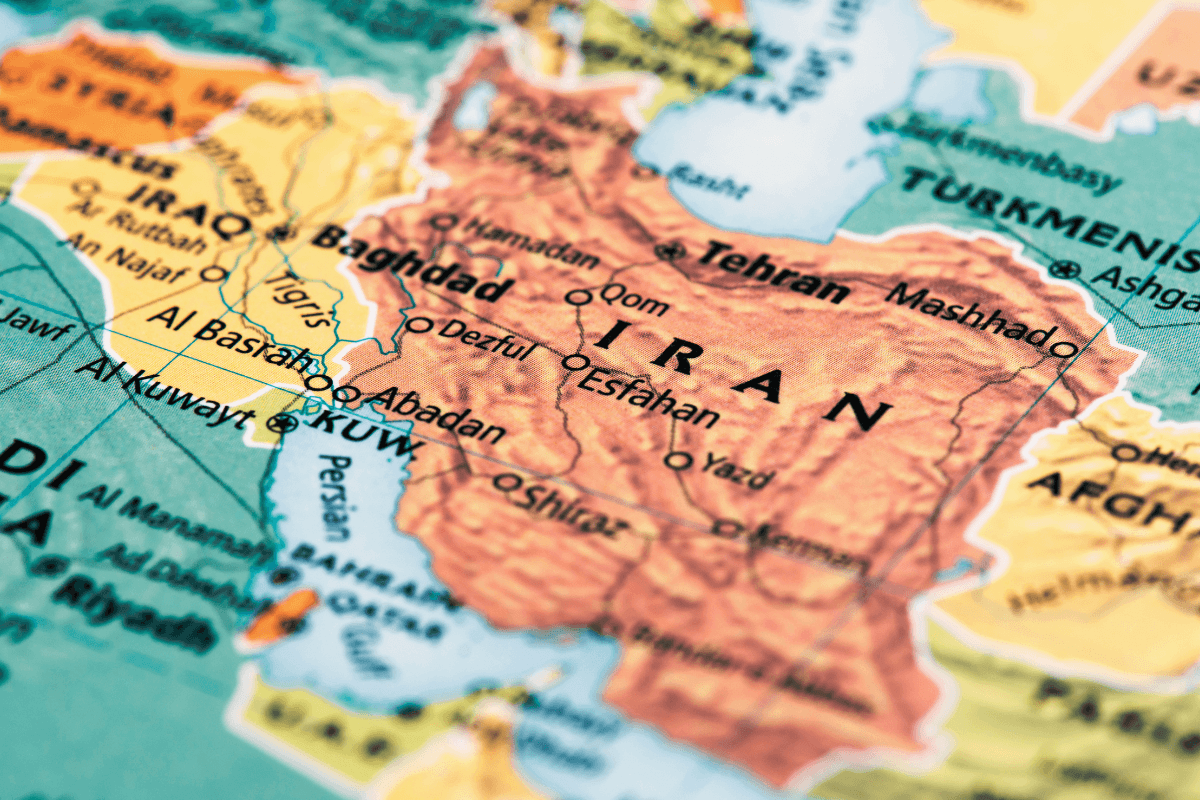
That is because the United States lacks the military means to impose its will on Iran in a long conflict. In 1991 a million solders from more than 40 countries were needed to reverse the invasion of Kuwait carried out by Saddam Hussain's Iraq. a country less sophisticated than Iran and a fraction of its size.
When Iran and Iraq fought each other to a standstill in the 1980s, death ran into the hundreds of thousands on each side. The United States would have to send a significant portion of its armed forces - which total only 1.3 million troops- to stand a chance of subduing Iran, and that force, if successful, would have to stay for a long time.
The argument can be made that the United States no longer depends on mustering huge armies; it has sophisticated missiles and other standoff weapons. But those weapons are needed to defend allies and interests in other theatres.and the United States is depleting them. According to reporting in the Times, it has already used 1,100 of its long-range missiles, earmarked for for potential conflicts in Asia , leaving just 1,500 in the stockpile, and fired an additional 1,000 Tomahawks cruise missiles , about 10 times as may as the military buys in an average year.
American leaders have been scolding their European allies for years about the inadequacy of their fighting forces, But if one measures America's military might against our pretensions rather than our G.D.P/, it is just as inadequate.
It would be wrong to say the United States is trapped in the war it started, It has options. But it is now going to pay a very steep price, no matter which of them it chooses It can desist in Iran, having demonstrated for no good reason m that its military is far less dominant than the world had assumed.
Or it draw resources from theatres that are of vital national interest, such as Europe and East Asia, to fund what the president refers to as as his Iranian "excursion." Or it can resort to the extreme military options, Mr.Trump darkly alluded to in social media posts to lose its reputation, its friends or its soul.
Prime Minister Benjamin Netayahu of Israel urged this war o Mr. Trump because he too recognized the musical chairs logic of the moment. Once the music stops, the United States may lack the firepower to protect Israel from its neighbors in the traditional manner and will probably lack the inclination.
The skepticism about American hegemony that led Americans to turn to Mr. Trump was a healthy one. If a globalist system built on free trade, democracy promotion and mass migration is so great, Mr. Trump voters asked , then why we have to borrow $35 trillion since we took it up? That's a genuinely good question. Mr.Trump was rhe perfect candidate for Americans who suspected something had gone wrong with their elites. His argument, basically, was that American-led globalism was so beneficial to politicians that once in power, they would defend it even against their voters, no matter what they said while campaigning, Events, alas, have proved him right.
China loves electric cars; making them, driving them and selling them to the rest of the world. Electric vehicles have been widely adopted in China, thanks in part to years of now-defunct government subsidies and a fast growing network of charging stations.


 What Bombs Cannot Kill. Part I: Ali Shariati, the Iranian Revolution, and t...