One day Abu Dharr asked the Messenger of Allah: How many prophets are there in all? He (Prophet Muhammad) replied: One hundred and twenty four thousand. He (Abu Dharr) then asked: How many of them were messenger prophets? He replied: Three hundred thirteen from the above group. He asked: Who was the first of them? He replied: Adam...The first prophet among Bani Israel was Musa and the last of them was Isa and they were in all six hundred (Jewish) prophets." (Biharul Anwar, Vol. 11, Pg. 32)
One hundred and twenty four thousand Prophets seems to be a great exaggeration, but the one God sends at least one prophet to every tribe that has its own language. We know the names of some of the prophets sent to the Israelite people, but we do not know the names of many others.
The Rabbis taught that 48 male prophets and 7 female prophets prophesied in Israel: Sarah, Miriam, Deborah, Hannah, Abigail, Hulda and Queen Esther. "You who believe, be steadfast in your devotion to God and bear witness impartially: do not let hatred of others lead you away from justice, but adhere to justice, for that is closer to awareness of God. Be mindful of God: God is well aware of all that you do."
(Qur'an 5:8)So characterizing the factors that have shaped linguistic diversity is fundamental for understanding human history, culture, and cognition. Before the onset of plant and animal domestication, the number of languages was smaller than it is today (4500 to 6000 compared with 7500 today). Subsequent increases in global population precipitated increased linguistic diversity. A new study now has uncovered a linguistic "golden age" with thousands of languages 3000 to 1000 BCE years ago.
Before the onset of plant and animal domestication, the number of languages was smaller than it is today (4500 to 6000 compared with 7500). Subsequent increases in global population precipitated increased linguistic diversity. There was a linguistic "golden age" with tens of thousands of languages 3000 to 1000 years ago.
Great loss of linguistic diversity did not begin with recent colonial expansion but as multinational empires first spread along with their languages and cultures. Thus, extinction has likely played a much greater role in shaping linguistic and cultural diversity than previously thought.
Human uniqueness isn't because humans alone of all mammal species run on two feet; because ostriches can do that. Nor is Human uniqueness due to making tools; because Chimps, Bonobos, New Caledonia crows and a half dozen other animals also make tools.
Humans are unique because they are the only species that can tell stories and worship the Divine.
Languages and religions are ubiquitous among humans. Every tribe, no matter how small or isolated, speaks a language and believes in a religion. These two activities are the most important in all human culture.
Linguists estimate that between 31,000 and perhaps 200,000-500,000 languages have existed throughout human history. Because speech leaves no fossil record, exact numbers are impossible to prove.
Linguists have discovered over 6,900 spoken languages; and have documented almost 600 more that were, and no-longer are, spoken. Every few years the last living speaker of a small tribal language dies. By the end of the 21st century there will probably be; 50-100 fewer spoken and 50-100 more dead; languages. The widely spoken languages grow and the smaller languages fade away.
The same is true for religions; and the Gods they worship. The vast majority of the world's religions in the past were polytheistic, so the number of Gods and Spirits worshiped by name was almost 4,000: but who today believes in Zeus or Helios, or any of the other gods and goddesses of the Greco-Roman pantheon. Who today believes in Odin, chief god of the Nordic religion, or Thor of the mighty hammer, or the rest of the Norse pantheon. Or the ancient Aztec and Mayan gods.
Hebrew is the oldest of the ongoing monotheistic religions; and Arabic is the most recent of the universal monotheist religions (although Catholics no longer pray in Latin).
The original language of Islam is Arabic. The foundational texts of the religion, including the Quran (the word of God as revealed to Prophet Muhammad) and the Hadith (the recorded sayings of the Prophet), were originally recorded and preserved in Quranic Arabic.
Because Arabic is considered the literal word of God in Islam, Arabic serves as the universal liturgical language for Muslims. Central acts of worship, such as daily prayers, are always recited in Arabic. Translations of the Quran are treated merely as interpretations of the meaning rather than the actual holy text itself.
A linguistic "golden age" flourished between 1,000 to 3,000 years ago when many tens of thousands of languages were spoken throughout the world, according to a new study coauthored by Yale linguist Claire Bowern that traces trajectories in global language diversity over the past 12,000 years. The golden age was followed by a period of rapid decline in linguistic diversity that coincided with the rise of large states and multinational empires, such as the Roman Empire, the researchers found. The finding challenges a commonly held view that widespread language extinction began later, about 500 years ago, with the onset of European colonial expansion.
The Talmud tells us that the Hebrew Scriptures mention by name 48 male prophets and seven female prophetesses. The seven prophetesses of the Hebrew Bible are:
- Sarah. Abraham's wife Sarah was an equal partner in his efforts to spread monotheistic beliefs and morality. Abraham led the men, and Sarah the women.2 She was originally named Yiscah, but Abraham called her Sarai ("my princess) because she was superior to him in her prophetic abilities. When she was 89 years old, God commanded that her name be changed to Sarah (which means "princess") and Abram ("exalted father") become Abraham ("father of many nations"). Sarah was so holy that her bread would remain fresh all week, her Shabbat candles would burn until the following Friday, and a cloud would hover above her tent.
- Miriam the Prophetess, (Exodus 15:20) marks the introduction of Miriam as a prophetess and her leadership of the Israelite women. She took a tambourine and led all the women in singing and dancing to celebrate God's miraculous rescue of the Israelites at the Reed Sea. Miriam knew that her parents were destined to give birth to the child who would lead the people out of slavery, and she convinced them to be sexually active. From that union came Prophet Moses, the redeemer of Israel. When the Israelites left Egypt and crossed the Reed Sea, leaving the Egyptians behind, Prophetess Miriam led the women in song and dance. Due to Miriam's merit, God provided the Jewish people with a traveling well for almost 40 years that they were in the desert. God chose Prophetess Miriam to be a pivotal leader of the Exodus because of her courage, quick thinking, and prophetic voice. The Hebrew Biblical narrative shows her actions earning her role as a foundational figure in Israel's history
- Deborah the Prophetess ruled Israel from under a date tree (tomer Devorah) in the land of Ephraim. One reason for this open-air office was that she was wary of being alone with men who came to seek her counsel, and therefore chose to meet them in plain sight. Scripture describes her as "a woman of flames (lapidot)." The sages understood this to mean that she had the honor of making wicks for the Temple menorah. She conveyed God's message to Barak that he should go to war against the Canaanites, who had been oppressing the people of Israel. Barak agreed to go to war only if Prophetess Deborah would go with him. She obliged, the Israelites won (with the help of Yael (A convert to Judaism and another brave woman), and Deborah sang a song to thank God for His deliverance.
- Hannah-Chanah had no offspring, but her husband's other wife, Peninah, was blessed with many children. One holiday, she was so saddened that she went alone to the Tabernacle and wept, silently praying. She promised God that if she would be blessed with a son, she would give him to God all the days of his life. Her prayer was unusual in that it was silent, and Eli, the High Priest at the time, thought she was drunk. When she explained what she was doing, Eli was impressed and agreed she was correct. Several ways of Jewish prayer are derived from Chanah's prayer.
- Abigail was the wise and beautiful wife of Nabal, a stingy man who was as tough as a lion. After Nabal, who was as rich as he was bad, refused to give provisions to Prophet King David and his men, Abigail gave them bread, wine, meat and dried fruits, and convinced David not to kill her husband. According to the Talmud, she did so using proofs from Jewish law. Ten days later, Nabal died and David and Abigail married. Tradition tells us that Abigail did more than just say wise words, but that she actually prophesied to King David.
- Huldah the Prophetess encouraged King Josiah to continue his program of renovating the Holy Temple in Jerusalem and reintroducing the service of God. After the king asked her the significance of an old Torah scroll found in the Temple, she conveyed the following message from God to the King: "But to the king of Judah . . . Because your heart was tender and you humbled yourself before the Lord when you heard what I decreed against this place and against its inhabitants . . .I heard you. So I will gather you unto your fathers, and you will go to your grave in peace." Huldah lived in the time of the reign of King Josiah in Jerusalem. This was also the time of two other prophets Jeremiah and Zephaniah. Huldah had a school for women in Jerusalem. The Talmud states that Huldah was a relative of prophet Jeremiah on his mother's side. On his father's side, she was a descend of a convert to Judaism.
- The name Haman appears in both Quran and Bible, and refers to two different men and time periods with a common hate. In the Quran, Haman was a high-ranking court official under Pharaoh during the time of Prophet Moses. Haman is mentioned by name six times in the Qur'an. In the Bible's Book of Esther, Haman is a vizier to the Persian King Ahasuerus (Xerxes) who plots against the Jews, almost 1,000 years later.
The Book of Esther (2:7) relates that Esther had two names: "He was foster father to Hadassah-that is, Esther." While the Book of Esther centers on her political maneuvering and bravery, the Talmud also identifies her as the last of the Biblical prophetesses, noting that she was imbued with a divine spirit to risk her life to save her people. Queen Esther is an orphan raised by her uncle Mordecai and is eventually married to King Ahasuerus. She does not reveal her Jewishness to the king and learns of a plan to kill all the Jews by the king's advisor, Haman.
Esther recognizes that she needs to personally plead the king to save her people. She fasts for three days, and then goes to the king, enduring many obstacles while going through the palace. Her bravery earns her a major spot among the seven women prophets, and she is remembered as the one responsible for the deliverance of the people Israel. Esther was the only woman to author a full book of the Hebrew Bible. (Talmud, Megillah 14a) Queen Esther had the Book of Esther recorded for all posterity, to be read every year on Purim, the day Jews celebrated that two of their worst enemies had been vanquished. (Esther 9:29). All females should read the Book of Esther.


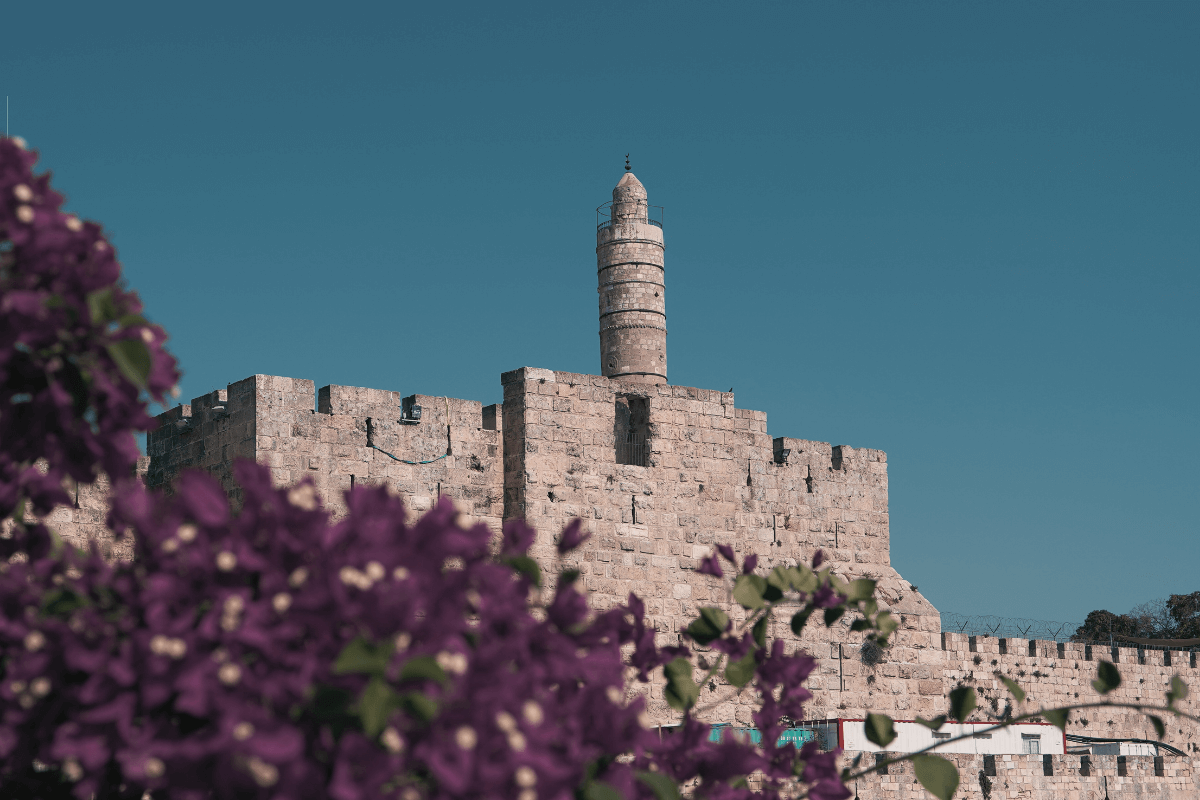 Prophet David Is Streaming Almost Everywhere


