
IslamiCity
Listen PodCasts, Live Quran, Watch Videos @VideoHub

The concept of intifada, literally meaning "uprising" or "shaking off," has often been associated with the blessed armed resistance in Palestine. Yet the lesson of Gaza extends far beyond the battlefield. It is a lesson in resilience, in refusing to submit, and in the determination to live freely despite overwhelming odds.
Gaza teaches Muslims everywhere that occupation is not only territorial. It is economic, geopolitical, educational, intellectual, cultural, ideological, and institutional. Every Muslim country, in one way or another, is occupied. And every Muslim country needs an intifada, not necessarily military, but tailored to its own conditions, proportional to the severity of its situation, and directed towards liberation in all dimensions of life.
Their economies are dependent on foreign loans, their universities often replicate Western curricula without producing original thought, their cultural industries imitate rather than innovate, and their political institutions are shaped by external pressures.
Gaza teaches that occupation is not only about land. It is about the mind, the soul, and the structures that govern daily life. To ignore this lesson is to remain in denial, stubbornly refusing to acknowledge the depth of dependency that defines contemporary Muslim societies.
Economic occupation is perhaps the most visible. Most Muslim countries rely heavily on imports for basic goods, from food to technology. Their economies are tied to global financial institutions that dictate policies. Structural adjustment programs imposed by the International Monetary Fund have reshaped economies in ways that prioritize debt repayment over social welfare.
Oil-rich states, despite their wealth, remain dependent on Western markets and technologies. This dependency is also a form of occupation: decisions are not made freely, but under external constraints.
Geopolitical occupation is equally pervasive. Foreign military bases dot the Muslim world, from the Gulf to Central Asia. Alliances are often dictated by Western powers, not by local priorities. Muslim countries are pressured to align with global blocs, sacrificing independent foreign policy. Their sovereignty is compromised by treaties and interventions that serve external interests.
In this regard, Zionist Israel together with the devilish U.S. tendencies act as omnipresent bullies of evil, trapping nations in unavoidable suffering. They ensnare them in a vicious cycle where remorse and resistance only tighten the chains, sinking them further into misery.
Furthermore, educational occupation is subtler but no less damaging. Curricula in many Muslim countries are modeled after Western systems, often neglecting local history, culture, and intellectual traditions. Students graduate fluent in foreign theories but disconnected from their own heritage.
Original research is scarce, and dependence on Western universities for validation persists. This intellectual subordination is a powerful form of conquest, shaping minds to think within borrowed frameworks.
Cultural occupation likewise manifests in media, fashion, and entertainment that imitate Western trends. Local creativity is sidelined, and cultural identity diluted. Everything local or alternative is derided and deliberately undermined, reduced to a caricature before being erased.
The illusion of freedom through consumer choice masks a deeper dependency: tastes, aesthetics, and values are imported rather than cultivated organically.
Ideological occupation is evident in the wholesale adoption of foreign political ideologies, from nationalism to liberalism, often at the expense of Islamic thought. Muslims are told what democracy, freedom, and progress should mean, in lieu of defining these concepts for themselves.
Institutional occupation persists in legal systems, bureaucracies, and governance structures modeled after colonial legacies. Even decades after independence, institutions reflect foreign designs, perpetuating dependency and preventing genuine self-determination.
However, these are surface freedoms, peppered over reality to create a false sense of self-determination. They distract from deeper issues: lack of economic sovereignty, intellectual creativity, and cultural authenticity.
True freedom is not the ability to choose between imported brands or political parties designed within foreign worldviews. True freedom is the ability to think, create, and live according to one's own values and selfhood.
The small things that are celebrated as freedom are diversions, designed to provide a false sense of happiness and self-affirmation. They lack depth and substance, and they conceal the reality that all is gone when independence is surrendered.
Every Muslim country therefore needs an intifada, an awakening, a "rebellion", a shaking off of imposed realities. These intifadas must be customised for each context. They must be economic, educational, cultural, intellectual, and institutional.
They are wars of ideas, values, criteria, culture, and creativity. They require sacrifice, discipline, and unity. Just as Gaza refuses to submit militarily, Muslims elsewhere must refuse to submit across all existential fields.
Liberation is never easy. It entails hardship and presupposes offerings. Comfort and complacency are the enemies of independence. Muslims must be willing to endure tribulations to achieve genuine liberty.
The axis of domination, composed of Western imperialism and Zionism, does not sleep. Therefore, Muslim struggle must not sleep either. It must be continuous, relentless, and uncompromising until independence is achieved in all spheres.
True independence for Muslims means producing their own goods and technologies, thinking freely, creatively, and independently, using their own reference books that address their own issues, practicing Islam fully and freely without contamination from foreign ideologies, being proud of their history, culture, and identity, and living fully according to their values.
Without these, independence is a mirage. With them, the sky is the limit.
Gaza teaches that resistance is possible, that submission is not inevitable. Muslims must recognize that they are all the targets of malignant currents designed to enforce subjugation and total control. They must reject the peanuts of symbolic concessions, demanding instead the substance of real things.
They must struggle, sacrifice, and awaken. The total idea of jihad must be revived and practiced. Only then can they live completely according to their religion and civilisational standards. Only then can they achieve true liberation. Only then can they be themselves.
This is neither accidental nor merely the result of military weakness. It is the consequence of a comprehensive system of domination that has enabled the enemies of Gaza-and, more broadly, of the Muslim world-to secure decisive advantages across virtually every sector of power.
A civilisation cannot realistically outmaneuver its adversaries with weapons, technologies, intelligence systems, and digital infrastructures that remain dependent upon those very adversaries.
It cannot achieve true economic sovereignty while its markets, currencies, financial institutions, and patterns of development are shaped by external powers.
Nor can it aspire to scientific and technological leadership when innovation is largely imported instead of independently conceived and nurtured.
Most critically, it cannot consistently outthink those who have long influenced its educational systems, intellectual frameworks, and the formation of its elites. Those who educate and train others acquire an intimate understanding of how they think, what assumptions they hold, where their strengths lie, and where their vulnerabilities can be exploited.
The enemies know us more intimately than we know ourselves. They also study us more painstakingly and more systematically than we do ourselves. Such is their obsession about us. It seems as though they care more about subjugating us than truly upgrading themselves.
The result is a form of domination far deeper than military occupation. It is the occupation of minds before lands, of institutions before borders, and of the future before the present. Such control does not simply restrict action; it shapes perception, defines possibilities, and limits imagination itself.
This is occupation in its most advanced and comprehensive form- a system in which all possible influences converge to leave a people physically present yet strategically constrained.
The loss is gradual and therefore less visible, making it all the more dangerous. Many continue to live under the illusion that periodic elections, freedom of movement, and consumer choice constitute bona fide freedom, while the deeper determinants of their collective future are increasingly shaped by forces beyond their control.
The consequences are becoming more and more evident. The economy remains fragile, politics has largely degenerated into short-term maneuvering, public trust in institutions continues to decline, and education struggles to produce intellectually independent and morally grounded individuals.
Instead of cultivating confidence in its own civilizational heritage, society too often embraces imported paradigms without sufficient critical evaluation. The result is a growing dependence not only on foreign capital and institutions but also on foreign ideas, priorities, and patterns by which success itself is measured.
Equally troubling is the gradual weakening of the Islamic spiritual and moral ethos that historically formed the heart of Bosniak character and self-recognition. It is challenged from numerous directions by ideologies, philosophies, and cultural currents that often present themselves as the only path to progress and modernity.
The danger lies less in engagement with other civilizations than in the uncritical acceptance of their assumptions at the expense of one's own intellectual and spiritual foundations.
The tragedy of Bosnia is therefore deeper than many are willing to acknowledge. The perils confronting the country cannot be reduced to the political ambitions of neighboring nationalisms or to memories of the 1992-1995 aggression.
Those remain important realities, but they represent only part of the picture. The same constellation of economic, political, cultural, informational, and ideological pressures that can be observed elsewhere in the Muslim world is also at work in Bosnia, albeit in forms less dramatic than open warfare and therefore more difficult to recognize.
Although the manifestations differ, the major tragedies that have befallen the Muslim world over the past century share the same underlying pattern. They are often driven by the same islamophobic global power structures and strategic interests, while the local actors merely change from one conflict to another.
The thread connecting Bosnia and Gaza is therefore neither superficial nor incidental-it is structural. The methods, rhetoric, and local proxies may vary, but the underlying logic of domination, fragmentation, and subjugation remains remarkably consistent. The essence is one, while the circumstances and instruments differ. What appears as separate tragedies are, in reality, different chapters of the same historical struggle.
While Bosniaks possess a commendable sense of national individuality, it is not always accompanied by sufficient intellectual profundity, spiritual vitality, or moral resilience. Identity sustained primarily by emotion rather than by knowledge and conviction is inherently vulnerable.
History repeatedly demonstrates that nationalism detached from ethical and religious foundations can ultimately become counterproductive, weakening as opposed to strengthening the society it seeks to protect.
The symptoms of this greater crisis are progressively more visible. Communities are less united than they should be, religious commitment is weaker, moral confusion more widespread, and ignorance more prevalent than genuine knowledge. It is not seldom that the appearance and conduct of a Muslim and a non-Muslim are indistinguishable.
The moral filth and behavioral unaccountability rooted in the liberal relativism of the modern West and its (un)civilisation are steadily invading the deepest recesses of both personal and institutional life. There is nowhere to hide and nowhere to run. The assault resembles a strategy of blanket bombing in a war of attrition, systematically targeting every moral and cultural stronghold until resistance collapses.
Moreover, economic uncertainty continues to burden ordinary families, while many young people see their future outside their homeland. Beneath the appearance of normality lies a pervasive sense of insecurity and uncertainty about what tomorrow may bring.
Perhaps the greatest tragedy is the growing separation between Islam and authentic Bosniak selfhood. For centuries, the two developed organically together, shaping the nation's worldview, ethics, culture, architecture, and understanding of itself. Today, that relationship is becoming ever more fragile as alternative identities and value systems gradually replace what once provided Bosniaks with coherence, dignity, and fortitude.
Bosnia thus illustrates a broader lesson applicable to much of the Muslim world. Physical freedom is often the easiest form of freedom to attain and defend. Other, softer and more nuanced counterparts are far more demanding. They require vision, scholarship, institutional strength, and continuous renewal. Without them, political independence alone offers only the appearance of freedom.
There is an old truth that deserves renewed reflection: many nations successfully pass the test of war but fail the test of peace. War often unites, clarifies priorities, and awakens devotion. Peace, by contrast, tests wisdom, discipline, vigilance, and the capacity to preserve individuality without the stimulus of an immediate external threat.
Many societies rise heroically during adversity, only to decline gradually when confronted with the subtler challenges of comfort, complacency, and moral erosion. Bosnia, like many Muslim societies today, stands at precisely such a crossroads.
Indeed, without Islam, Muslims have neither a meaningful present nor a viable future. Everything the Ummah has achieved-and whatever strength it still possesses-has come through Islam. To imagine a future without it is civilizational suicide.
Our adversaries understand this well. That is why they keep striking where it hurts most: at Islam itself, knowing that if they weaken the faith, they weaken the Ummah at its very core.
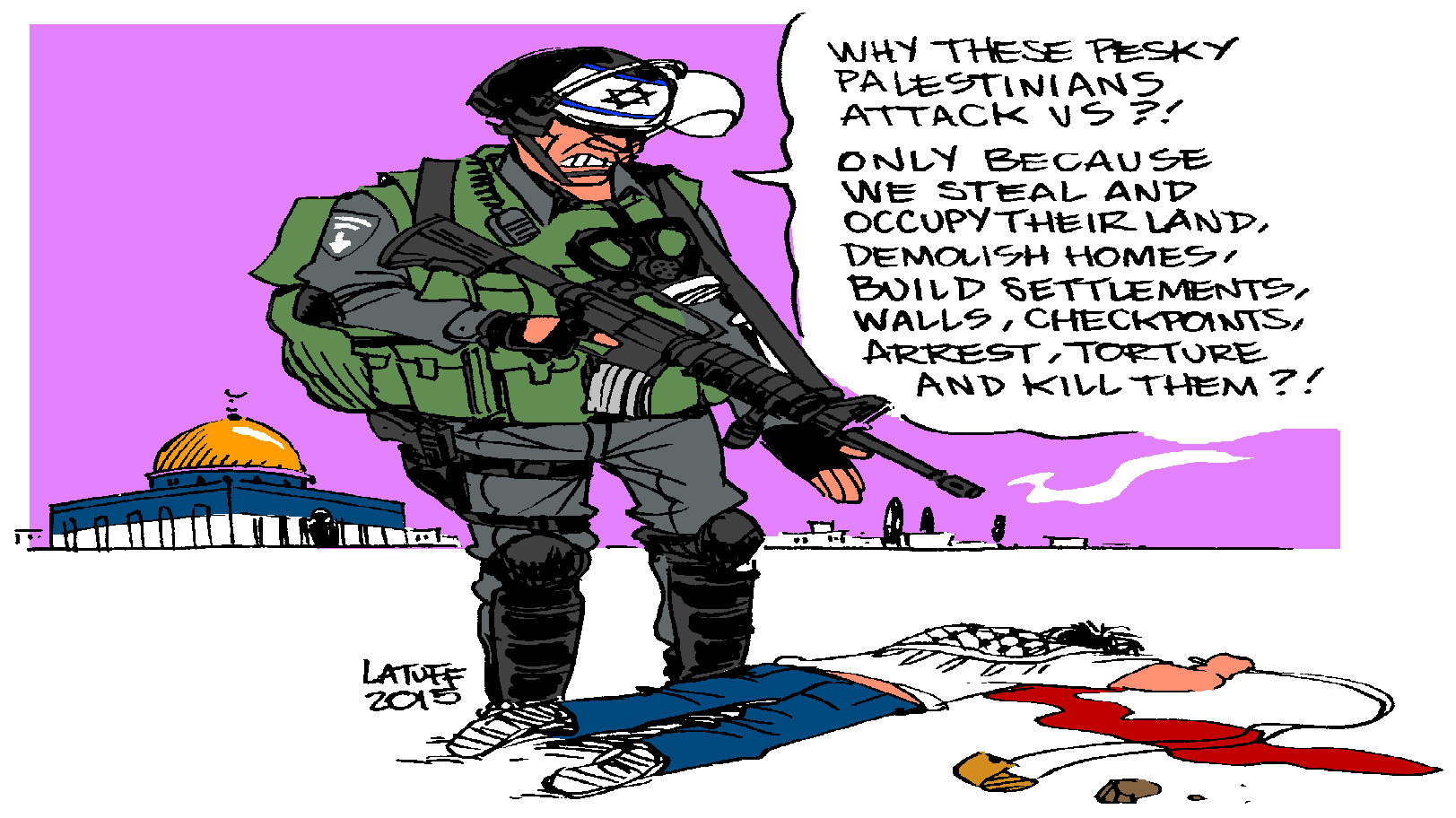 Intifada for Dummies: Why a Popular Uprising Is Yet to Take Off?


