
IslamiCity
Listen PodCasts, Live Quran, Watch Videos @VideoHub

Mariana Tavar, a woman from Portugal, describes a remarkable journey of faith that led her from Christianity to Islam. Her story, as recounted in her testimony, is marked by a difficult childhood, a search for meaning, years of Christian missionary work, and a gradual transformation in how she understood God and the role of Jesus.
Her experience also includes a deeply personal expression of regret over her earlier efforts to persuade Muslim children to embrace Christianity.
She remained there until she was 18.
Life in the orphanage was emotionally challenging. Mariana recalls feeling abandoned and unwanted, questioning why her parents seemed unable to care for her and wondering what purpose her life served.
These experiences profoundly affected her understanding of God. She struggled to reconcile the idea of a loving Creator with the suffering she had experienced. She questioned why her family had endured so much hardship and why they had been forced to hide for years.
Eventually, she reached a point where she no longer believed in God.
For Mariana, this was not simply an intellectual rejection of religion. It was connected to pain, loneliness, and unanswered questions about the world around her.
She decided to pray.
Kneeling in her room, she experienced what she describes as a powerful emotional moment. She began crying and felt a profound sense of peace and forgiveness. This experience encouraged her to return to religious belief and explore Christianity more deeply.
She began attending a small church near her home, studying the Bible, and participating in religious instruction. She also received training in preaching and learned how to communicate Christian teachings to others.
Over time, missionary work became a significant part of her life.
In her testimony, she estimates that she preached to at least 15,000 children in Africa, seeking to persuade them to convert to Christianity.
However, looking back on this period, she expresses deep regret.
She says she hopes to return one day and tell the children that she believes she misled them. In particular, she regrets encouraging them to confess that Jesus was Lord in a way that, in her present understanding, conflicted with the oneness of God.
Her change of perspective centres on a fundamental theological distinction between Christianity and Islam.
Most mainstream Christian traditions teach that Jesus is divine, while maintaining that God is one, commonly understood through the doctrine of the Trinity. Islam, by contrast, teaches that God is absolutely one and that Jesus, known in Arabic as Isa, is the Messiah and a great prophet, but not God.
Mariana now identifies with the Islamic understanding of Jesus. Her regret reflects her belief that her earlier missionary activities encouraged children to accept religious claims she no longer considers correct.
Her account illustrates how a person's interpretation of their past can change dramatically when their religious convictions change.
During one missionary outing, she encountered a group of Muslims and engaged them in a discussion about faith. The conversation prompted her to examine Islam more closely.
Initially, she approached the religion with strong prejudice. She explains that she had been taught, or had come to believe, that Islam was associated with evil and deception. Consequently, her early investigations were not conducted with an open mind.
Nevertheless, as she continued learning, certain aspects of Islam challenged her assumptions.
She describes having dreams involving herself wearing a hijab and seeing the Prophet Muhammad, peace be upon him. These dreams became part of her personal spiritual experience, although their meaning was something she had to interpret for herself.
She also found herself reconsidering her previous views about Muslims, particularly the suffering experienced by Palestinians.
At first, she had suspected that the emotions and suffering she witnessed were exaggerated or staged to influence public opinion. However, an encounter with a traumatised child profoundly challenged that belief.
The experience affected her deeply.
She realised that the child's distress could not simply be dismissed as an act. The suffering appeared genuine, and the child's fear and trauma were unmistakable to her.
For Mariana, this became a turning point. She began questioning the assumptions through which she had previously interpreted the experiences of Muslims and Palestinians.
The encounter also contributed to a broader change in her outlook. She started to recognise that her understanding of Islam and Muslim communities might have been shaped by prejudice rather than by an impartial examination of their beliefs and experiences.
Her account does not establish the full circumstances surrounding the child or the specific events that caused the trauma. Nevertheless, the emotional impact of witnessing suffering was central to how she describes her own transformation.
The Islamic emphasis on the absolute oneness of God became particularly significant to her. In Islam, worship belongs to God alone, while Jesus is honoured as the Messiah and a prophet who called people to worship the one God.
This understanding differed from the Christian theology she had previously taught.
According to her testimony, Mariana eventually embraced Islam. She describes this decision as the culmination of a gradual awakening in which her assumptions about religion, her understanding of Jesus, and her perceptions of Muslim communities all changed.
Her conversion was therefore more than a change in religious identity. It also prompted her to reassess her past actions and the beliefs she had once promoted.
She does not describe her earlier missionary work simply as a chapter of her life that she has left behind. Instead, she expresses a desire to return to the children she taught and explain why her beliefs have changed.
Her account raises broader questions about religious persuasion, the responsibilities of missionaries, and the importance of understanding another faith before making judgments about it.
Religious convictions can influence how people interpret suffering, morality, identity, and the experiences of others. When those convictions change, individuals may also reassess their previous decisions and the consequences of their actions.
For Mariana, this reassessment appears closely connected to her new understanding of God's oneness and the status of Jesus in Islam.
Her story also demonstrates how personal suffering can shape religious questions. The doubts that emerged during her childhood, the emotional experience that drew her back to Christianity, and the encounters that later challenged her assumptions about Islam all played roles in the narrative she shares.
Along the way, she experienced moments of emotional relief, developed strong convictions, travelled to preach Christianity, and later reconsidered the very teachings she had once promoted.
Her greatest regret concerns the Muslim children she says she encouraged to convert to Christianity. Today, she wishes she could return to them and explain why she now believes differently.
Ultimately, her story is a personal account of how faith can evolve through experience, reflection, and encounters with people whose lives challenge our assumptions.
Whether someone approaches her testimony from a Christian, Muslim, or non-religious perspective, it highlights the importance of intellectual humility, compassion, and a willingness to reconsider deeply held beliefs.
For Mariana, the journey did not end when she found a religion to believe in. It continued when she began questioning her own past, acknowledging her regrets, and seeking to live according to what she now understands to be the truth.
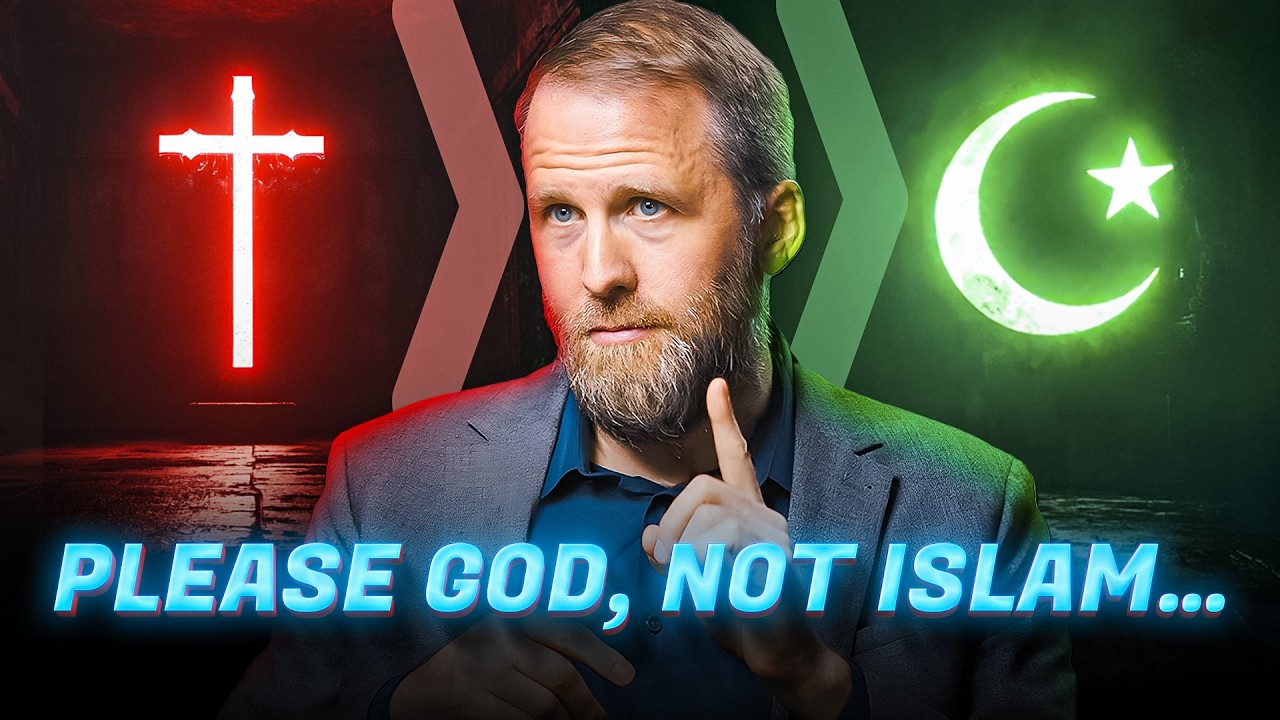 “I Begged God That Islam Wasn't True!”

