Allah does not actually have a total of only 99 names; rather, the 99 names represent a specific, special subset of Allah names highlighted in Islamic tradition, while the total names and attributes are infinite. The Quran mentions dozens of divine attributes, but it does not explicitly list or number them as 99. Names and attributes are infinite. Moral attributes are infinite; but ancient pre-writing names are gone.
The 99 Names of Allah (known in Arabic as Asma'u l-Husna) were not "written" by a single author. Instead, the concept originates from traditions (hadiths), and the most famous list of 99 names was compiled and transmitted by Islamic scholars. Al-Nawawi said: The (Islamic) scholars are unanimously agreed that this hadeeth does not mean that Allah has only ninety-nine names, or that He (Allah) does not have any other names apart from these ninety-nine. Rather what the hadeeth means is that whoever learns these ninety-nine will enter Paradise. The point is that one may enter Paradise by learning them, not that the number is limited to these names.
Persian Zoroastrianism has something similar to 101 names of God. The 99 names aren't just names, they are attributes, because every one name of them means something like "the most merciful" "the all knowing" "the holy" "the Peace maker". These hadiths were written by Bukhari who was a Persian. And Persia, for 11-12 centuries was conquered by Arabs, was Zoroastrian.
The most well known of Allah's 99 names is Ar-Rahman -'the kindest and most forgiving one'; but Allah has kept to Himself the knowledge of His greatest name, the 100th name, and He has not granted knowledge to any of His creation on Planet Earth. Some Muslims believe it will only be revealed by Imam Mahdi.
Or it is possible that Hagar's feminist name for God may be the 100th beautiful name. One name of God that very few Christians, Jews or Muslims even know, much less use today, is a name that I believe will become more important in the future as Christians, Jews and Muslims learn more about each other's religions. This name, El Ro'ee, only appears twice in the Hebrew Bible and, as far as I know, is not used at all in the Jewish Talmud or Midrash as a Divine appellation.
Prophet Abraham's wife Hagar/Ha-jar uses El Ro'ee as her special name for God. El Ro'ee means A God Who Sees Me. It also became the name for a well (Zamzum?). "Then she (Hagar) called the name of YHVH, who spoke to her, El Ro'ee, 'You are a God who sees me'; for she said, 'Have I even remained alive here after seeing Him?' Therefore the well (where this happened) was called Beer-laHai-roee; the well of the Living One (Al-Hayy) who sees me. Behold, it is between Kadesh and Bered. So Hagar bore Abram a son; and Abram called the name of his son, whom Hagar bore, Ishmael..." (Genesis 16:13-15)
Neither Sarah nor Hagar/Ha-jar are mentioned by name in the Qur'an, but the story of Ha-jar's exile from Abraham's home is traditionally understood to be referred to in a line from Ibrāhīm's prayer in the Qur'an
(14:37): "I have settled some of my family in a barren valley near your Sacred House (Kaaba)" Muslim tradition relates that when
Hā-jar ran out of water, and Ismā'īl, an infant at that time, began to die; Hā-jar panicked and ran between two nearby hills, Al-Safa and Al-Marwah repeatedly searching for water. After her seventh run, Ismā'īl hit the ground with his heel and miraculously caused a well to spring out of the ground called Zamzum Well. It is located a few meters from the Kaaba in Mecca.
Perhaps these two Torah names of God, El Ro'ee and Hai (Hayy) Ro'ee; which are Hagar's names for God, which mean A Self-reflecting God or A God Who Sees Me, and the name for the Zamzum well 'Beer-laHai-roi'; the well of the Living One (Hayy) who sees (mirrors) me; can help bring Christians, Jews and Muslims, who all share respect for Prophet Abraham and his family, to see each other better and thus become closer together in the future. That would be an excellent example of the power of God's name to cause future seemingly impossible transformations in all kinds of people and places.
The meaning of God's name YHWH, is central to Jewish theology. There are two approaches: the philosophical, focusing on God's essence ("being") and the kabbalistic, focusing on God's evolving relationship with Israel ("becoming"). Rabbi Moses Maimonides (1138-1204), Judaism's chief rationalist, holds that all divine names, except YHVH, refer to God's activities: judge, ruler. creator, merciful, forgiver, etc. But for Rabbi Moses Nahmanides (1194-1270), a prominent Spanish Kabbalistic mystical Bible expositor, God is far more interactive and personal than just a first cause of existence, and thus the names capture different dimensions of God's dynamic being.
For those religions that trace their prophets back to Prophet Abraham, and his two sons Prophet Ishmael and Isaac, the many names of God simply describe different aspects or attributes of the one God's multifaceted personality. God's names are appellations: titles and descriptions. Thus to say that God is a King or Judge describes one of many ways God acts. To say that God is the Compassionate One is to describe one of many character or personality traits of the one God.
While each of the many 'names' for the one God is only one of the many appellations of the one universal creator of space and time; both Islam and Judaism also have one special Divine name that is always in the believer's heart and soul.
Because the Qur'an is filled with beautiful Arabic poetry, it is not surprising that the Qur'an is also filled with so many names of God. Because the Jewish tradition reaches back more than thirty five centuries; it is not surprising that Jews have focused on many additional names for the one and only God over those many centuries.
Yet, because all the many names of God call upon the same One God, it is also not surprising that many of the 99 beautiful names of God in Muslim tradition also appear in Jewish tradition, which sometimes refers to the 70 names of God (found in Midrash Shir HaShirim and Midrash Otiot Rabbi Akiba).
When Muslims use the word Allah they mean the one God they worship and adore; who sent Prophets, speaking their own language to every nation and tribe on Planet Earth, and sent Prophet Muhammad to proclaim the Qur'an in Arabic. This is the same one God; who sent Jesus to proclaim the Gospel and Moses to proclaim the Torah. Neither Jews nor Christians connect to God in this very special universal way.
Thus, for Muslims the word Allah is both a generic for the one God of all monotheistic religions; and a special personal Islamic name when spoken with devotion and love by a Muslim.
As an American Reform Rabbi, I can understand why many Muslims would object to Christians using the word Allah in the context of saying that Jesus is the son of Allah.
Another word for Divinity is needed. On the other hand, one could say that Allah spoke to Jesus as the Qur'an itself states, "Allah said: Jesus, I will take you back and raise you up to Myself..."
(3:55)If people of good will use the generic aspect of the word Allah only in a monotheistic context, and use another word for a trinitarian or polytheistic context, we can have more light and less heat in our own religious lives.
But for those religions that trace their prophets back to Prophet Abraham, and his two sons Prophets Ishmael and Isaac, the many names of God simply describe different aspects or attributes of the one God's multifaceted personality. God's names are appellations: titles and descriptions. Thus to say that God is a King or Judge describes one of many ways God acts. To say that God is the Compassionate One is to describe one of many character or personality traits of the one God.
While each of the many 'names' for the one God is only one of the many appellations of the one universal creator of space and time; both Islam and Judaism also have one special Divine name that is always in the believer's heart and soul.
Because the Qur'an is filled with beautiful Arabic poetry, it is not surprising that the Qur'an is also filled with so many names of God.
Because the Jewish tradition reaches back more than thirty five centuries; it is not surprising that Jews have focused on many additional names for the one and only God over those many centuries. Yet, because all the many names of God call upon the same One God, it is also not surprising that many of the 99 beautiful names of God in Muslim tradition also appear in Jewish tradition, which sometimes refers to the 70 names of God (found in Midrash Shir HaShirim and Midrash Otiot Rabbi Akiba).
The Quran doesn't say that god has 99 names, it only says Allah has beautiful asmaa (أسماء) which can mean both nouns and adjectives in Arabic. The Quran contains positive adjectives like "merciful" and "knowing", but there is not 99 of them in the Quran. The concept of 99 names is completely based on hadiths, which were written a dozen years after the Quran.
Islam has its 99 names of the one and only God. Judaism also has many different names (in the 70's); but the YHWH: יהוה is not just a name; it is also a description of the one and only God's energy of material creation and YHVH's energy of an infinite flow of energy, the ongoing capacity to do physical work, and to cause consciousness in ideological change. YHVH started before the big bang and is a fundamental quantitative property that can be transferred between objects, or transformed from one consciousness ideological view to another.
The YHVH may be a sign of the 100th name to be the silent cause of consciousness in ideological change to bring Jews and Muslims closer.


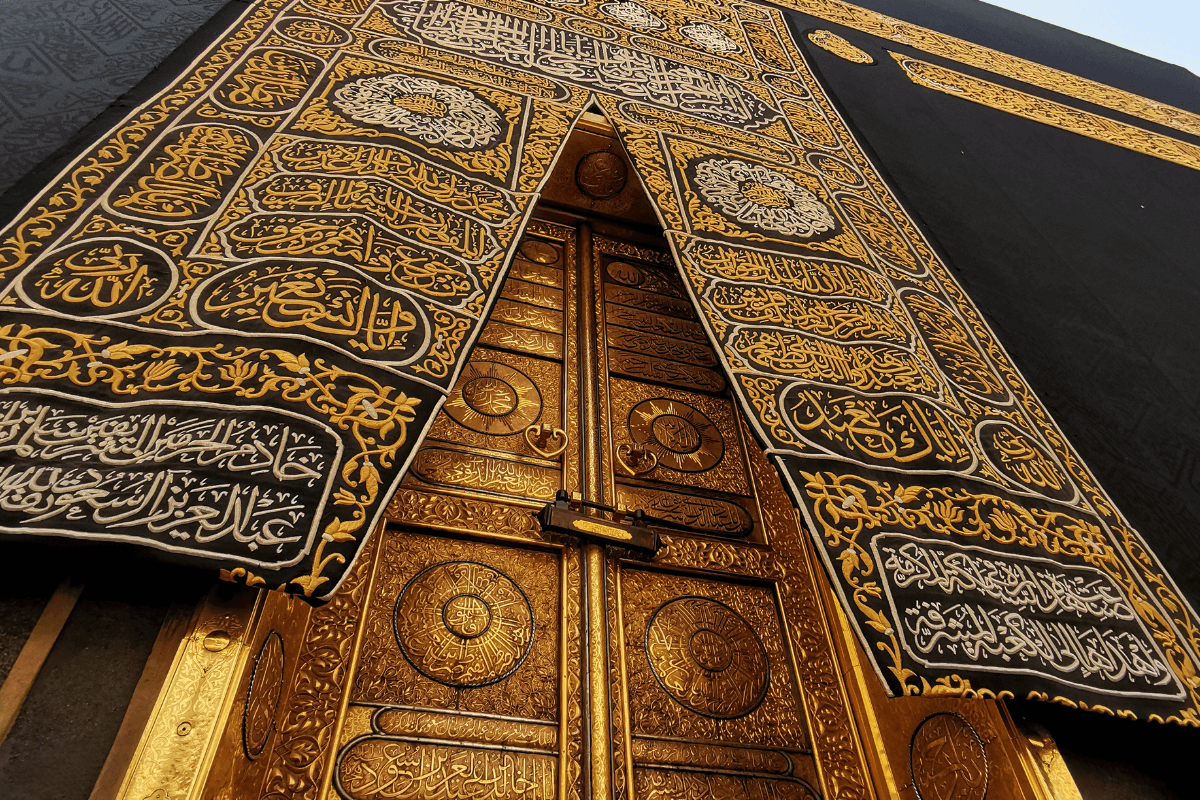 Tawhid Holiness Linked to Kaab’a and Temple Mount


