
IslamiCity
Listen PodCasts, Live Quran, Watch Videos @VideoHub

Though human existence in this world has brought about many positive transformational changes, it has also brought with it a baggage of chaos, power struggles, wars, and destruction. Human beings' insatiable hunger for power, wealth, land, and dominance over others has shifted them away from the noble purpose for which God placed them here.
Being preoccupied with the ephemeral things in life has derailed many people from their ideal position as God's vicegerents. As such, the world is currently witnessing an absence of fairness and justice, racism, an unequal distribution of wealth, and a lack of mutual respect for one another's lives and dignity.
As an academic involved in teaching subjects such as Basic Philosophy, Islamic Worldview, Islamic Ethics, and Islamic Civilization at the International Islamic University Malaysia (IIUM), I have often been confronted with questions during classroom teaching and research interviews, such as: What is Islamic politics, and who qualifies to be a leader?
From an Islamic perspective, everyone is a leader, be it within a family, at the workplace, in society, or at the national and international levels. As leaders, we have to fulfil our duties and responsibilities as a trust given to us by God.
As Muslims, whenever we fail to fulfil the Will of God in this world, we are deemed to have betrayed our Creator.
For Muslims, the best role model in leadership is, first and foremost, Prophet Muhammad (SAW), followed by the four Rightly Guided Caliphs: Abu Bakr (RA), Umar (RA), Uthman (RA), and Ali (RA).
Although the four Rightly Guided Caliphs who succeeded him had different leadership styles, they shared sincerity, good character, and a strong commitment to upholding the message of the Qur'an and following the ways shown by the Prophet (SAW). They placed these responsibilities above their personal interests and the pursuit of worldly gains.
During the era of the Khulafah al-Rashideen, the four Caliphs faced challenges of their own. Except for Abu Bakr (RA), the other three Caliphs were brutally murdered.
The expansion of Muslim territories during the Umayyad period and beyond brought considerable wealth and power to those who held the position of Khalifah. Such developments also gave rise to traitors and conspirators within the empire.
While power struggles were taking place in the Muslim world, the flourishing of Islamic civilization brought fame and glory to Muslims during that period. However, after reaching its peak, Islamic civilization gradually began to decline.
From 1258 onwards, one Muslim empire after another began to crumble, losing its territories and political dominance.
The leadership crisis became even worse when Muslim countries came under the control of European colonial powers. By then, Muslims had also lost much of their dominance in science and technology.
Colonization, to a certain extent, created a slave mentality among Muslim leaders and ordinary citizens in Muslim lands. This pathetic condition further weakened the morale of Muslims.
The leaders who emerged after the decline of Islamic civilization were generally weak. Many lacked the necessary knowledge and leadership skills. Some wasted billions of dollars purchasing missiles and other sophisticated weapons from the West.
In the Middle East, it is particularly unfortunate that Muslim countries, despite sharing the same faith, often do not trust one another.
In the contemporary world, some leaders, in their desire to remain in power and enrich their families, are willing to sell their souls to the enemies of Islam and become puppets of the West.
In addition to having a good understanding of the Qur'an, Hadith, and Seerah, my personal advice to them is that they should also acquire profound knowledge of civilizational studies, history, and the contemporary world.
Those who aspire to enter politics should also develop good communication skills, together with the ability to exercise diplomacy and persuasion when dealing with people from all walks of life. Many experts believe that a good leader should be able to articulate his ideas clearly and convincingly.
His language of diplomacy should act as a means to unite people of different races and religions.
It is equally important for those aspiring to enter politics to have sincere intentions and noble motives. They should not join politics with the intention of enriching their siblings, children, or cronies.
When one occupies an important position in government, the temptation to misuse power is always present. Therefore, those who aspire to become political leaders must have the discipline and moral strength to resist such temptations.
One should enter politics for a higher purpose, rather than to fulfil selfish interests and personal ambitions. As Muslims, those who join politics should do so with the intention of serving not only their fellow Muslims but also people of other faiths in the country.
The interests of the country and its people must always come first.
To become a good political leader, one also needs to understand the history of one's own country and that of other nations. The Spanish-American philosopher, George Santayana (1863-1952), was right when he said, "Those who cannot remember the past are condemned to repeat it."
I also believe that a politician should be a well-read person who understands the grievances of his people and humanity at large.
In the contemporary world, politicians in many countries are siding with corporate capitalists who provide them with sponsorships and a share of the profits they make through government contracts.
As Muslims and responsible politicians, we should not allow ourselves to be bribed by business people. Muslim politicians should remain free from all forms of bribery and corruption.
In particular, Muslim politicians should be honest and transparent in all their political dealings and in running the country. By doing so, they will be able to restore the dignity and pride of the Muslim Ummah.
Another important piece of advice that I give to my students is not to follow the ideas given by the Florentine philosopher, Niccolò Machiavelli (1469-1527), particularly the one that says, "might is right." In addition, he also said that "the end justifies the means."
For this reason, he believed that it was acceptable for political leaders to make empty promises before coming into power.
In his magnum opus, The Prince, he urged leaders to tell the masses what they wanted to hear, but once they were seated in positions of power, they could do the things they wanted to do.
He also said that a ruler should appear fearful to his opponents and subjects alike. Furthermore, he urged leaders in power to be cunning and shrewd when dealing with their opponents and to discredit whatever their predecessors had done while in power by painting them in the darkest colours.
The last thing I share with my students is that, in the contemporary Muslim world, except for a handful of Muslim leaders, most politicians seem to follow the ideas popularised by Machiavelli.
If they lack good character and knowledge and have only a limited understanding of Islamic political ideals, they should first improve their knowledge and skills and work on their personalities before venturing into politics.
(The views expressed are those of Dr. Mohd Abbas Abdul Razak from the Department of Fundamental and Interdisciplinary Studies, AHAS KIRKHS, IIUM, and do not necessarily reflect the views of IslamiCity)
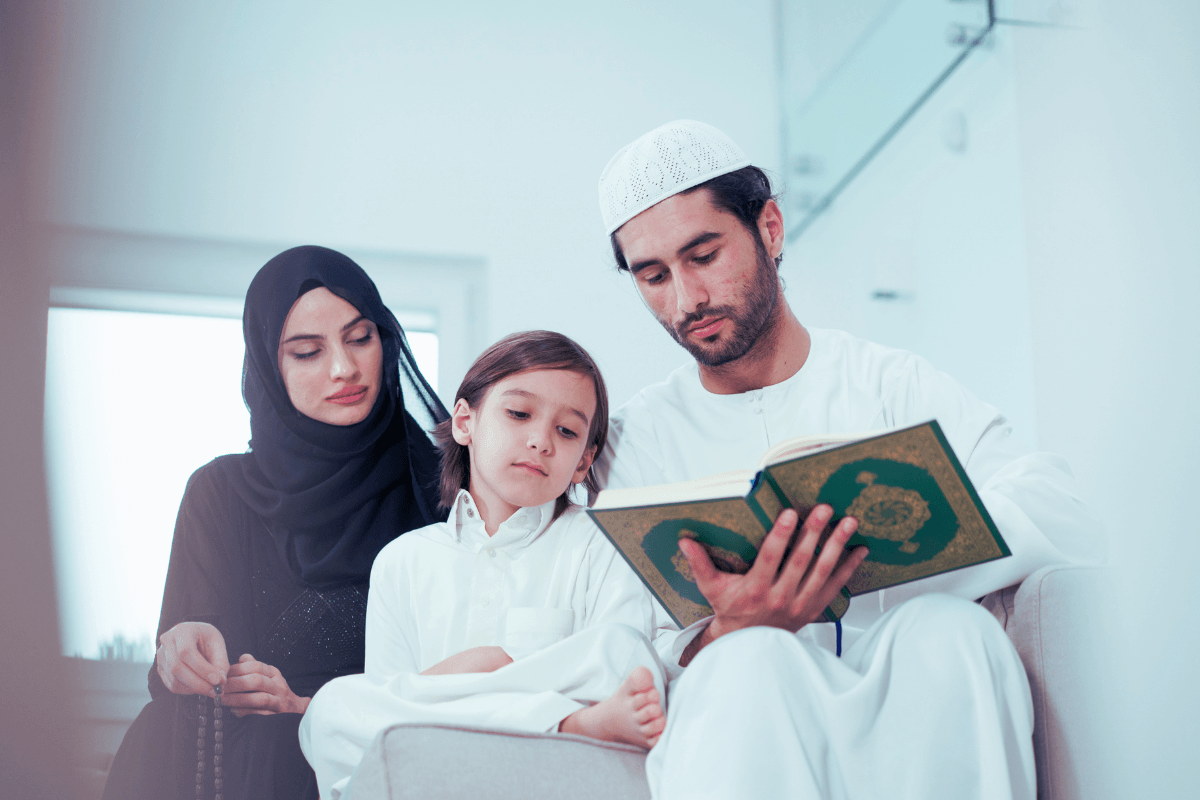 Muslim Parenting: A Challenging Task in the Digital Era.


