
IslamiCity
Listen PodCasts, Live Quran, Watch Videos @VideoHub

While Malaysia has experienced immense economic growth and made remarkable progress in eradicating traditional slums over the past few decades, urban poverty within public housing presents distinct challenges of its own.
Behind the modern skyline of the capital city lies a quieter, more persistent struggle. In the Shafi'i tradition, a distinction is drawn between the faqir, who live in severe and complete destitution, and the miskin, who possess some means yet remain in persistent hardship. Many urban families live precisely in the condition of the miskin: working tirelessly, yet held in place by rising living costs, insecure housing, and structural barriers that income figures alone cannot capture.
In conjunction with the International Day for the Eradication of Poverty, an academic forum titled "Urban Lived Realities: Resilience, Inclusion, Dignity at the Margins" hosted at the International Islamic University Malaysia (IIUM) brought together educators, researchers, and young Muslim advocates to reflect on these pressing issues and explore how youth can lead meaningful change.
The forum highlighted a vital truth: Islamic education must extend beyond theology to embrace real-world action and social responsibility. Examining urban poverty as a multidimensional condition invites us to consider how evolving urban environments reshape who is marginalised, and how lived faith calls us to respond with compassion and justice.
Moderated by postgraduate researcher Nuruljannah Binti Che Muret, the panel brought together diverse voices from academia and community practice, including Dr. Shahridan Faiez of Think City, Hanif Mahpa from Buku Jalanan Chow Kit, and urban researcher Siti Nur Yasmin Mohd Yaacob.
The human cost of this crowding is stark. Siti Nur Yasmin's qualitative work with urban youth revealed households where up to ten family members share a flat, leaving individuals with barely 80 square feet of space; this is less than half the size of a parking spot. For a secondary school student, this means there is no quiet corner to revise; studying happens on stairwells or late-at-night on university grounds. What seems like a modest spatial constraint creates compounding friction. Educational institutions often implicitly benchmark student performance against middle-class home environments. Consequently, when a student falls behind, institutions tend to misread structural constraints as a lack of personal motivation.
This pressure extends beyond the individual apartment into common areas. When an elevator breaks down, elderly residents face ten flights of stairs, while delivery fees double for basic essentials like cooking gas. Dark corridors and unmaintained public spaces quietly erode the casual daily interactions that build neighborly trust. As Eric Klinenberg notes in his work on "social infrastructure," when physical spaces are neglected, the fabric of community cohesion inevitably weakens.
Small daily hurdles accumulate into heavy burdens. Combined with territorial stigma, they gradually wear down resident well-being. As one student participant noted: "I never imagined that something I considered a minor issue, like a broken lift, could fundamentally shape a community's daily life."
Hanif Mahpa reflected on how his education background from IIUM informs his grassroots advocacy, sharing a deeply troubling incident: four Rohingya families seeking a modest foundation grant needed a local cleric to sign off on their financial eligibility. The cleric refused. Coming from an established religious authority, that refusal did more than block financial aid-it reinforced existing social biases against refugees, lending institutional cover to prejudice and denying families basic dignity.
Hanif's work with Buku Jalanan Chow Kit (BJCK) offers a fresh perspective on inner-city neighborhoods, challenging stereotypes of disorganization. The youth BJCK supports are embedded in active informal safety nets of peers and kin. He urged scholars and practitioners to reject institutional "othering"-the habit of blaming decaying housing or administrative delays on the moral character of residents.
The lesson here is one of attribution. True inclusion begins when these struggles are seen not as personal failures but as systemic gaps that call for structural reform, and when communities are met with patient engagement rather than dismissal. As one student attendee noted, "The issues faced by the community are not due to individual problems; instead, it is a structural problem... Before this forum, I thought urban poverty was just low income, but housing conditions, family responsibilities, and authority policies shape their daily lives."
The panel pointed to initiatives where this is already bearing fruit. In PPR Taman Mulia, local tutors guided neighbourhood students to top SPM results. Buku Jalanan Chow Kit involves local mothers as supervisors and opens pathways for young people like Nizam, a former banana seller who joined BJCK at the age of ten, passed his SPM as a private candidate, and now holds a 4.0 GPA at university. Such initiatives also have the potential to strengthen social cohesion. Residents who tutor neighbours' children or supervise shared spaces can build, or rebuild, the trust and reciprocity that overcrowding and poor maintenance tend to erode.
Both Hanif and Siti Nur Yasmin stressed the value of consistent, long-term mentorship. Yasmin observed that while PPR youth harbor genuine ambition, they often lack guidance on navigating post-secondary pathways. Hanif noted that a steady presence helps young people realize their potential rather than navigating system barriers in isolation. The panel also highlighted the importance of equitable safeguards: avoiding "elite capture" by broadening leadership, and designing urban spaces with the safety of women and children in mind. This aligns closely with Islamic social ethics, balancing tawakkul (trust in God) with active agency, neighborly responsibility, and collective care.
Still, grassroots work cannot replace structural reform. While stories like Nizam's demonstrate the power of dedicated mentorship, individual successes cannot plug systemic policy gaps; every child deserves robust institutional backing, not just those fortunate enough to connect with an NGO. Hanif emphasized that while grassroots action restores dignity, it must pair with systemic policy reform to yield lasting change. Reflecting on this after the session, a student noted: "Empowering communities to lead their own solutions is far more effective than external intervention alone... When planning outreach, our first step must be listening to what communities actually need, rather than imposing our own assumptions."
Reframing our perspective transforms our role: we move from trying to 'save' communities to working alongside them to dismantle structural barriers, supporting local agency while honoring human dignity. As one student remarked: "Developing a strong sociological lens is vital because policymakers often miss the grounded realities needed to serve communities effectively."
Empathy, as an educational goal, demands more than sympathy; it requires intellectual rigor and the disciplined attempt to understand lived realities from within their specific constraints-what Max Weber termed verstehen. This understanding cannot be gained through textbook readings alone, where social issues are pre-packaged into abstract concepts. It takes shape when theory meets real-world complexities-such as when a sociology student steps out of the lecture hall and walks up ten flights of stairs alongside a resident whose elevator has been out of service for months.
The Islamic intellectual tradition has long held that knowledge cannot be detached from social responsibility. The classical pairing of 'ilm (knowledge) and 'amal (action) reminds us that unapplied knowledge remains incomplete, while ihsan (spiritual excellence) calls for meaningful care toward others. True Ummatic excellence is not measured by individual credentials alone, but by how effectively academic scholarship serves and uplifts the wider community.
Academic theory remains indispensable, it is what enables us to recognize a broken lift as a systemic pattern rather than an isolated misfortune. Yet theoretical and religious knowledge only fulfill their purpose when brought back to the communities that give them relevance. If we are to practice authentic Islamic excellence in education, our benchmark must be whether surrounding communities are better understood, better served, and truly heard.
About the Authors
Dr. Sh Fatimah AlZahrah Syed Hussien, an academic at International Islamic University Malaysia (IIUM) and the Director of Tawhidic Epistemology and Strategic Academic Planning at its Office of Strategic Institution Transformation (OSIT).
Nuruljannah Binti Che Muret, a Postgraduate Researcher at the Department of Sociology and Anthropology, IIUM
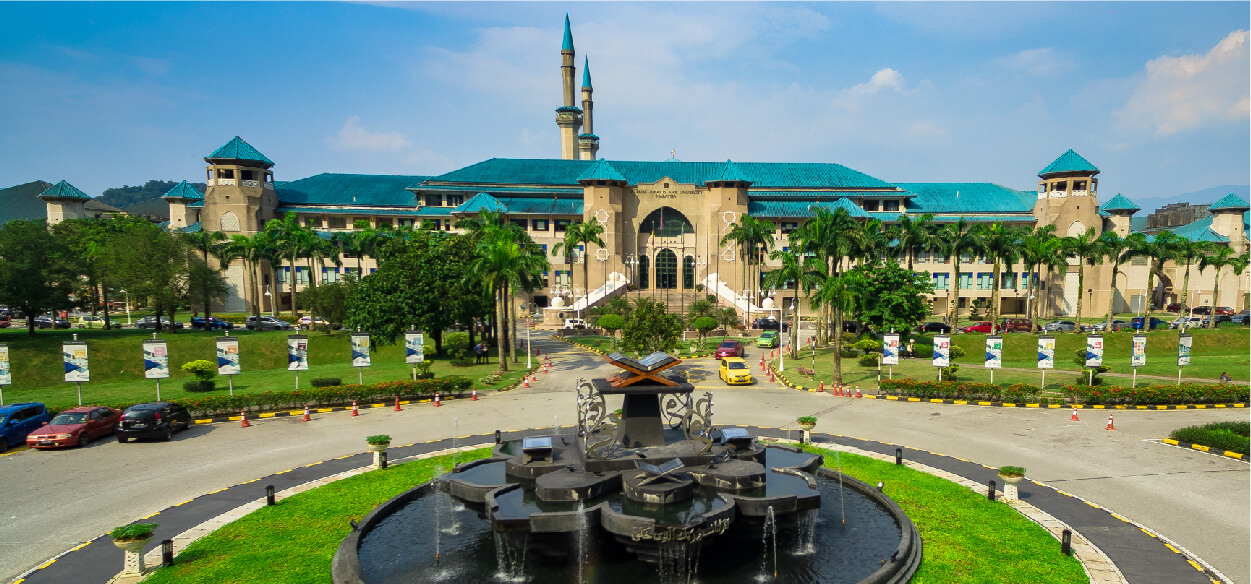 IIUM: Forging Leaders, Shaping Futures


