
IslamiCity
Listen PodCasts, Live Quran, Watch Videos @VideoHub

 |
Since early 2003, Sudanese government forces and ethnic militia called "Janjaweed" have engaged in an armed conflict with two rebel groups called the Sudanese Liberation Army/Movement (SLA/SLM) and the Justice and Equality Movement (JEM). As part of its operations against the rebels, government forces have waged a systematic campaign of "ethnic cleansing" against the civilian population who are members of the same ethnic groups as the rebels.
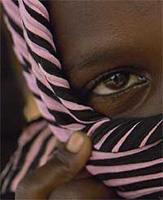
Between 2003 and 2005, the Sudanese government and the Janjaweed militias burned and destroyed hundreds of rural villages, killed tens of thousands of people and raped and assaulted thousands of women and girls. The government's campaign forced more than two million Darfurians from their homes. As of 2006, some 1.8 million live in camps in Darfur and approximately 220,000 have fled into Chad, where they live in refugee camps. In addition to the people displaced by the conflict, at least 1.5 million other people need some form of food assistance because the conflict has destroyed the local economy, markets and trade in Darfur.
What is happening in Darfur now?
In early 2005, the number of government attacks on civilians dropped, partly because the vast majority of rural villages were already destroyed and their inhabitants displaced from the rural areas. As of 2006, however, the situation has dramatically worsened and the fighting has increased. Janjaweed forces with Chadian rebels are conducting attacks over the border into Chad. Janjaweed militias are also continuing to attack civilians and humanitarian aid workers, and are even attacking the camps for internally displaced in Darfur.
Why is the situation in Darfur deteriorating?
One of the key problems is that the Sudanese government continues to follow a policy of supporting ethnic militias, organizing attacks on the civilian population and permitting violations of international law to go unpunished. This has led to a climate of impunity in Darfur, which in turn has allowed other armed groups to flourish and rob and attack civilians and aid workers. The rebel groups are also responsible for abuses, including attacks on aid convoys and some killings of civilians.
What is the African Union doing in Darfur?
The African Union mediated an April 2004 ceasefire and sent in a ceasefire monitoring team in May 2004. As violence against civilians continued in 2004, the African Union force (AMIS) expanded and received funding and equipment from the European Union, the United Kingodm, the United States and other partners. The AMIS force now numbers 7,000 personnel, including more than 6,000 troops whose mandate includes monitoring the ceasefire and protecting civilians under "imminent threat." The African Union is also mediating negotiations for a peace agreement between the Sudanese government and the rebel movements, in Abuja, Nigeria.
What can be done to protect civilians?
The most urgent need is for a much more powerful, well-equipped international force in Darfur. The African Union force (AMIS) has managed to improve security in certain places where they deployed, but none of the warring parties are respecting the ceasefire and the Sudanese government continues to support the abusive Janjaweed, rather than disarming them. AMIS lacks the numbers of troops and the kind of equipment needed to effectively operate in such a difficult environment.
A U.N. force would be larger, better equipped and more financially stable than the current AU force, since it could draw on global personnel, capacity and on UN financing. The current African Union forces would probably be absorbed into a UN force.
The U.N. force must have the strongest possible mandate to protect civilians, under Chapter VII of the U.N. Charter, and the international community must continue to pressure the Sudanese government to end its abusive policies in Darfur. Until a U.N. force comes in during the next six to nine months, the African Union must be bolstered with funds, equipment and other support.
What is the U.N. doing in Sudan?
The U.N. already has a peacekeeping mandate for southern Sudan, where the January 2005 Comprehensive Peace Agreement recently ended the twenty-one year civil war between the Sudanese government and southern rebels known as the Sudan People's Liberation Movement/Army (SPLM/A). The U.N. mission in Sudan, known as UNMIS, will eventually deploy 10,000 troops to monitor and implement the north-south agreement. As of January 2006, there are 5,300 foreign troops from sixty-one countries participating in UNMIS and deployed in Khartoum and southern Sudan.
What are the views of the African Union on the proposed transfer to the UN?
On January 12, the African Union agreed in principle to a transition to a UN force. The African Union never intended for its force in Darfur to become a permanent peacekeeping force in the region. Since early February, however, the Sudanese government has mounted a massive public relations campaign against a U.N. force and has even threatened to withdraw from the African Union if a UN force enters Darfur.
Why is the Sudanese government refusing to accept a UN force?
The Sudanese government claims that a U.N. force will violate its sovereignty and that the intervention of western troops will turn Sudan into another Iraq. Yet Sudan has already agreed to a U.N. force of 10,000 troops to monitor the peace agreement ending the twenty-one year civil war in southern Sudan, and more than 6,000 troops from Africa are already present in Darfur, so its resistance to a U.N. force in Darfur is puzzling. One reason for the Sudanese government's reluctance may be that it fears that a U.N. presence with U.N. Security Council backing will play a much stronger role in protecting civilians and demanding accountability and thereby hamper its own policy of ethnic cleansing in Darfur.
Is the United States going to send troops to Darfur?
There are no indications that the U.S.-or any other Western country-is preparing or planning to send troops to Darfur, although there are some U.S. technical advisors and military observers already working with the AU. Currently, there are more than 6,000 African troops on the ground in Darfur, mainly from Nigeria and Rwanda. If the U.N. takes over the AU mission then they will probably "re-hat" or absorb these African troops into a U.N. mission and then provide more troops, most likely from Africa or Asia.
What is NATO doing in Darfur?
In April 2005, the African Union requested technical support from NATO, mainly in the form of airlift capacity. Practically, this means that NATO provides logistical support to the African Union, such as airplanes for transport of troops, and expert technical advisors who provide training or advice on logistics, communications and other matters. NATO does not have any troops on the ground in Darfur and has publicly stated that it does not have plans to send troops to Darfur.
How does the Sudanese government explain the situation in Darfur?
In the first few years of the conflict, the Sudanese government regularly described the situation in Darfur as "tribal clashes" and consistently refused to acknowledge its responsibility for systematic attacks on civilians. It also tried to limit media access to Darfur and detained the Al Jazeera correspondent in Khartoum for several weeks in 2004 after the broadcast agency transmitted reports about Darfur. Khartoum has also accused international journalists and human rights groups of "fabricating" the Darfur situation, despite the overwhelming evidence of the Sudanese government's responsibility for the crimes.
What is the Arab League doing about Darfur?
The Arab League has been largely silent on the atrocities in Darfur. This is probably because Sudan is a member of the Arab League and the Sudanese government has close relations with Egypt and other fellow Arab League members. The Arab League did send a fact-finding mission to Darfur in May 2004 but although its report concluded that serious atrocities were taking place, the Arab League has yet to publicly condemn or criticize the massive human rights abuses in Sudan. The coming Arab League summit on March 28-29 represents an opportunity for the Arab League to take a leadership position in condemning the atrocities and deteriorating conditions in Darfur. The Arab League should also unequivocably back the swift transition from A.U. to U.N. peacekeeping forces.
What is the UN Security Council doing about Darfur?
The UN Security Council is divided on Sudan because different member states have divergent interests. Russia and China have often supported the Sudanese government due to their economic interests--the Chinese, for instance, import 5% of their oil from Sudan. The Security Council did take two important steps in 2005, however. One was that they referred the situation in Darfur to the International Criminal Court in the Hague because of the massive crimes that took place in Darfur. The second step was establishing a sanctions committee and a panel of experts to investigate individuals who violate the arms embargo, commit abuses of human rights, or impede the peace process.
What kind of sanctions is the U.N. imposing on Sudan?
At present, there are no U.N. sanctions on Sudan. The sanctions being discussed at the U.N. Security Council are targeted sanctions on individuals, such as travel bans and freezing foreign bank accounts and other assets. The U.N. panel of experts recommended that seventeen people, including the Sudanese Minister of Defense, Major-General Abdel Rahim Mohammed Hussein, nine other government officials, two Janjaweed militia leaders and five Darfur rebel commanders be sanctioned. As of March 2006, some of the Sudanese government's allies on the Security Council, including Qatar, have apparently been stalling any progress in the sanctions committee.
What is the International Criminal Court doing on Darfur?
The International Criminal Court (ICC) opened an investigation into the crimes in Darfur in June 2005. The ICC has the mandate to investigate those individuals responsible for crimes against humanity, war crimes and genocide since July 2002 in accordance with the Rome Statute. The Prosecutor is currently conducting investigations from outside Darfur. To date the Prosecutor has not had access to Darfur to conduct investigations. The Sudanese government has publicly indicated it will not cooperate with the ICC and insists that it will try criminals in Darfur itself, in a Special Court. However, there is no indication that the Sudanese justice system is seriously investigating or prosecuting any of the government officials, militia leaders, or other individuals responsible for serious crimes in Darfur.
What are the religious dimensions of the conflict in Darfur?
All of the people in Darfur are Muslim. The Sudanese government and its Janjaweed militias are also Muslim. There have been incidents, however, of government forces and Janjaweed destroying mosques, killing imams and others seeking refuge inside mosques, and desecrating the Koran while attacking civilians.
What are the ethnic divisions in Darfur?
There are many different ethnic groups in Darfur with their own languages and customs. The rebel movements are drawn from three main ethnic groups: the Fur, Zaghawa, and Masalit, all of which are considered non-Arab tribes. The Janjaweed militias recruited by the Sudanese government are mainly drawn from several small Arab nomadic tribes who historically have no access to land and migrated into Darfur from Chad in the 1980s. Historically these groups coexisted peacefully and there was intermarriage between Arab and African ethnic groups, despite occasional clashes over resources. There are also many larger Arab tribes in Darfur who have not participated in the conflict, so it is an over-simplification to describe Darfur as an African-Arab conflict.
How are people surviving in Darfur?
The majority of the displaced people in Darfur-1.8 million-are now living in camps where they are almost entirely dependent on international humanitarian assistance. They cannot leave the camps because they continue to be attacked by the militias and women are raped on a daily basis when they try to collect firewood outside the camps. People cannot return to their homes due to the continuing presence of government-backed militias in the rural areas.
Why would the Sudanese government organize the Janjaweed militias?
Many of the members of the Sudanese armed forces are from Darfur, so the government may have been reluctant to use those troops in a conflict in their own region. In addition, the government of Sudan has often used militias as proxy forces. The use of militias provides the government with "deniability;" it claims, as it has in the south, that it cannot "control" the militias. There is no evidence, however, that it has actually attempted to do so. The militias allow the Sudanese government to have a large armed force at its disposal that will serve loyally as a counterinsurgency force, as the militias stand to benefit financially (loot and land) from their participation in the fighting.
Who assists the Sudanese government?
The Sudanese government buys and receives military supplies from several countries, including China, Russia, Belarus and others. Sudan's government revenues have increased substantially since it began exporting oil in August 1999-it is now estimated to be between one-half and one billion dollars a year. As a result, Sudan has been able to purchase additional attack helicopters, MiGs, and other materiel. These new weapons and aircraft have been shifted from the 21-year war in the south to Darfur after October 2002, when a ceasefire in the south was reached.


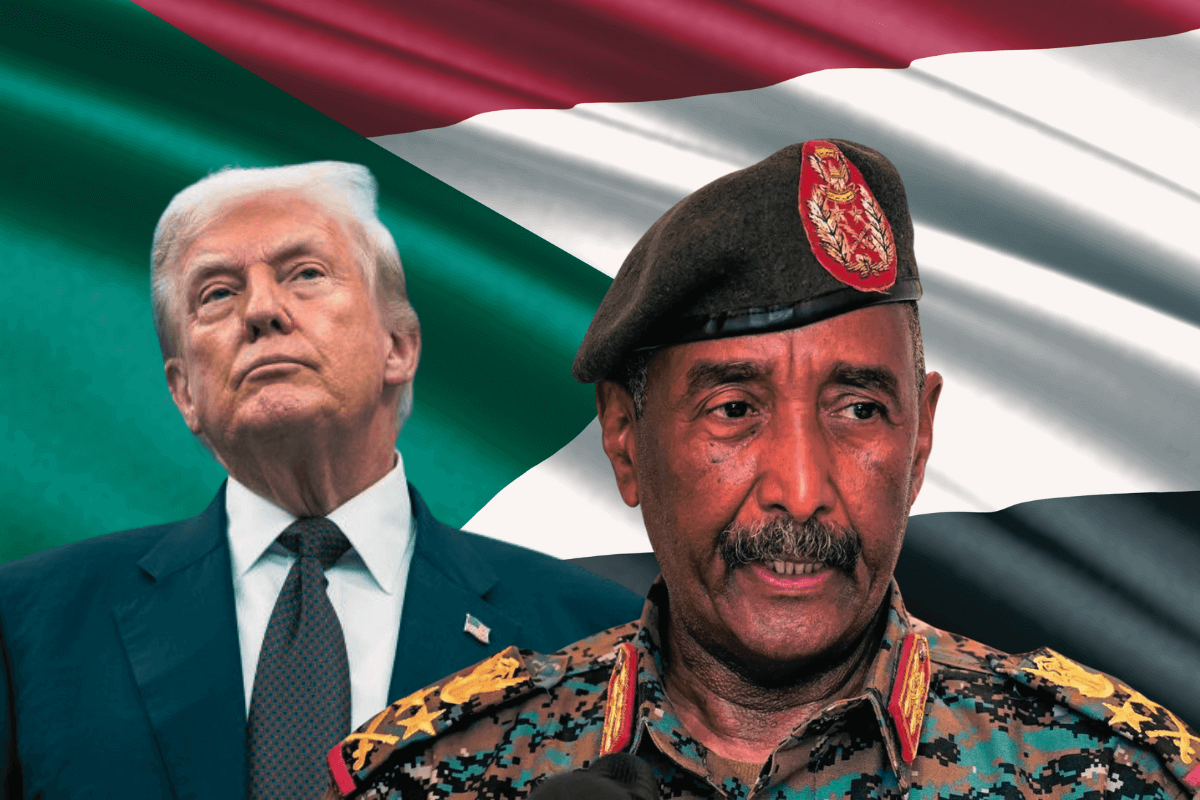 Sudan’s Army Chief Rejects US-Led Ceasefire Proposal, Calling it “Worst...