
IslamiCity
Listen PodCasts, Live Quran, Watch Videos @VideoHub

The following is based on a hadith from Sahih Muslim, Hadith 2766a
The Prophet Muhammad (ﷺ) narrated the story of a man who lived long before us and had killed ninety-nine people.
One day, the man began searching for a way to repent. He asked people to direct him to the most knowledgeable person, and they sent him to a monk.
(The Arabic word used for monk is رَاهِب (rahib), referring to someone devoted to religious worship and asceticism.)
The man approached the monk and confessed, "I have killed ninety-nine people. Is there any hope of repentance for me?"
The monk replied, "No."
Upon hearing this, the man became angry and killed the monk as well, bringing the number of his victims to one hundred.
Feeling more remorseful he still continued to seek repentance, the man once again asked to be directed to the most knowledgeable person. This time, he was sent to a learned man (رَجُلٍ عَالِمٍ, rajulin alimin).
He approached the learned man and said, "I have killed one hundred people. Is there any hope of repentance for me?"
The learned man replied, "Yes! Who can stand between you and repentance?"
He then advised him:
"Go to such-and-such a land. There are people there who worship Allah. Join them in worshipping Allah, and do not return to your homeland, for it is a place of evil."
The man accepted this advice and immediately set out toward the new land, hoping to leave his sinful past behind.
But halfway through his journey, death overtook him.
The angels of mercy and the angels of punishment then disagreed over his fate.
The angels of mercy argued, "He came in sincere repentance, turning his heart toward Allah."
But the angels of punishment argued, "He has never done a single good deed."
Then an angel appeared in human form, and the angels appointed him to settle their disagreement.
He instructed them:
"Measure the distance between the two lands. Whichever land he is closer to will determine his fate."
The angels measured the distance and discovered that the man was closer to the land he had been traveling toward, the land of righteous people.
And so, the angels of mercy took his soul.
Qatadah further narrated that Al-Hasan said:
"We were told that when death approached him, the man stretched his chest forward, toward the land he was trying to reach."
| Arabic expression | Transliteration | Meaning |
| رَاهِبٍ | Rahib | A monk or religious ascetic |
| رَجُلٍ عَالِمٍ | Rajulin alim | A learned man, a person of knowledge |
| أَعْلَمِ أَهْلِ الأَرْضِ | A'lam ahl al-ard | The most knowledgeable person on earth |
| فَهَلْ لَهُ مِنْ تَوْبَةٍ | Fa-hal lahu min tawbah | Is there any possibility of repentance for him? |
| وَمَنْ يَحُولُ بَيْنَهُ وَبَيْنَ التَّوْبَةِ | Wa-man yahulu baynahu wa-bayna al-tawbah | And who could stand between him and repentance? |
The monk was a person devoted to worship, but his response reflected a lack of understanding of the extent of Allah's mercy.
The learned man, however, understood not only that repentance remained possible, but also that genuine repentance required a change in the man's environment and companionship.
He gave the man three practical instructions:
1. Leave the environment of wrongdoing.
2. Join a community of people who worship Allah.
3. Do not return to the environment that encouraged evil.
The hadith thus illustrates an important distinction in Islamic teachings: Personal piety and religious knowledge are not necessarily the same thing.
It also demonstrates that sincere repentance is not simply about seeking forgiveness, but about changing one's direction in life and taking meaningful steps toward righteousness.
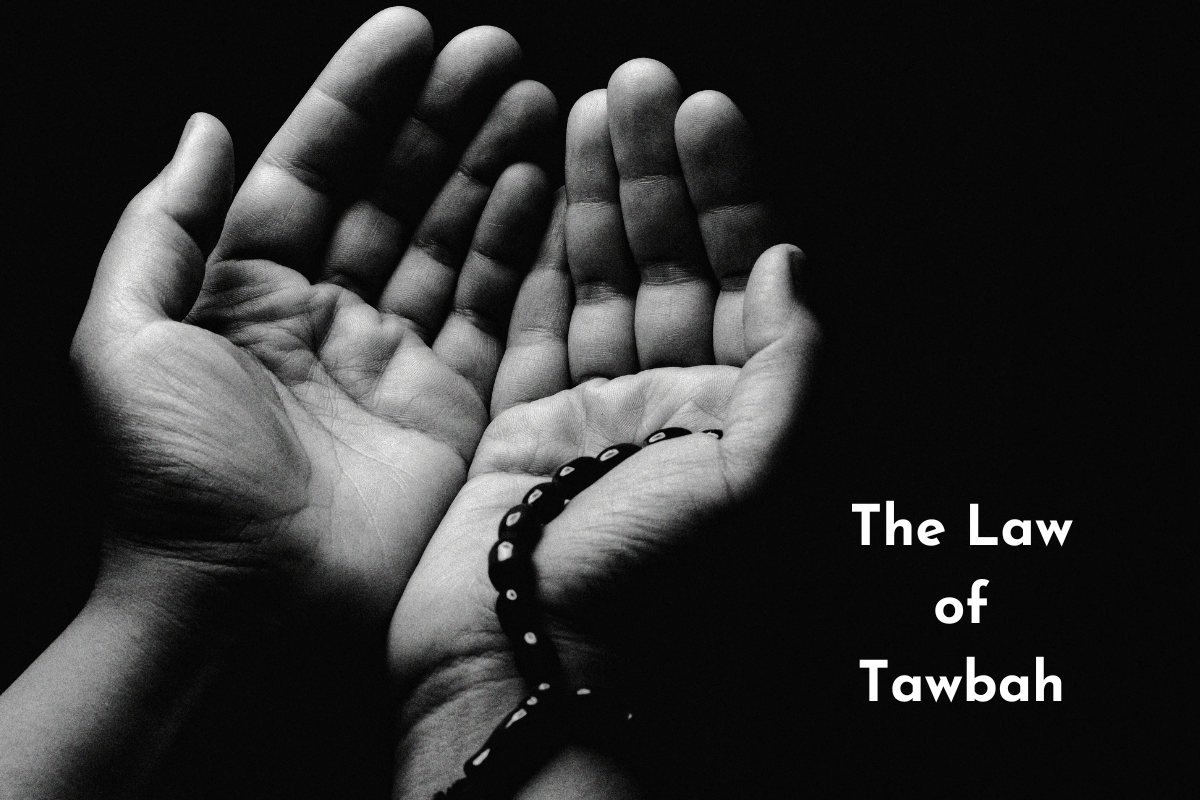 The Law of Tawbah


