
IslamiCity
Listen PodCasts, Live Quran, Watch Videos @VideoHub

World Philosophy Day was first celebrated on 21 November 2002 in Paris, France. This initiative, undertaken by UNESCO, emphasises the contributions of philosophy and philosophers to humanity.
Since 2002, World Philosophy Day has been celebrated annually on the third Thursday of November. The main reasons behind this celebration are to encourage critical thinking, promote the development of tolerant societies around the globe, highlight the importance of education, and address the modern challenges confronting humanity.
In 2026, World Philosophy Day will be celebrated on 19 November. On that day, UNESCO will host a special event at its Headquarters in Paris. The esteemed Senegalese philosopher, Professor Souleymane Bachir Diagne from Columbia University, New York, has been invited to deliver a keynote lecture entitled 'Living the Earth Together', which will explore the concept of the Universal Human.
Following the keynote lecture, a round-table discussion will be held under the theme 'Thinking and Acting Together: Philosophy to Inhabit a World with Plural Challenges.'
Now, turning to the question of what philosophy is all about, the etymology of the word 'philosophy' can be traced back to the Greek word philosophia, which means 'love of wisdom'. There is a famous notion, widely held in many parts of the world, that not everyone who possesses knowledge has wisdom, but those who possess wisdom have profound knowledge. In other words, wisdom goes a level higher than mere knowledge.
Wisdom in Arabic is termed Hikmah. The Qur'an says that those who are given wisdom are given goodness in abundance. The following is the verse from Surah Al-Baqarah (2:269):
"He gives wisdom to whom He wills, and whoever has been given wisdom has certainly been given much good. And none will remember except those of understanding."
In our daily conversations, whenever the word 'philosophy' is uttered or heard, our minds tend to go back to ancient Greece and its philosophers, such as Thales (c. 624-c. 546 BCE), Socrates (469-399 BCE), Plato (427-347 BCE), Aristotle (384-322 BCE), and Epicurus (341-270 BCE), and countless others.
The fall of Greece as a civilizational force ushered in the rise of Rome as a new superpower. To a lesser degree than its predecessor, Rome too produced great philosophers like Seneca (4 BCE-65 CE), Cicero (106-43 BCE), Marcus Aurelius (121-180 CE), Epictetus (c. 50-135 CE), Lucretius (c. 99-55 BCE), Musonius Rufus (c. 30-100 CE), and Plotinus (204/205-270 CE).
However, it is fascinating to note that, concurrently with the development of philosophy in Greece and Rome, philosophical discourse was also taking place in India, China, Persia, Egypt, Mesopotamia, and elsewhere in the Middle East.
Talking about philosophy from a European or Western perspective, Greece occupies a special place. To many European researchers, Greece is regarded as the birthplace of Western philosophy, civilisation, democracy, education, and liberal thought. Although philosophy in Greece began with Thales and other pre-Socratic philosophers, it was Socrates who was given the honour of being called the 'Father of Philosophy'.
Philosophy before the era of Socrates was mainly associated with mythological stories, and discussions largely centred on how the universe was created. Crucial to these discussions were the elements of water, air, fire, and earth. It is said that Socrates was the philosopher who brought philosophy down from the heavens to earth by shifting its focus towards human affairs. He discussed subjects such as civil society, democracy, ethics, education, justice, and other aspects of everyday human life.
In the West, long before the emergence of various disciplines of knowledge, such as biology, physics, chemistry, mathematics, and other natural and human sciences, all such studies and discussions were placed under the domain of philosophy. As such, many Western scholars believe that 'philosophy is the mother of all knowledge'. The branching out and categorization of the various disciplines of knowledge only took place in modern times.
In contrast to the situation in the West, the Muslim world came into contact with philosophy at a much later time. To be more precise, this happened during the Golden Age of Islamic civilisation. According to many Western and Islamic scholars, the Islamic Golden Age lasted from 750 to 1258.
Before this period, the Umayyads, who held power, were mainly focused on expanding the Islamic empire and extending the territories under their rule. However, following the change of power in 750, the Abbasids managed to take control of the vast empire established by the Umayyads.
Compared to the previous regime, the Abbasids showed greater interest in exploring new frontiers in the expansion of knowledge, conducting research, translating manuscripts from earlier civilisations into Arabic, developing technology, and mastering various fields of knowledge, including the natural, social, and human sciences.
When Muslims first came into contact with the philosophical treatises of the ancient Greeks, Persians, and Indians, they felt elated and enthusiastically embarked on translating these works, without applying any filters. Al-Kindi (c. 801-873 CE) was the first Muslim philosopher, followed by Al-Farabi (c. 872-950 CE) and Ibn Sina (Avicenna) (980-1037 CE). Without fully realizing the slippery slopes present in Greek philosophy, and out of sheer enthusiasm, they embraced much of what was presented in the Greek manuscripts. To put it metaphorically, they were swept away by the tidal wave of Greek thought.
Al-Ghazali (1058-1111 CE), who came after the three above-mentioned great Muslim philosophers, undertook a thorough investigation of philosophy and recognised the hidden dangers of Greek philosophy when its ideas were accepted without any process of filtration. Al-Ghazali, who was well known at the time by the title Hujjat al-Islam, took on the task of highlighting the shortcomings of Greek philosophy. After analysing the philosophical works of his predecessors, he wrote his famous critical examination of philosophy, known as Tahafut al-Falasifah (The Incoherence of the Philosophers). In this book, Al-Ghazali highlighted twenty areas in which he believed the Muslim philosophers had gone wrong.
It is important to note here that the publication of Tahafut al-Falasifah gave Muslims a new perspective on how they could acquire and benefit from ideas originating from other civilisations. To put it in today's context, Al-Ghazali suggested ways and means through which Muslims could borrow ideas from other civilisations. This approach can be understood through the Three A's Principle: Adopt, Adapt, and Assimilate. By adopting such an approach, Muslims can eliminate the harmful elements found in the domain of philosophy.
Following Al-Ghazali's criticism, philosophy in the Muslim world went into a deep slumber. There was relatively little discussion of philosophy until the emergence of Ibn Rushd (1126-1198 CE), the great philosopher from Cordoba. In an attempt to rebut Al-Ghazali's arguments in Tahafut al-Falasifah, Ibn Rushd wrote his famous philosophical work, Tahafut al-Tahafut (The Incoherence of the Incoherence).
Ibn Rushd strongly challenged Al-Ghazali's criticism of philosophy. He argued that the numerous Qur'anic verses urging mankind to think, contemplate, and critically examine the phenomena manifested in the universe encourage the use of reason and philosophical inquiry. Furthermore, he believed that such a mode of thinking is not contradictory to the teachings of Islam but rather goes hand in hand with the Qur'anic emphasis on reflection and contemplation.
The decline of Islamic civilisation began with the fall of Baghdad to the Mongols in 1258. This event, together with the later experience of colonisation, contributed to the decline of Muslim intellectualism. These historical developments deprived Muslim intellectuals of the freedom to think dynamically and produce new ideas. One of the areas in which Muslims gradually lost their dominance was philosophy.
After a long absence from the intellectual domain, modern times witnessed the emergence of thinkers such as Muhammad Iqbal (1877-1938), Ali Shariati (1933-1977), Syed Muhammad Naquib al-Attas (1931-2026), and Seyyed Hossein Nasr (1933). Through their intellectual contributions, they sought to revive the Muslim intellectual heritage and restore the spirit of critical thinking among Muslims.
To conclude, here is what I would like to say about philosophy as an academic subject in institutions of higher learning in Muslim countries. Unlike in the West, throughout the Muslim world, the position of 'Mother of All Knowledge' is given to the Qur'an and not to philosophy because the Qur'an is a divine revelation from God, the Almighty Creator. Compared to the Qur'an, philosophy is still considered a human intellectual endeavour and is bound to have some shortcomings here and there.
Although philosophy has some problematic areas, students should nevertheless be encouraged and motivated to study it during their university years. As a teacher of Basic Philosophy and Islamic Worldview, I find that philosophy sharpens students' minds. It teaches them to think critically and creatively and enables them to discuss and argue matters related to good governance and politics in a more rational, diplomatic, and persuasive manner.
As for career opportunities after graduation, students who study philosophy can pursue careers in politics, writing, and teaching. They can also become members of think tanks involved in shaping government policies and decisions or serve in the diplomatic missions of their respective countries.
(The views expressed are those of Dr. Mohd Abbas Abdul Razak from the Department of Fundamental and Interdisciplinary Studies, AHAS KIRKHS, IIUM, and do not necessarily reflect the views of IslamiCity)
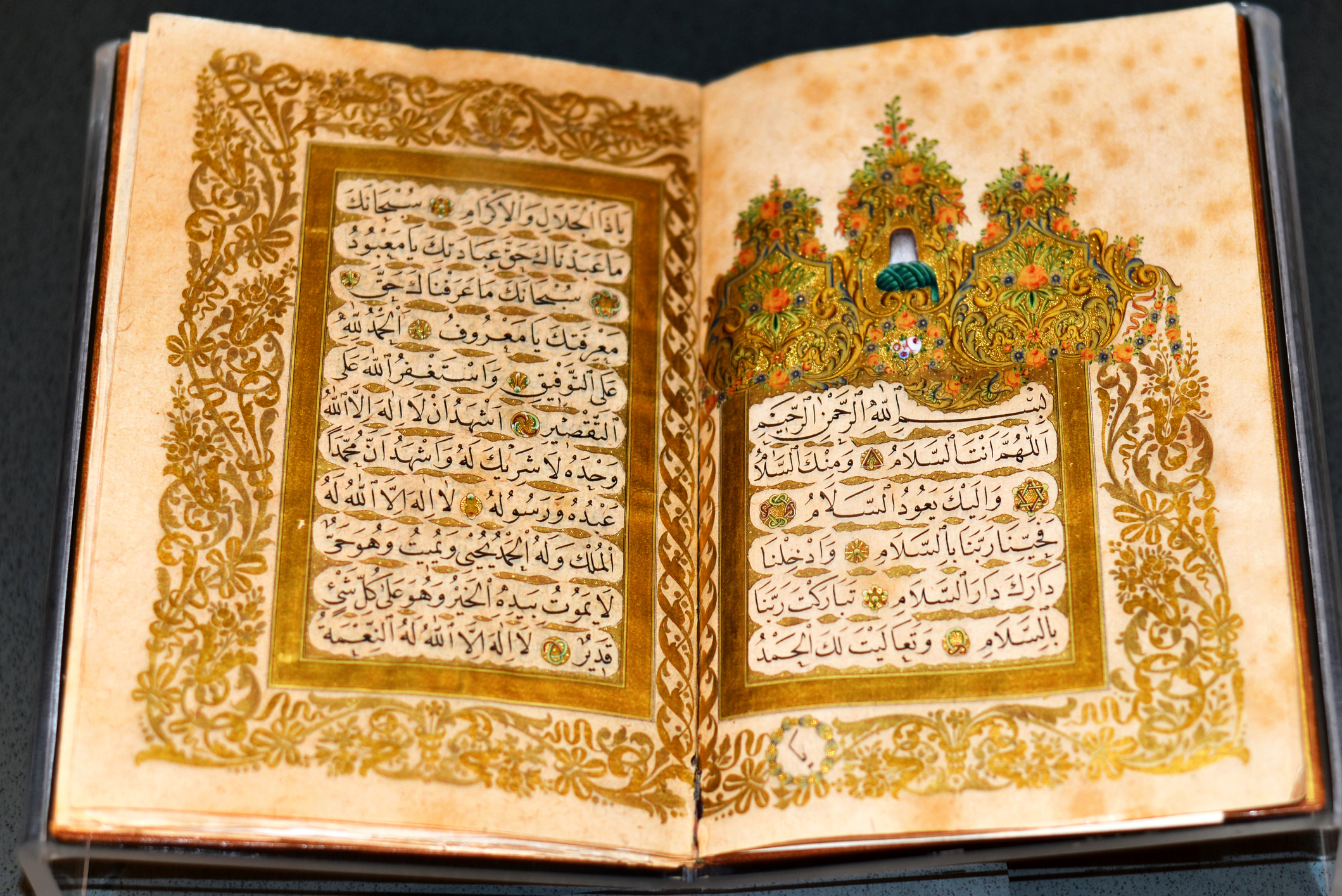 The Quran and Muslim Unity


